
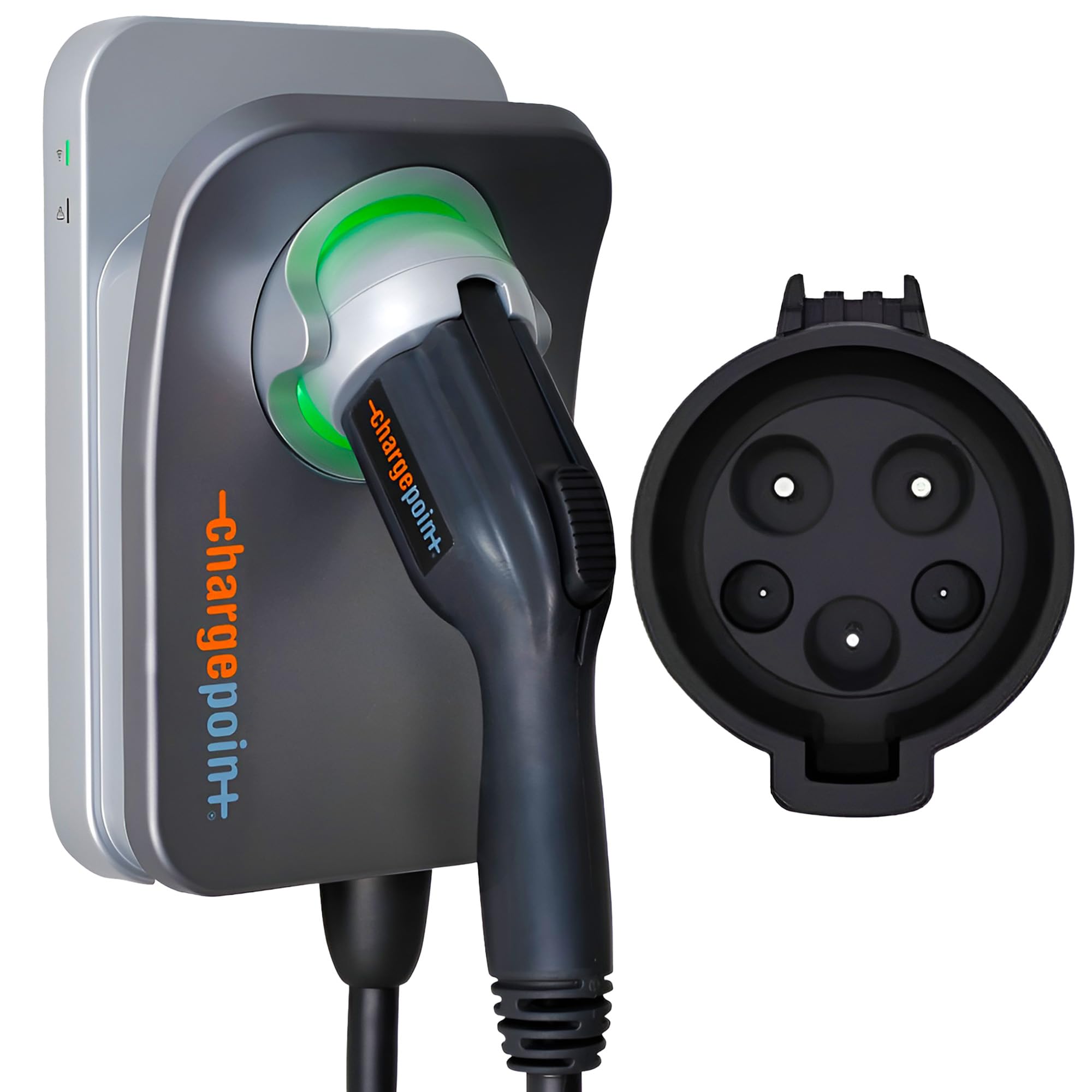
Setting up home Best EV Charging Station Installation starts with understanding what your electrical panel can support and how a charger connects to your vehicle. A Level 2 charger delivers far more power than a standard wall outlet, cutting charge times from a full day to a few hours, but the installation method (hardwired versus plug-in) and the amperage you choose both depend on your home’s wiring and your electrician’s assessment of your panel capacity.
Most home chargers fall into two installation categories. Hardwired units connect directly to a dedicated circuit and are permanently wired in, which typically supports higher amperage but requires a licensed electrician for the full install. Plug-in units use a NEMA 14-50 outlet, similar to what powers an electric range or RV hookup, and can be installed by an electrician once, then unplugged or moved if needed.
The right charger for your garage depends on your vehicle’s connector type, the amperage your panel can safely support, and whether you want a fixed hardwired unit or the flexibility of a plug-in model. Weather exposure, cable length, and Wi-Fi features matter too, especially for outdoor or shared-space installations.
Best for maximum charging speed: ChargePoint HomeFlex
Best for flexible plug-in setup: EMPORIA Level 2 Charger
Best for no-frills reliability: Grizzl-E Classic
Best for extreme weather durability: EVIQO Level 2 Charger
Best for Tesla and non-Tesla households: MACH 1 Dual Connector Charger
Best for trusted diagnostic-brand engineering: Autel MaxiCharger
Best for budget-conscious smart charging: AIMILER Level 2 Charger
Best for renters and portable use: MACH 3 Portable Charger
Best for cable organization: J1772 Charger Holder
Best for driveways without wall access: Maizengauto EV Charger Pedestal
ChargePoint HomeFlex

This charger suits homeowners who want adjustable amperage and a hardwired install backed by a large public charging network.
Pros
- Adjustable from 16A to 50A to match different circuit sizes
- 23-foot cold-resistant cable rated for indoor or outdoor mounting
- Access to a large network of public charging stations through the app
Cons
- Requires hardwiring by a licensed electrician
- Tesla drivers need a separate adapter
- Some users report app connectivity issues
The HomeFlex stands out for its flexibility. An electrician can configure it for a 20A to 80A circuit, so it works whether a home has an older panel or a newly upgraded one. The J1772 connector fits all non-Tesla EVs sold in North America.
Reviewers consistently praise the straightforward electrician install and reliable daily charging. A few mention Wi-Fi setup hiccups during initial activation, though most resolve after a reset. The mobile app adds scheduling and usage tracking once connected.
EMPORIA Level 2 EV Charger
This unit works well for buyers who want the option to start with a plug-in NEMA 14-50 outlet and switch to hardwired later without replacing the charger.
Pros
- Convertible between NEMA 14-50 plug-in (40A) and hardwired (48A) setups
- Compatible with a wide range of EV brands through the J1772 connector
- Energy Star certified with real-time energy tracking in the app
Cons
- Higher amperage requires professional hardwiring
- A few buyers noted a delay before the unit powered on after install
- App can only manage one charger per account at a time
The dual installation path is the main appeal here. A NEMA 14-50 outlet lets an electrician install a receptacle rather than running a permanent hardwired connection, which can simplify future moves or upgrades.
Owners describe the app as a highlight, with clear scheduling options and usage data. Installation reviews mention it takes an electrician under an hour once the circuit is ready.
Grizzl-E Classic
Buyers who want a durable charger without app dependency will find this metal-enclosed unit dependable in daily use.
Pros
- Solid metal enclosure rated IP67 for water resistance
- Adjustable amperage (16A, 24A, 32A, 40A) to match different circuit breakers
- No Wi-Fi required, so there is nothing to set up or reconnect
Cons
- No smartphone app or remote scheduling
- Heavier unit that needs a stud for secure mounting
- NEMA 14-50 plug only, no hardwire option listed
This charger appeals to owners who prefer simple, mechanical reliability over connected features. The steel housing handles temperature swings and outdoor exposure without added enclosures.
Reviewers highlight the heavy-duty cable and connector as standout build quality. Several note it runs cool even at the maximum 40A setting, and installation is limited to plugging into a properly rated NEMA 14-50 outlet.
EVIQO Level 2 EV Charger
This hardwired charger fits households in harsh climates that need a sealed enclosure and a reliable Wi-Fi connection in a garage or basement.
Pros
- IP66/NEMA 4 sealed housing for outdoor installations
- Adjustable up to 50A via DIP switch settings on a 70A circuit
- Reset button avoids breaker shutoffs for troubleshooting
Cons
- Requires a dedicated 60A or 70A circuit for full output
- Hardwired only, no plug-in configuration
- Newer product with a shorter track record than established brands
The 25-foot cable and glow-in-the-dark holster add practical touches for nighttime use in driveways. The sealed housing and steel shielding are built for exposure to rain, snow, and dust.
Its stronger antenna is designed to hold a Wi-Fi signal in detached garages or basements where weaker routers struggle. An electrician must verify the panel supports the 60A or 70A dedicated circuit before installation.
MACH 1 Dual Connector Charger
Households with both a Tesla and a non-Tesla EV benefit from this charger’s built-in J1772 and NACS connector options.
Pros
- Includes a NACS adapter for Tesla vehicles alongside the standard J1772 connector
- Supports hardwiring or NEMA 14-50 plug-in installation
- 30-foot cable reaches across most garages and driveways
Cons
- Higher 48A output requires a dedicated 60A circuit
- Fewer independent reviews than more established brands
- Anti-theft hardware adds setup steps for wall mounting
The dual-connector approach removes the need to buy a separate adapter for Tesla charging, which simplifies shared garages with mixed vehicle types.
The 2.4-inch display and app pairing give visibility into charging sessions, and the included RFID cards support shared or semi-public use. Installation flexibility between hardwire and plug-in lets an electrician choose the setup that fits the home’s panel.
Autel MaxiCharger
This charger fits buyers who want a NEMA 4-rated enclosure and a brand with a long history in automotive diagnostic equipment.
Pros
- NEMA 4-rated housing for snow, rain, and dust protection
- Adjustable output up to 50A for compatible circuits
- Flexible 25-foot cable rated to -40°C
Cons
- Some owners report Wi-Fi connection issues after extended use
- Panel removal for wiring access takes extra steps during install
- A few reports of faults appearing after a few years of use
Autel built this charger on nearly two decades of automotive testing experience, and the enclosure reflects that engineering focus with certified overcurrent and overvoltage protection.
Installation reviews describe the process as straightforward for a licensed electrician, though accessing the internal wiring terminals takes removing more than one panel. Owners who hardwire at 48A report consistent output matching their expectations.
AIMILER Level 2 EV Charger
This plug-in charger works for buyers who want app-based scheduling and adjustable amperage without a permanent hardwired install.
Pros
- NEMA 14-50 plug-in design with adjustable amperage from 16A to 40A
- Built-in leakage protection removes the need for a separate GFCI breaker
- Touch screen displays amperage, voltage, and charging status directly on the unit
Cons
- Requires a 2.4GHz Wi-Fi network; dual-band routers need reconfiguring
- Not compatible with Tesla vehicles without an added adapter
- Portable design means less permanent mounting than hardwired units
The plug-and-play default mode lets the charger start automatically once connected, while app mode adds scheduling for off-peak charging rates.
Owners across several EV brands, including plug-in hybrids, report smooth setup once the outlet is in place. The 25-foot cable and included carrying bag support both garage and portable use cases.
MACH 3 Portable EV Charger
This charger suits renters or drivers who need Level 1 and Level 2 charging without a fixed wall installation.
Pros
- Works with existing NEMA 14-50 or NEMA 5-15 outlets, no hardwiring involved
- Includes a J1772-to-Tesla adapter for mixed-vehicle compatibility
- Compact and portable with a carrying bag for travel
Cons
- Level 1 charging (120V) is significantly slower than dedicated Level 2 setups
- Fewer customer reviews compared to other chargers in this roundup
- Requires an existing compatible outlet rather than a fixed install
Because it plugs into outlets that already exist, this charger avoids electrical work entirely for households with a NEMA 14-50 or standard outlet available.
The adjustable 16A to 40A range and app connectivity give it functionality closer to fixed Level 2 units, while the portable form factor makes it useful for renters, apartment dwellers, or drivers who travel between properties.
J1772 Charger Holder
This wall mount organizes the charging cable and connector for any J1772-based home charging setup.
Pros
- Stainless steel construction resists rust in garage environments
- Includes a storage box to hold the charger’s control unit
- Simple screw-in installation on studs or solid walls
Cons
- Storage box may not fit all charger models, especially bulkier units
- Nozzle holster can be snug for some J1772 connector shapes
- Not designed for NACS-only connectors
Cable management matters after installation, since a loose connector and cable left on the garage floor can create a tripping hazard and expose the cable to wear.
Reviewers note the build feels sturdy, though it is worth measuring a charger’s control box dimensions before buying, since sizes vary by brand. The J-hook keeps the cable off the ground and reduces strain on the connector over time.
Maizengauto EV Charger Pedestal
This freestanding pedestal solves installation for driveways or parking areas without a nearby wall to mount a charger.
Pros
- Galvanized steel construction resists corrosion outdoors
- Works with most Level 2 charger brands and models
- Expandable design can support a second charger unit
Cons
- Adds cost and installation time beyond the charger itself
- Requires its own secure anchoring, typically concrete
- Limited independent reviews available at this time
Homes with detached garages, carports, or driveway-only parking often lack a wall close enough to the vehicle for a standard charger mount. A pedestal solves that by creating a dedicated post.
The one-piece column design avoids splicing points that could weaken over time. An electrician still needs to run conduit to the pedestal location, so this accessory adds a planning step rather than replacing professional installation.
Best EV Charging Station Installation Buying Guide
Match Amperage to Your Electrical Panel
A charger’s amperage rating determines how fast it charges and what size circuit it needs. Higher amperage (40A to 50A) charges faster but requires a larger dedicated circuit, often 50A to 80A after applying the National Electrical Code’s continuous load rule. A licensed electrician should evaluate your panel’s available capacity before choosing a charger.
| Amperage | Typical Circuit Needed | Approx. Range Added Per Hour |
|---|---|---|
| 16A | 20A | 10-12 miles |
| 24A | 30A | 15-18 miles |
| 32A | 40A | 22-25 miles |
| 40A | 50A | 28-30 miles |
| 48-50A | 60-80A | 37-46 miles |
Choose Hardwired or Plug-In Installation
Hardwired chargers connect directly to house wiring and cannot be unplugged, which suits permanent garage installations. Plug-in chargers use a NEMA 14-50 outlet, similar to an electric dryer plug, and offer more flexibility if you move or want to swap chargers later. Both require a licensed electrician to install the circuit safely.
Confirm Connector Compatibility
Most non-Tesla EVs sold in North America use the J1772 connector. Tesla vehicles use the NACS connector, though most Teslas ship with an adapter for J1772 chargers. Some newer chargers include both connector types built in, which removes the need for a separate adapter in mixed-vehicle households.
Consider Weather Exposure and Placement
Outdoor installations need a charger rated for moisture and temperature extremes, typically indicated by an IP or NEMA rating. NEMA 4 or IP66 ratings indicate strong resistance to rain, snow, and dust. Indoor garage installations have more flexibility but should still account for temperature swings in unheated spaces.
Evaluate Cable Length and Mounting Location
Measure the distance from your proposed mounting point to your vehicle’s charging port in its typical parking position. Cables in this category range from 23 to 30 feet. A pedestal mount can help when no wall exists near the parking spot.
Decide If Wi-Fi Features Matter
App-connected chargers allow scheduling, usage tracking, and remote start or stop. This adds convenience but depends on a stable 2.4GHz Wi-Fi signal reaching the garage or driveway. Chargers without Wi-Fi operate reliably through manual controls alone, which some buyers prefer for simplicity.