
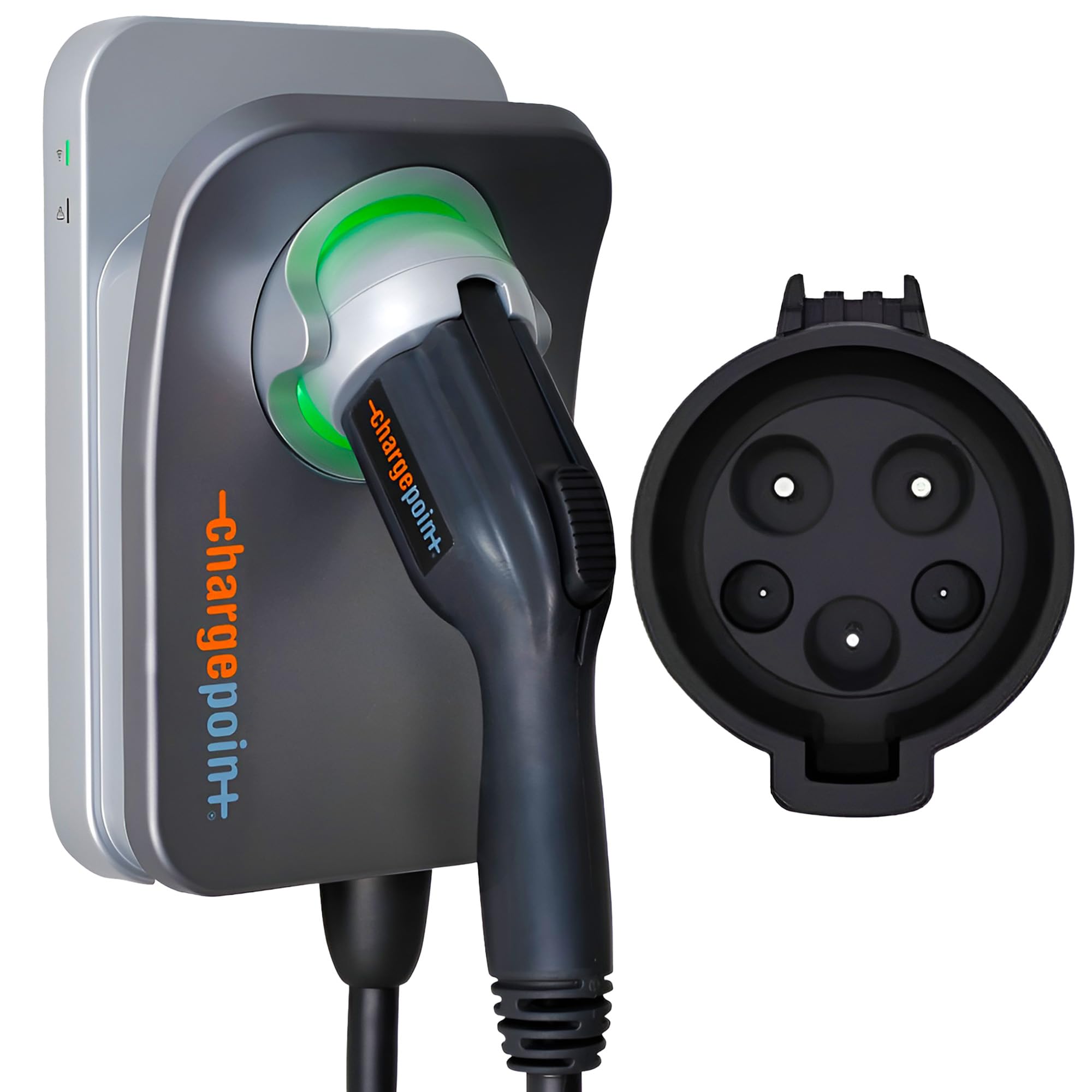
A home EV charger turns overnight parking into a full battery, cutting out the wait times and range anxiety that come with relying on public stations. Level 1 chargers use a standard household outlet and work well for plug-in hybrids or drivers who cover fewer miles each day. Level 2 chargers run on a 240-volt circuit and can refill a battery several times faster, making them the practical choice for anyone who drives an EV as a daily vehicle.
Choosing between these options comes down to how the charger connects to the electrical system and how much power it can deliver. Hardwired units connect directly to a home’s wiring through a dedicated circuit, while plug-in models use a NEMA outlet like the 14-50, which is easier to install and move if needed. Connector type matters too: J1772 works with nearly every non-Tesla EV, while NACS is built for Tesla vehicles and newer EVs adopting that standard.
Matching a charger’s amperage to a home’s electrical panel and a vehicle’s onboard charging limit prevents both wasted money and disappointing charge times. A 48-amp charger won’t charge faster than a car’s onboard charger allows, and a circuit that can’t support high amperage will limit output regardless of the unit’s rating. The picks below cover hardwired and plug-in options, J1772 and NACS connectors, and a range of amperages to fit different budgets and electrical setups.
Best for maximum output on a large circuit: ChargePoint HomeFlex Level 2 EV Fast Charger
Best overall value for most homes: EMPORIA Level 2 EV Charger
Best plug-in charger for easy setup: EVIQO Level 2 EV Charger J1772 40A
Best for app-based scheduling and monitoring: Autel 40A Level 2 EV Charger
Best for renters and mixed 120V/240V households: EVDANCE Level 1&2 EV Charger
Best budget-friendly Level 2 charger: AIMILER Level 2 EV Charger
Best for outdoor installation in harsh weather: Autel Level 2 EV Charger up to 50Amp
Best hardwired charger for Tesla and NACS vehicles: EVIQO Level 2 EV Charger NACS 48A
Best for adjustable charging speeds on a budget circuit: EVDANCE Level 2 EV Charger 32Amp
Best portable charger for travel and apartments: bokman Portable Level 1&2 EV Charger ChargePoint HomeFlex Level 2 EV Fast Charger

This charger suits drivers who want adjustable amperage and a trusted charging network behind the hardware.
Pros
- Adjustable output from 16A to 50A to match different circuit sizes
- Backed by one of the largest public charging networks in North America
- Cold-resistant 23-foot cable rated for indoor or outdoor use
Cons
- Requires professional hardwiring, adding installation cost
- J1772 connector needs an adapter for Tesla vehicles
- App features depend on a stable Wi-Fi connection
- Home EV Charger
The HomeFlex stands out for its flexibility. Instead of buying a single fixed-amperage unit, owners can dial in the output to match a 40A, 50A, or 80A circuit, which is useful if a future EV needs more power. ChargePoint’s app adds scheduling and station-finding tools, though Wi-Fi hiccups can occasionally interrupt remote features. As a hardwired unit, it needs an electrician for installation, which adds cost but results in a cleaner, permanent setup.
EMPORIA Level 2 EV Charger
This charger delivers strong performance and flexible installation options at a price that undercuts many competitors.
Pros
- Works as either a NEMA 14-50 plug-in unit or hardwired for full 48A output
- Energy Star certified with broad EV compatibility
- Well-regarded app for scheduling and real-time monitoring
Cons
- Hardwiring requires a licensed electrician for the higher amperage
- Single port limits use to one vehicle at a time
- 2.4GHz-only Wi-Fi can be finicky with some routers
Emporia’s charger gives buyers a rare choice: start with the NEMA 14-50 plug for 40A charging, then convert to hardwired later for the full 48A. That flexibility, combined with wide compatibility across Tesla, Ford, Hyundai, and other major brands, makes it a strong fit for households that might upgrade their electrical service down the road. The app has consistently drawn praise for being easier to use than earlier charger models.
EVIQO Level 2 EV Charger J1772 40A
This plug-in charger is a solid pick for anyone who wants Level 2 speeds without hiring an electrician for hardwiring.
Pros
- Plugs directly into a NEMA 14-50 outlet, no hardwiring required
- IP66/NEMA 4 sealed housing for reliable outdoor use
- Side reset button simplifies troubleshooting
Cons
- Requires an existing NEMA 14-50 outlet on a dedicated 50A circuit
- 40A output is lower than some hardwired competitors
- Tesla drivers need a separate J1772 adapter
The plug-in design means this charger can be installed by simply plugging it into a properly rated outlet, cutting installation time and cost compared to hardwired models. Its sealed housing and steel internal shielding hold up well outdoors. The 25-foot cable and glow-in-the-dark holster add convenience for driveway parking in low light.
Autel 40A Level 2 EV Charger
This charger appeals to buyers who want quick setup and strong app-based control without sacrificing durability.
Pros
- Plugs into a NEMA 14-50 outlet for roughly five-minute installation
- Adjustable output from 16A to 40A through the Autel Charge app
- NEMA 4X weatherproof housing for outdoor durability
Cons
- RFID and app features add a learning curve for first-time users
- 40A ceiling is lower than some higher-output hardwired chargers
- Fewer total reviews than some competitors, though feedback is positive
Autel’s background in automotive diagnostics shows in the charger’s app, which lets owners fine-tune amperage and set schedules around off-peak electricity rates. The plug-in NEMA 14-50 setup keeps installation simple for anyone with the outlet already in place. RFID access adds a layer of security that’s useful for shared garages or driveways.
EVDANCE Level 1&2 EV Charger
This charger fits renters and light-duty drivers who need both 120V and 240V flexibility in one unit.
Pros
- Works with standard 120V outlets and 240V NEMA 6-20 outlets
- Compact and portable with an included carrying bag
- Lower price point than most hardwired Level 2 chargers
Cons
- Maximum 16A output is slower than higher-amp Level 2 units
- Not compatible with NEMA 6-15, 10-30, 14-30, 14-50, or 6-50 outlets without an adapter
- Shorter 1-year warranty compared to 3-year offerings elsewhere
Drivers who don’t have access to a dedicated 240V circuit will find this charger’s dual-voltage design useful. It delivers modest but steady charging from a regular wall outlet and picks up the pace on a NEMA 6-20 circuit. The tradeoff is charging speed. At 16A max, it won’t match dedicated Level 2 units, but for plug-in hybrids or low-mileage driving, it covers daily needs.
AIMILER Level 2 EV Charger
This charger offers dependable Level 2 speeds at a price that competes well against pricier hardwired models.
Pros
- Adjustable amperage from 16A to 32A to match different circuit breakers
- Built-in leakage protection removes the need for a separate GFCI breaker
- Touch screen displays amperage, charging speed, and delay settings
Cons
- NEMA 14-50 plug-in only, no hardwired option
- App setup requires 2.4GHz Wi-Fi, which trips up some users initially
- Reviewers note the button controls take a bit of practice
Owners praise this charger’s build quality and its 25-foot cable, which reaches comfortably across most driveways and garages. The adjustable amperage settings make it adaptable to 20A, 30A, or 40A circuits without buying a new unit. Its built-in leakage detection simplifies installation since a separate GFCI breaker often isn’t needed for NEMA 14-50 setups.
Autel Level 2 EV Charger up to 50Amp
This hardwired charger suits homeowners who want higher output and rugged weather resistance in one package.
Pros
- Delivers up to 50A output for faster charging on a properly sized circuit
- NEMA Type 4 rating protects against snow, rain, and dust
- Bluetooth and Wi-Fi connectivity support remote firmware updates
Cons
- Hardwired installation requires an electrician
- Higher amperage demands a larger dedicated circuit
- Ethernet option adds complexity for buyers unfamiliar with networked devices
This model targets homes with the electrical capacity to support higher output. The NEMA Type 4 housing makes it a good choice for exposed outdoor installations in regions with harsh winters. Bluetooth pairing alongside Wi-Fi gives installers more ways to connect during setup, and automatic firmware updates keep the charger current without manual intervention.
EVIQO Level 2 EV Charger NACS 48A
This charger is built specifically for Tesla owners who want a native NACS connector without relying on an adapter.
Pros
- Built-in NACS plug works directly with Tesla vehicles, including the charge-port release button
- Can be configured for 48A or 50A depending on circuit size
- Sealed IP66/NEMA 4 housing suited to outdoor mounting
Cons
- Hardwired installation requires a licensed electrician and a dedicated 60A or 70A circuit
- Non-Tesla EVs need a separate NACS-to-J1772 adapter
- Higher amperage settings demand more electrical panel capacity
Tesla owners looking to skip the J1772 adapter entirely will appreciate this charger’s native NACS plug. The DIP switch option to unlock 50A on a 70A circuit gives some room to grow, though it depends on the home’s electrical service supporting it. As a hardwired unit, it needs professional installation, which adds cost compared to plug-in alternatives.
EVDANCE Level 2 EV Charger 32Amp
This charger gives budget-conscious buyers adjustable charging speeds without committing to a single fixed amperage.
Pros
- Adjustable output (16A, 24A, or 32A) to match 20A, 30A, or 40A breakers
- Portable design with a carrying case for travel
- LED screen displays real-time voltage, amperage, and delay settings
Cons
- Shorter 1-year warranty on the charger itself
- 32A ceiling is lower than higher-output hardwired models
- NEMA 14-50P plug only, no hardwired configuration
This unit fits households that want to start small and adjust as needed. Lowering the amperage for daily charging can reduce heat buildup and may help preserve battery health over time, an option not every charger offers. The portable design and included bracket mean it can serve as either a permanent driveway fixture or a charger that travels for road trips.
bokman Portable Level 1&2 EV Charger
This compact charger works well for apartment dwellers and drivers who need a charger that travels easily.
Pros
- Includes a NEMA 5-15 adapter for standard household outlets
- Physical buttons and LED screen work reliably in cold or wet conditions
- Delay timer supports off-peak charging without needing an app
Cons
- 16A maximum output is on the slower end for Level 2 charging
- No Wi-Fi app means no remote monitoring
- 20-foot cable is shorter than some 25-foot competitors
Skipping the smartphone app entirely, this charger relies on physical buttons and a straightforward display, which some drivers find more dependable in cold weather or when gloves are involved. The included adapter makes it usable at home or on the road with a standard outlet. Its 20-foot cable is shorter than some rivals, worth checking against garage or driveway layout before buying.
Home EV Charger Buying Guide
Level 1 vs. Level 2 Charging
Level 1 charging uses a standard 120-volt household outlet and adds roughly 3 to 5 miles of range per hour. Level 2 charging runs on a 240-volt circuit and can add 20 to 45 miles per hour, depending on the vehicle’s onboard charger and the unit’s amperage. Drivers covering more than 30 miles a day usually benefit from Level 2 charging.
Amperage and Circuit Sizing
A charger’s amperage rating shows its maximum output, but a home’s electrical panel and dedicated circuit have to support that draw. Common configurations include:
| Amperage | Typical Circuit Breaker | Approx. Range Added Per Hour* |
|---|---|---|
| 16A | 20A | 10-12 miles |
| 32A | 40A | 20-25 miles |
| 40A | 50A | 30-35 miles |
| 48A | 60A | 35-40 miles |
*Actual range added depends on the vehicle’s onboard charger and battery size.
An electrician can confirm whether a home’s panel has spare capacity for a new circuit before buying a high-amperage unit.
Plug-In vs. Hardwired Installation
Plug-in chargers connect to an outlet, most often a NEMA 14-50, and can be installed without an electrician if the outlet already exists. Hardwired chargers connect directly to the electrical panel through a dedicated circuit and need professional installation, but they tend to support higher amperage and offer a more permanent setup.
Connector Type: J1772 vs. NACS
J1772 is the standard connector for nearly all non-Tesla EVs and plug-in hybrids sold in North America. NACS (North American Charging Standard) is Tesla’s connector, now being adopted by other automakers. Tesla owners can use either a NACS charger directly or a J1772 charger with an adapter that Tesla includes with the vehicle.
Smart Features and Connectivity
Many chargers include Wi-Fi apps for scheduling charging during off-peak electricity hours, tracking energy use, and receiving firmware updates. These features need a stable 2.4GHz Wi-Fi connection, and signal strength in a garage or basement can affect reliability. Chargers with physical buttons and screens offer a dependable backup when Wi-Fi isn’t available.
Weatherproofing and Certification
Outdoor installations call for a charger rated NEMA 4 or IP66, which protects against rain, snow, and dust. Look for safety certifications like UL, ETL, or CSA, which confirm the unit has been tested against national electrical safety standards.
Cable Length
Most home chargers include a 20 to 25-foot cable. Measuring the distance from the planned mounting spot to the vehicle’s charging port location, including some slack, helps avoid a charger that can’t comfortably reach.