
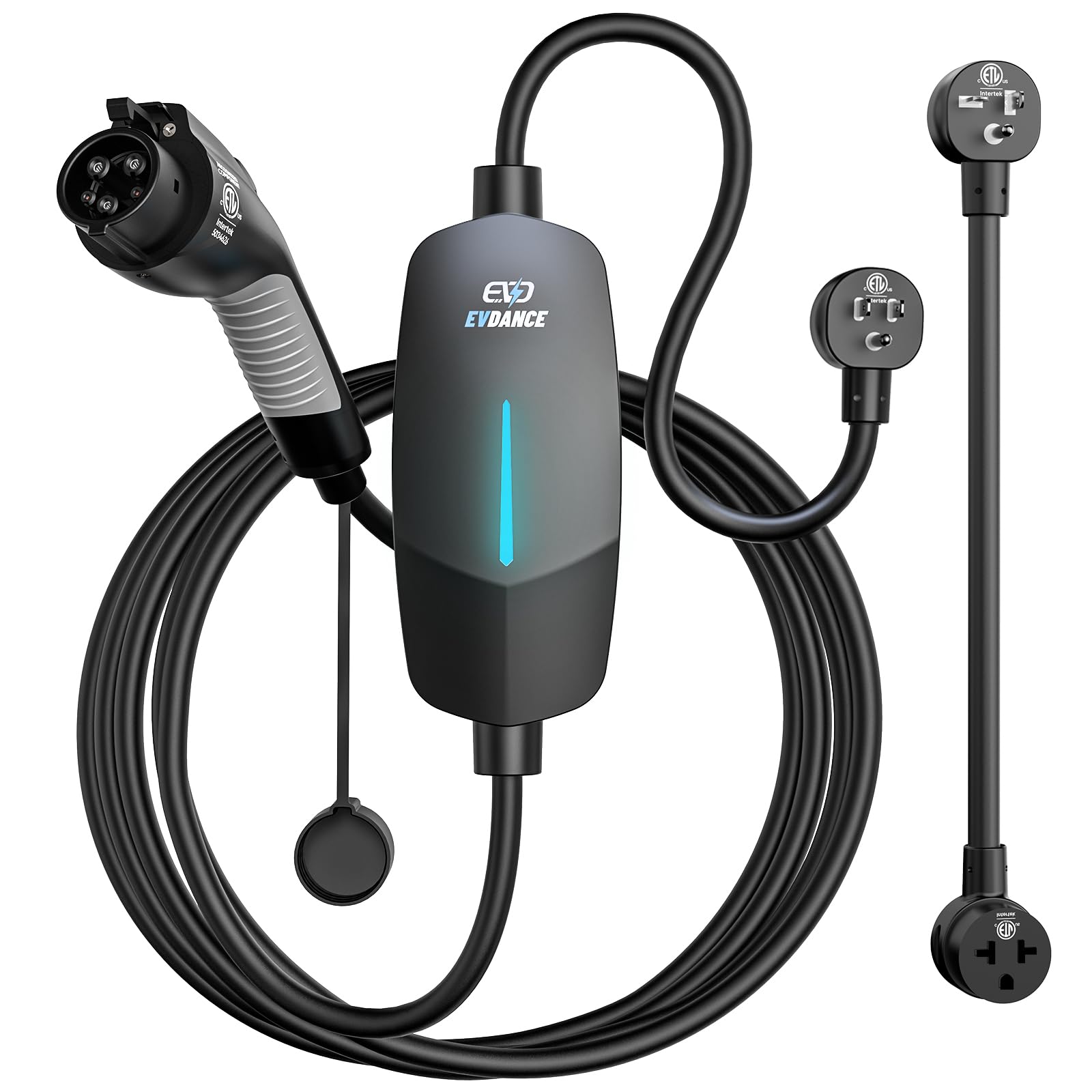
A Level 1 EV Chargers plugs into a standard 120-volt household outlet, the same kind used for lamps and phone chargers. It delivers power slowly, usually adding 2 to 5 miles of range per hour, but it needs no special wiring or electrician visit. For plug-in hybrid owners or drivers with short commutes, that trickle of power overnight can be enough to keep a car topped off without any home renovation.
Many portable chargers on the market now do double duty. They ship with a NEMA 5-15 plug for standard 120V outlets and a NEMA 6-20 plug for 240V outlets, giving owners a path to faster Level 2 speeds if they have (or later install) the right outlet. Understanding which plug fits which outlet matters more than chasing the highest amp rating, since a charger rated for 16 amps still charges slowly if it’s only ever used on a 120V household circuit.
The most useful portable chargers are the ones that match the outlets already in a garage or apartment parking spot, not the ones with the biggest number on the box. Cable length, weatherproofing, and safety certification also separate a reliable daily charger from one that causes headaches. The picks below cover a range of budgets, cable lengths, and control features for drivers who charge at home, on the road, or both.
Best overall value: EVDANCE Level 1&2 EV Charger
Best adjustable current control: bokman Portable Level 1&2 EV Charger
Best for newer EV buyers: VEVOR Level 1&2 EV Charger
Best simple Level 1 charger: Lectron Level 1 EV Charger
Best long cable for large driveways: VDLPOWERVP Level 1&2 EV Charger
Best backed by a long warranty: Schumacher Electric Level 1 Charger
Best lightweight travel charger: QPQ Level 1 and 2 Portable EV Charger
Best for app-based scheduling: Lectron EV Charger with App
EVDANCE Level 1&2 EV Charger

This charger suits drivers who want one device that handles both a standard wall outlet and a 240V outlet without buying two separate units.
Pros
- Works on both NEMA 5-15 (120V) and NEMA 6-20 (240V) outlets
- Long 25-foot cable reaches across most driveways
- ETL listed with IP66-rated housing for outdoor use
Cons
- Not compatible with Tesla without a separate adapter
- Excludes several PHEV models, including Prius Prime and RAV4 Prime
- 16A output only reaches full speed on a 240V circuit
The EVDANCE charger covers the two most common home charging scenarios in one box. On a 120V outlet it delivers a slow but steady charge, and switching to a 240V NEMA 6-20 outlet bumps output up to 16 amps for meaningfully faster charging. The LED display flags errors clearly, which helps new EV owners diagnose a bad outlet versus a charger fault. Its compatibility list excludes some popular PHEVs, so checking the model list before buying is worth the extra minute.
bokman Portable Level 1&2 EV Charger
Drivers who want to fine-tune their charging speed will get the most out of this charger’s adjustable amperage settings.
Pros
- Adjustable current from 6 to 16 amps to match circuit capacity
- Built-in delay timer for off-peak charging
- Tactile buttons work well in cold or wet weather
Cons
- Newer to market with a shorter track record
- Some reports of the connection needing a reseat to start charging
- 20-foot cable is shorter than some competitors
The bokman charger stands out for control. Instead of a fixed amp draw, drivers can dial the output down to protect an older circuit or up to 16 amps for faster charging on a compatible outlet. The 1-to-12-hour delay timer helps drivers take advantage of lower overnight electricity rates without any app or Wi-Fi setup. The IP65 housing and wide temperature range make it a reasonable choice for a garage without climate control, though a few users note the plug sometimes needs to be reseated.
VEVOR Level 1&2 EV Charger
This charger works well for owners of newer EV models like the Chevy Bolt who want a straightforward Level 1/Level 2 unit with a long cable.
Pros
- 25-foot cable offers flexibility in tight garages
- Included NEMA 5-15 adapter covers standard outlets
- IP66-rated control box for outdoor durability
Cons
- Listing mentions a delay charge feature some buyers say is missing
- Newer product with a smaller review history
- No adjustable amperage settings
Owners of the Chevy Bolt and similar EVs report solid results charging on both 120V and 240V outlets with this unit. The 25-foot cable and carrying bag make it practical for a garage setup or occasional travel. One recurring complaint involves a delay-charge feature listed in the product description that some buyers say doesn’t function as expected, so anyone relying on scheduled charging should confirm this before buying.
Lectron Level 1 EV Charger
This is a solid pick for drivers who only need 120V charging and want a no-frills, ETL-certified unit at a lower price.
Pros
- ETL certified and Energy Star rated for efficiency
- 2-year warranty, longer than many competitors
- Simple design with no adjustable settings to configure
Cons
- Level 1 only, no 240V charging option
- 15A output still charges slowly compared to Level 2
- 16-foot cable is shorter than some rivals
- Read more: Level 1 EV Chargers
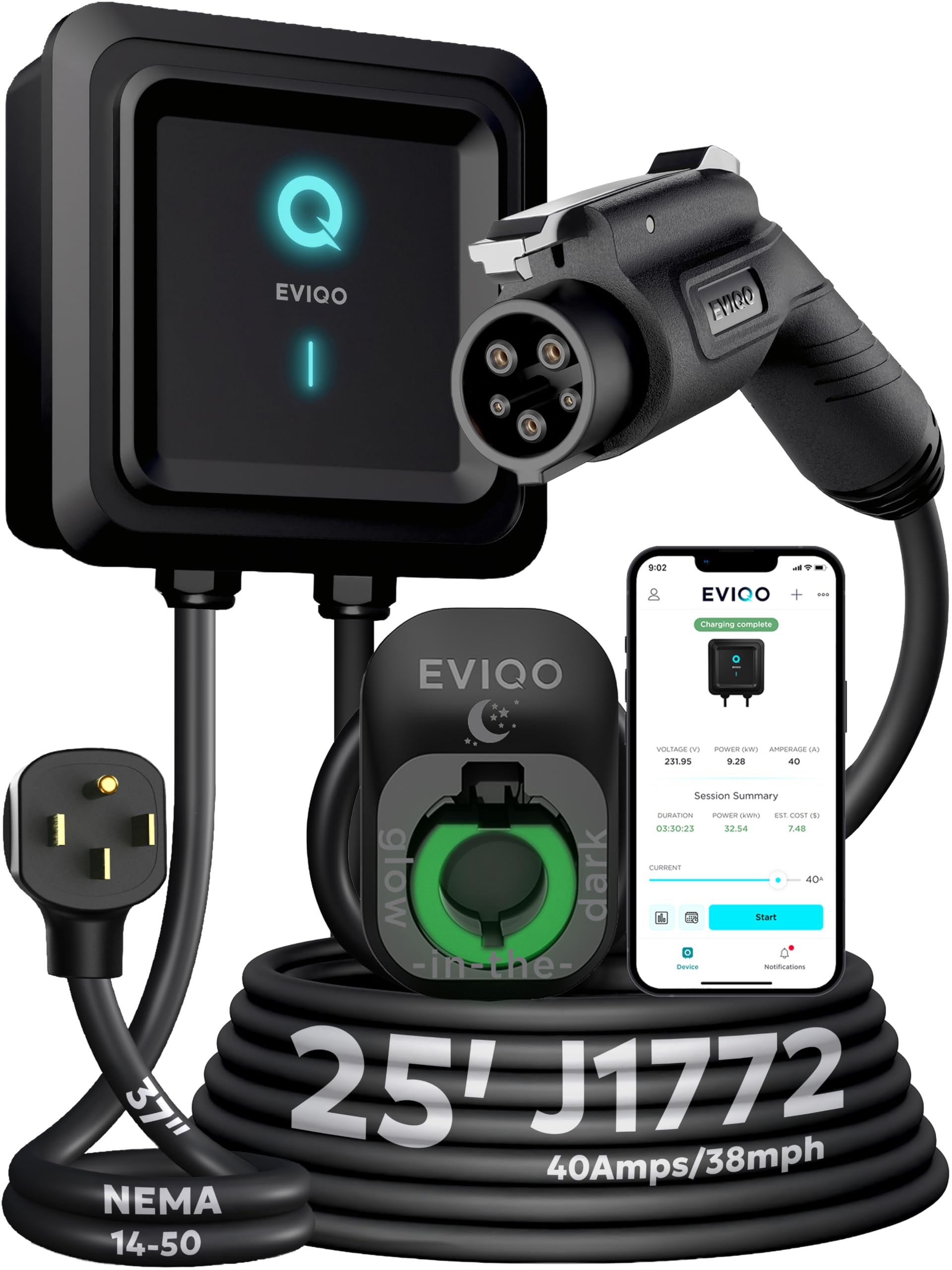
The Lectron Level 1 charger keeps things simple. There’s no adjustable amperage and no 240V plug option, just a reliable 120V charger built for overnight top-offs. Reviewers with PHEVs and shorter commutes report it adding a meaningful chunk of range by morning. The 2-year warranty is longer than most portable chargers in this category, which adds some peace of mind for a device that stays plugged in for hours at a time.
VDLPOWERVP Level 1&2 EV Charger
This charger fits drivers who need both 120V and 240V flexibility along with a cable long enough to reach across large parking areas.
Pros
- Dual NEMA 6-20 and NEMA 5-15 plug options
- 20-foot cable with lightweight, portable design
- IP65 waterproof housing
Cons
- FCC certified but not listed as ETL certified
- Lighter weight may mean thinner internal components
- Newer brand with a shorter track record
The VDLPOWERVP charger gives owners a way to charge slowly on a 120V outlet or faster on a 240V circuit, all in a unit that’s noticeably lighter than some competitors. Multiple reviewers compare it favorably to a Tesla mobile connector, noting cooler operation during long sessions. It lacks ETL certification, which some safety-conscious buyers may want to weigh against its lower weight and price.
Schumacher Electric Level 1 Charger
This charger appeals to buyers who want a name-brand Level 1 unit backed by an unusually long warranty.
Pros
- 3-year limited warranty, longest in this roundup
- 20-foot cable reaches both bays of a two-car garage
- UL and Energy Star certified
Cons
- Level 1 only, capped at 12 amps on 120V
- Some reviewers report intermittent fault errors
- Lower average rating than most competitors here
Schumacher built its reputation on automotive tools and batteries, and the SEV1670 brings that same straightforward approach to EV charging. It handles the basics well: plug into a household outlet, connect to the car, and let it charge overnight. A handful of reviewers report recurring fault messages that interrupt charging, which is worth noting given the otherwise strong warranty coverage backing the product.
QPQ Level 1 and 2 Portable EV Charger
This charger works well for drivers who travel often and want a compact, dual-voltage unit that packs down easily.
Pros
- 21-foot cable, longer than several competitors
- Replaceable NEMA 5-15 adapter for Level 1 use
- Includes a storage bag for travel
Cons
- Small number of reviews to draw on
- Lower best-seller ranking than more established brands
- No adjustable amperage settings
The QPQ charger checks the same boxes as pricier competitors: dual-voltage support, a J1772 connector, and IP65 weatherproofing. Its 21-foot cable gives it an edge in reach over several rivals in this list. Limited review volume makes it harder to judge long-term reliability, so buyers who prioritize a longer track record may want to compare it against better-established brands first.
Lectron EV Charger with App
This charger fits drivers who want to monitor and schedule charging sessions remotely through a smartphone app.
Pros
- Wi-Fi and app control for scheduling and monitoring
- IP65-rated control box
- Carrying case included for travel
Cons
- Level 1 only, capped at 12 amps
- Shorter 90-day warranty than other Lectron models
- Requires Wi-Fi setup, which adds a step for some users
This Lectron model adds smartphone control on top of standard Level 1 charging. Owners can check charging status, set a schedule, or cap the kWh delivered, all from an app instead of relying on the charger’s built-in display. It’s a good fit for anyone who wants to charge during off-peak hours without manually timing it. The tradeoff is a shorter 90-day warranty and a setup process that depends on a stable home Wi-Fi connection.
Buying Guide
Match the Charger to the Outlet, Not Just the Amp Rating
The amperage printed on the box only matters if the outlet can support it. A charger rated for 16 amps still charges at Level 1 speeds if it’s plugged into a standard 120V household outlet using an adapter. Before buying, check which outlets are available at home:
| Outlet Type | Voltage | Typical Use |
|---|---|---|
| NEMA 5-15 | 120V | Standard household outlet |
| NEMA 6-20 | 240V | Dedicated circuit, often added for EV charging |
| NEMA 14-50 | 240V | Common for RVs and higher-power EVSEs |
A charger with both a NEMA 6-20 plug and a NEMA 5-15 adapter offers the most flexibility, since it can be used now on a household outlet and later on a 240V circuit if one gets installed.
Understand EVSE and J1772 Basics
A portable charger is technically an EVSE, or electric vehicle supply equipment. It doesn’t charge the battery directly; it manages power flow safely between the outlet and the car’s onboard charger. The J1772 connector is the standard plug used by nearly every non-Tesla EV and PHEV sold in the US, so compatibility across brands is generally strong. Tesla owners need a separate J1772-to-Tesla adapter to use these chargers.
Prioritize Safety Certifications
Look for ETL or UL certification, which confirms a charger has passed independent safety testing for electrical shock and fire risk. Also check the IP rating, which measures resistance to dust and water. An IP65 or IP66 rating means the charger can handle rain and outdoor use without added risk.
Consider Cable Length and Portability
Cable lengths in this category typically range from 16 to 25 feet. A longer cable reaches across a two-car garage or from a house outlet to a driveway parking spot. Weight matters for anyone who travels with their charger; most portable units weigh between 6 and 8 pounds and come with a carrying case.
Know the Limits of Portable Chargers
Portable Level 1 and Level 2 chargers are convenient, but they can’t match the charging speed of a hardwired home charging station, which draws higher current from a dedicated circuit. Drivers with long commutes or larger batteries may eventually outgrow a portable charger and want a hardwired unit installed by a licensed electrician. For most daily drivers with shorter commutes, a portable charger paired with the right outlet covers overnight charging needs without that added expense.