
Every EV Connectors charging setup depends on matching the right connector to the right vehicle inlet, and getting that wrong can mean paying for hardware that never plugs in. J1772 remains the standard connector for most non-Tesla EVs sold in North America, while NACS (the Tesla-style plug) has become the connector of choice for newer chargers and vehicles switching over. Adapters bridge the gap between the two, but they are not interchangeable with full charging stations.
Home charging setups also involve more than the plug at the end of the cable. Amperage, voltage, circuit type, and whether a unit is hardwired or plugs into an outlet all affect how fast a vehicle charges and what installation looks like. A 48-amp charger on a 30-amp circuit will not deliver its rated output, and a NACS charger without an adapter will not charge a J1772 vehicle at all.
The safest approach is to identify your vehicle’s connector type and your home’s electrical capacity before comparing charging speed or smart features. This roundup separates full charging stations from adapters, inlet sockets, holsters, and high-current battery connectors so shoppers can match the right part to their setup.
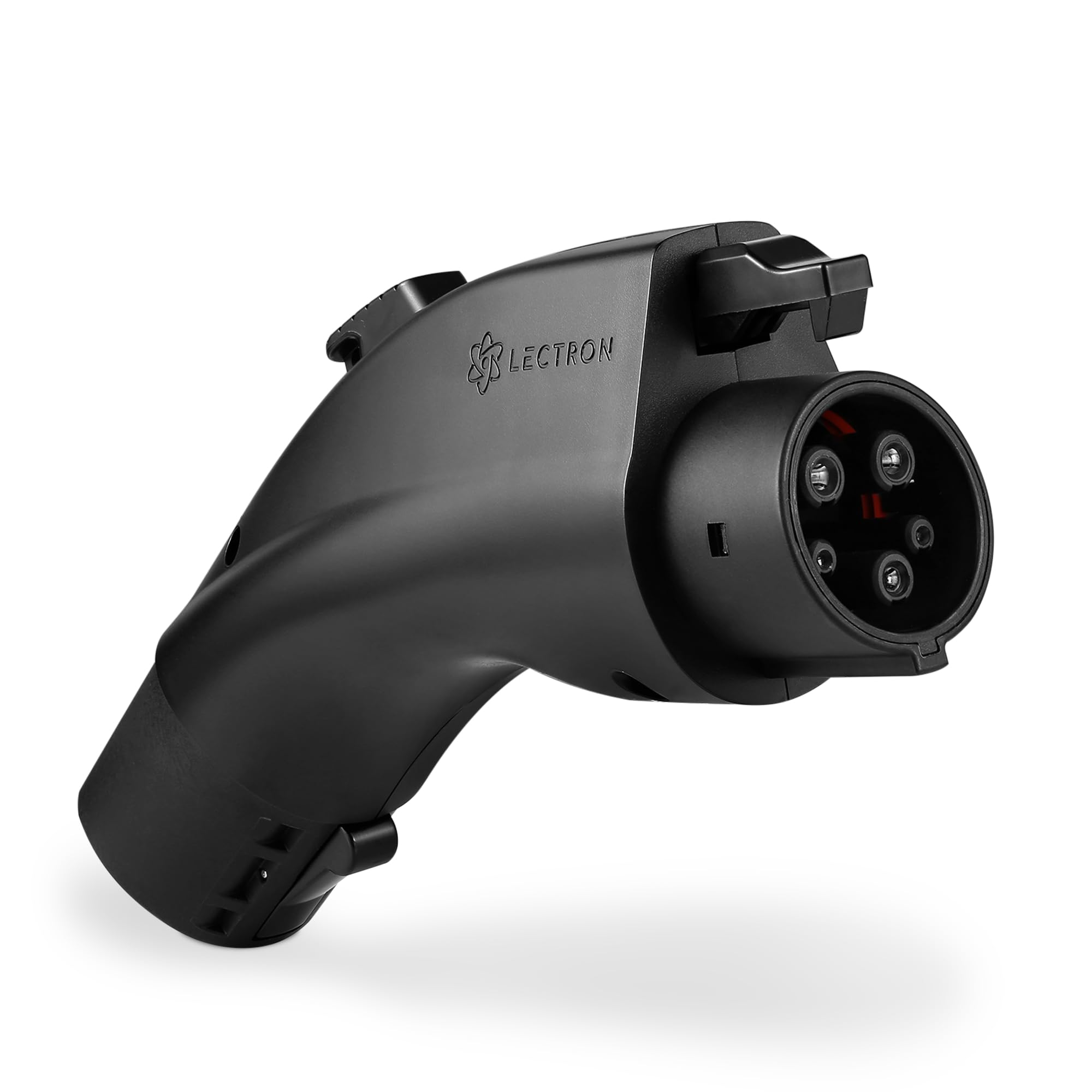
Best for Tesla-to-J1772 conversion: Lectron Tesla to J1772 EV Charging Adapter
Best for hardwired home installation: ChargePoint HomeFlex Level 2 EV Fast Charger
Best for plug-in flexibility: EVIQO Level 2 EV Charger J1772 40A
Best for budget-conscious plug-in charging: AIMILER Level 2 EV Charger
Best for high-amperage hardwired J1772 charging: EMPORIA Level 2 EV Charger
Best for native Tesla/NACS hardwired charging: EVIQO Level 2 EV Charger NACS
Best for adapting a 30-amp outlet to a 50-amp charger: 50Amp to 30Amp EV Charger Adapter Cord
Best for DIY charger repair or builds: SAE J1772 Type 1 Socket Inlet
Best for garage cable organization: Lectron Charger Nozzle Holster Dock
Best for high-current DIY power connections: FILFEEL 75A Battery Connectors
Lectron Tesla to J1772 EV Charging Adapter

This adapter is worth buying for J1772 drivers who want access to Tesla wall connectors and destination chargers, provided they understand it does not add fast-charging capability beyond 48 amps.
Pros
- Supports up to 48A and 240V, higher than many competing adapters
- Compatible with Tesla Wall Connectors, Destination Chargers, and Mobile Connectors
- Compact enough to store in a glovebox or trunk
Cons
- Some buyers report fit or lock-release issues over time
- Warranty support can be slow to resolve
- A few units arrived that did not match the advertised brand quality
This adapter opens up thousands of Tesla-branded charging points to J1772 vehicles like the Kia EV6, EV9, and various Audi and Volvo models. Reviewers confirm it works reliably with home Tesla Mobile Connectors and third-party NACS wall units. The UL 2251 safety certification adds confidence for regular use, though a handful of reviews mention the locking mechanism failing after months of outdoor use.
ChargePoint HomeFlex Level 2 EV Fast Charger
This hardwired charger suits homeowners who want a permanent, high-capacity J1772 station backed by a large public charging network.
Pros
- Adjustable output from 16A to 50A to match circuit capacity
- Access to ChargePoint’s network data and mobile app controls
- UL-certified with a 23-foot cable rated for indoor or outdoor mounting
Cons
- Hardwired install requires a licensed electrician
- Tesla drivers need a separate NACS adapter
- WiFi is required for full app functionality
The HomeFlex charges up to 9 times faster than a standard outlet, though actual speed depends on the vehicle’s onboard charger and the circuit’s amperage. A 50A circuit paired with a compatible EV delivers close to 37 miles of range per hour. The adjustable amperage setting lets one unit serve multiple electrical setups, which is useful for renters moving between homes with different panel capacities.
EVIQO Level 2 EV Charger J1772 40A
This plug-in charger fits drivers who want Level 2 speeds without hardwiring, as long as a NEMA 14-50 outlet is already installed. EV Connectors
Pros
- Plugs into a standard NEMA 14-50 outlet, no electrician needed for the unit itself
- IP66-rated housing for outdoor or indoor use
- Glow-in-the-dark holster helps locate the connector at night
Cons
- Requires an existing 14-50 outlet on a dedicated 50A circuit
- Tesla vehicles need their own J1772 adapter
- WiFi needs a 2.4GHz network, which some routers require configuring separately
The 25-foot cable reaches across most garages and driveways, and the adjustable 6A to 40A range lets owners tune output for their circuit. The app adds scheduling for off-peak charging, which can lower electricity costs depending on the utility’s rate plan. A side reset button avoids the need to cut breaker power for troubleshooting.
AIMILER Level 2 EV Charger
This charger works for shoppers who want a portable, adjustable-amperage J1772 EVSE at a lower cost than hardwired alternatives.
Pros
- Adjustable output between 16A and 32A to match different circuit breakers
- Includes a carrying bag for portability between locations
- Built-in leakage protection removes the need for a separate GFCI breaker
Cons
- Maximum 32A output is lower than some competitors
- Not compatible with Tesla vehicles without an added adapter
- Touch controls require pulling the connector out first, which can confuse new users
The NEMA 14-50 plug means no hardwiring, and the unit adjusts current based on the circuit breaker size, from 16A on a 20A circuit up to 32A on a 40A circuit. The touchscreen displays voltage, amperage, and charging time. The WiFi app tracks charging cost and history, useful for owners who split electricity costs or track EV expenses separately.
EMPORIA Level 2 EV Charger
This hardwired charger fits owners who want the highest available J1772 amperage in a compact, ENERGY STAR-certified unit.
Pros
- Supports up to 48A for faster charging on compatible vehicles and circuits
- ENERGY STAR certified with multiple UL safety listings
- 25-foot cable offers generous reach in garages or driveways
Cons
- Hardwired installation only, no plug-in option
- Tesla owners need a separate NACS charger or adapter
- Fewer user reviews than some competing brands
Rated at 48A on a 240V circuit, this charger can deliver up to 46 miles of range per hour, though that figure depends on the vehicle’s onboard charger accepting that rate. The included wall mount, cable holster, and mounting hardware simplify a clean garage installation. Emporia’s app supports charging schedules to take advantage of off-peak utility rates.
EVIQO Level 2 EV Charger NACS
This charger suits Tesla and NACS-equipped vehicle owners who want native charging without relying on an adapter.
Pros
- Built-in NACS plug works directly with Tesla and other NACS vehicles
- Supports up to 48A standard, with 50A available via DIP switch adjustment
- Weatherproof IP66 housing for outdoor mounting
Cons
- Requires hardwiring by a licensed electrician
- J1772 vehicles need a separate adapter, sold individually
- Needs a dedicated 60A circuit for full-rated output, or 70A for the 50A mode
The connector includes a button that opens a Tesla’s charge port automatically, a detail that saves a step compared to manual adapters. A dedicated 60A circuit is required to reach the full 48A output, and stepping up to 50A means upgrading to a 70A circuit and flipping internal DIP switches. This is a hardwired install only, so budget for an electrician alongside the unit cost.
50Amp to 30Amp EV Charger Adapter Cord
This adapter cord helps EV owners plug a 50A-ready charger into an existing 30A household outlet, though it is not designed for RV use.
Pros
- ETL listed for safety compliance
- Solid-molded plug and socket ends for a secure connection
- Compact 13-inch length keeps the setup low-profile
Cons
- Limits charging to 30A even if the charger supports more
- Explicitly not intended for RV outlets despite similar prong shape
- Only works with a NEMA 10-30 household outlet, not universal
This cord converts a NEMA 10-30P household plug into a NEMA 14-50R receptacle, letting portable EVSEs with a 14-50 plug connect to older 30A dryer-style outlets. It caps output at 30A regardless of the charger’s rated capacity, since the outlet itself becomes the limiting factor. The listing specifically warns against RV use, since RV pedestal wiring can differ from home 10-30 circuits.
SAE J1772 Type 1 Socket Inlet
This inlet socket is built for DIY EV conversions and charger repairs rather than everyday drivers, and it delivers solid build quality for that niche.
Pros
- Rated for 16A, 32A, 40A, or 50A depending on configuration
- IP44 protection rating during charging
- Silver-plated copper alloy pins for durable, low-resistance connections
Cons
- Not a plug-and-play consumer product
- Requires wiring knowledge or professional installation
- Limited buyer feedback compared to complete charger units
Reviewers who used this inlet in R&D and EV conversion projects report solid build quality and reliable performance under repeated use. It is a vehicle-side or charger-side connector, not an adapter or full EVSE, so it fits electricians and hobbyists building or repairing charging hardware. The UL94-V0 flame-retardant housing adds a layer of safety for permanent installations.
Lectron Charger Nozzle Holster Dock
This holster is a simple, effective way to keep a J1772 connector off the garage floor and protected between charges.
Pros
- Compatible with all standard J1772 connectors
- Easy surface mount with included screws and wall anchors
- Latches onto the connector nozzle to prevent it from falling out
Cons
- Plastic construction, not metal
- Drill bit size for anchors is not specified in the instructions
- Mounting position needs planning around cable slack
Reviewers consistently praise the clean look it gives a garage charging setup, along with the secure latch that holds the connector in place. It works with wall-mounted EVSEs and portable Level 1 chargers alike, based on user reports covering both use cases. This is a passive accessory, not a charger or adapter, so it will not affect charging speed or vehicle compatibility.
FILFEEL 75A Battery Connectors
This set of high-current connectors suits DIY electrical projects like solar setups or battery banks, not standard vehicle charging.
Pros
- Rated for 75A at up to 600V maximum
- Silver-plated brass contacts reduce resistance and wear
- Keyed design prevents incorrect connections between similar plugs
Cons
- Not designed for direct EV-to-charger connections
- Requires crimping or wiring skill to install
- Limited buyer reviews available at this time
These connectors work in solar inverters, UPS systems, and DC distribution setups where high current needs a secure, low-resistance connection. The polycarbonate cover withstands temperatures from -20°C to 125°C, and the flat wiping contact design cleans the surface with each connection cycle. This is a component for builders and installers, not a finished charging cable or adapter.
Buying Guide
Match the Connector to the Vehicle
The connector standard determines whether a product works with a given vehicle at all. J1772 is the standard plug for most non-Tesla EVs and plug-in hybrids sold in North America. NACS, originally Tesla’s proprietary connector, has become an open standard adopted by more automakers and charging networks.
| Connector Type | Common Vehicles | Adapter Needed For |
|---|---|---|
| J1772 | Most non-Tesla EVs (Ford, Chevrolet, Hyundai, Kia, Nissan, BMW, Audi, Rivian) | Charging at Tesla-branded stations |
| NACS | Tesla vehicles, newer EVs adopting NACS ports | Charging at J1772 stations |
Check the vehicle’s charge port before buying a charger or adapter. Some manufacturers already include an adapter in the box, which can make a separate purchase unnecessary.
Understand Amperage and Voltage
Amperage and voltage together determine maximum charging speed, but the vehicle’s onboard charger sets the real limit. A 48A charger will not charge faster than a vehicle’s onboard charger allows, even on a fully rated circuit.
- 16A-32A: Suitable for smaller circuits (20A-40A breakers); slower overnight charging
- 40A-48A: Requires a 50A-60A dedicated circuit; faster charging for compatible vehicles
- 50A+: Needs a 70A circuit or higher; only useful if the vehicle supports that input rate
Choose Between Hardwired and Plug-In Installation
Hardwired units connect directly to the home’s electrical panel and require a licensed electrician. Plug-in units connect to an existing outlet, usually a NEMA 14-50, and can be moved or replaced without rewiring.
Plug-in chargers offer more flexibility for renters or anyone who might relocate. Hardwired units tend to support higher amperage and often come with longer warranties tied to professional installation.
Check Weather Rating and Cable Length
Outdoor installations need a charger rated IP66 or NEMA 4 to resist rain, snow, and dust. Cable length matters for garages and driveways where the charging port position varies between vehicles; a 25-foot cable covers most parking configurations, while shorter cables may not reach.
Confirm Certifications
Look for UL, ETL, or Energy Star certification on any charger or adapter. These marks confirm the product met independent safety testing for electrical components, which matters given the voltage and current involved in EV charging.
Match Outlet Adapters Carefully
Adapter cords that convert one outlet type to another, such as a 30A household plug to a 50A charger receptacle, cap output at the lower-rated outlet. These adapters are not interchangeable with RV power cords even when the plug shape looks similar, since wiring and rated loads can differ between the two use cases.