
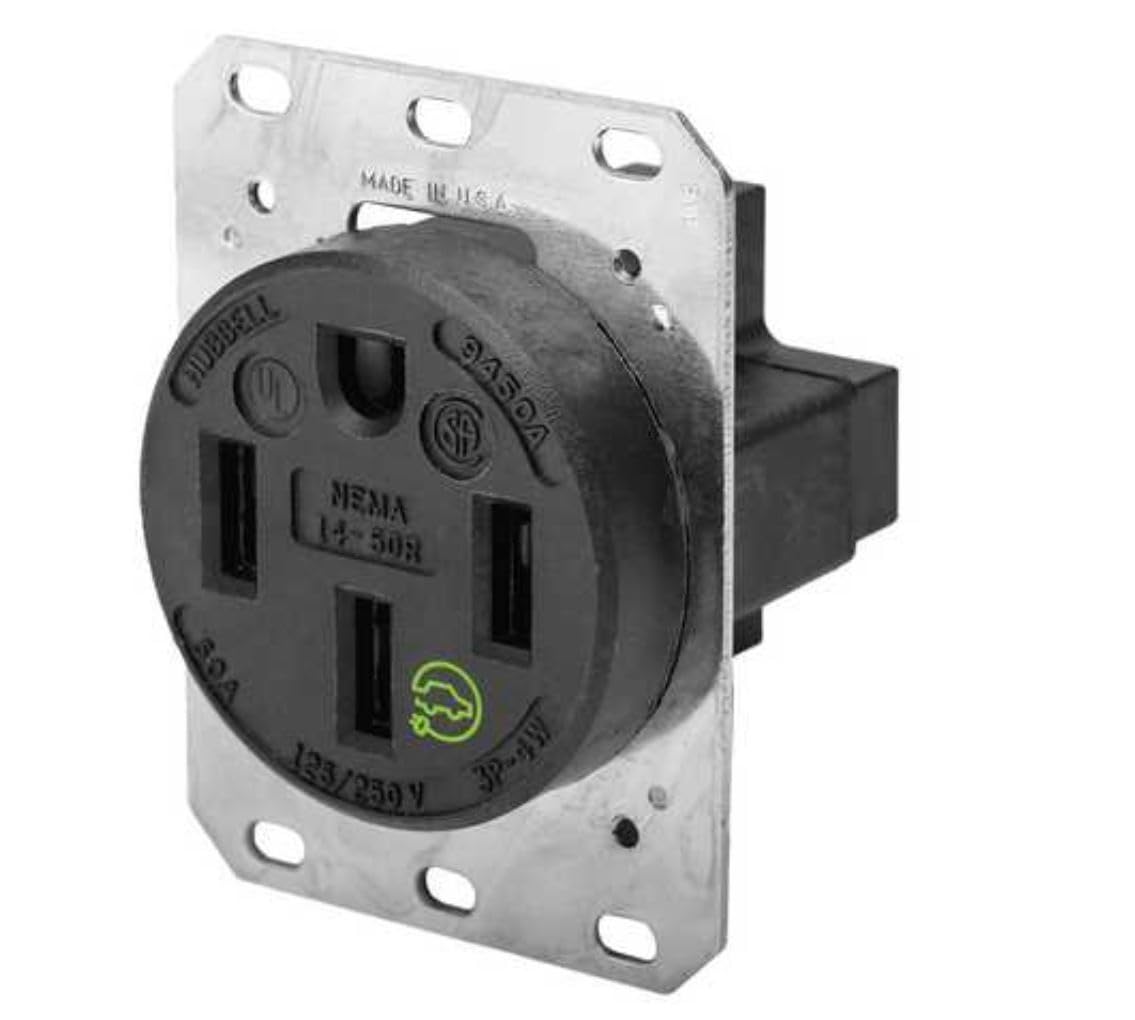
A NEMA 14-50 outlet is the standard connection point for most Level 2 EV Charging Outlet sold in the United States, and choosing the right one affects both charging speed and electrical safety. This receptacle handles 50 amps at 125/250 volts, enough power to run a home EV charging station, a large RV, or heavy appliances like an electric range. Getting this connection wrong, whether through a mismatched receptacle, poor wiring, or an underrated enclosure, can lead to overheating, melted plugs, or worse.
Not every 14-50 outlet is built for EV charging. Some are designed for occasional RV shore power, where plug-in cycles are less frequent and loads are lighter. EV charging demands a receptacle that can handle repeated insertions and hours of continuous high-amperage draw without heating up. The right choice depends on whether the installation is indoors or outdoors, permanent or exposed to weather, and whether it needs a self-contained enclosure or a simple flush-mount plate.
Material quality, wire gauge compatibility, and safety certification all affect long-term reliability. A receptacle rated for continuous EV use typically uses thicker brass contacts and higher torque-rated terminals than a standard household-grade outlet. Enclosures add another layer of protection for outdoor installations, guarding against rain, dust, and accidental disconnection. The following comparisons break down which designs suit garage installations, outdoor charging stations, and RV setups, so the right one gets picked before an electrician shows up.
Best for EV charging reliability: Hubbell 125V 50A 3-Pole 4-Wire Black Receptacle
Best for dedicated home EV charging: Leviton 50 Amp EV Charging Receptacle
Best for outdoor lockable installations: RVGUARD 50 Amp Power Outlet Box
Best value EV-grade receptacle: RVGUARD 50 Amp EV Charging Receptacle
Best all-in-one weatherproof kit: Leviton EVCVM-050 Outdoor Outlet
Best for multi-use RV and job site power: VEVOR Temporary Power Outlet Panel
Best budget outdoor enclosure: EXCELFU 50 Amp EV Power Outlet Box
Best pre-drilled installation box: Suplevel 50 Amp NEMA 14-50R Box
Best flush-mount receptacle: LIDER Weather-Resistant Flush Receptacle
Best compact weatherproof design: STARELO NEMA 14-50R Outlet Box
Hubbell 125V 50A 3-Pole 4-Wire Black Receptacle

This is a solid pick for buyers who want an industrial-grade replacement receptacle built to commercial standards.
Pros
- Copper construction with heavy-duty terminals
- Genuine OEM part trusted in commercial food service settings
- Fits standard two-gang electrical boxes
Cons
- No included wall plate
- Basic packaging with minimal documentation
- Limited weatherproofing for outdoor use
Owners consistently describe this receptacle as noticeably heavier and better built than cheaper alternatives. Several EV owners specifically bought it after comparing it to other brands and noting thicker terminal blades and a tighter grip on the plug. It requires a compatible electrical box rated for 4 or 6 gauge wire, so checking box size before installation matters. This receptacle suits indoor garage installations more than exposed outdoor spots.
Leviton 50 Amp EV Charging Receptacle
This receptacle is purpose-built for EV charging and stands out for handling extended charge cycles without overheating.
Pros
- Engineered specifically for repeated EV plug-in cycles
- High-impact nylon housing resists wear
- Pressure-wire terminals rated to 75 in-lbs for a secure connection
Cons
- Requires precise torque application during install
- Side-wired terminals can be tight in smaller boxes
- Not weatherproof on its own
Multiple reviewers replaced older, non-EV-rated outlets with this model after noticing overheating warnings from their car’s charging app. The pressure-wire terminals create a firm connection when tightened correctly, which several owners credit for resolving charging speed drops caused by loose wiring. Buyers using 8 AWG wire in a two-gang box should expect a tight fit. This model is a strong match for dedicated EV circuits.
RVGUARD 50 Amp Power Outlet Box
This complete outdoor panel suits buyers who need a weatherproof, lockable enclosure built around the receptacle itself.
Pros
- Heavy-gauge metal housing with powder coating
- Includes a lock for tamper and child safety
- Multiple knockout panels for flexible conduit routing
Cons
- Interior wiring space is tight for thick 6 AWG cable
- Knockouts can be difficult to remove cleanly
- Mounting holes are hard to access post-installation
This box is a common choice for RV parks and driveway EV charging stations that need to sit outdoors year-round. The rubber gasket under the knockout panel helps keep moisture away from the internal connections. Reviewers who installed 60-amp cable found the internal space cramped, so this box suits standard 50-amp EV setups better than heavier gauge wiring.
RVGUARD 50 Amp EV Charging Receptacle
This receptacle offers EV-grade construction at a lower price than many name-brand alternatives.
Pros
- Heavy-gauge brass contacts rated for continuous use
- Includes stainless steel wall plate and mounting screws
- ETL listed for the full receptacle and plate assembly
Cons
- Requires a two-gang or larger outlet box
- Torque spec for terminal screws is not printed on the unit
- Limited long-term track record compared to established brands
Buyers who compared this to pricier competitors found similar build quality at a lower cost, with brass terminal blades thicker than typical hardware store outlets. It works with 4, 6, or 8 AWG copper wire, giving some flexibility during installation. Several owners running EVs at 40 amps in hot garages reported no heat issues after a full season of use.
Leviton EVCVM-050 Outdoor Outlet
This pre-assembled kit combines a receptacle and weatherproof cover in one unit, cutting down on separate part sourcing.
Pros
- Comes pre-wired with a factory ground connection
- NEMA 3R rated galvanized steel resists rust and corrosion
- Cover locks securely even with a plug inserted
Cons
- Higher cost than buying receptacle and cover separately
- Surface-mount design needs adequate wall clearance
- Compatible mainly with Midwest B-series hubs for hub-style setups
This unit suits garages or exterior walls where a single, code-compliant part simplifies the electrician’s job. The welded flange and NEMA 3R rating provide meaningful protection against rain and snow exposure. Because it ships pre-assembled, less on-site fitting is required, which can reduce labor time during installation.
VEVOR Temporary Power Outlet Panel
This panel fits buyers who need multiple outlet types in one weatherproof box rather than a single dedicated EV receptacle.
Pros
- Combines 50A, 30A, and 20A GFCI outlets in one unit
- IP54 waterproof rating with auto-disconnect on water contact
- Pre-connected grounding wires simplify setup
Cons
- Bulkier than single-receptacle boxes
- Primarily marketed for temporary or job site power, not permanent EV charging
- Heavier at nearly 12 pounds, requiring sturdier mounting
This panel works well for job sites, temporary RV hookups, or properties that need flexible power options in one location. The three-outlet design covers a broader range of equipment than a dedicated EV outlet box. Buyers planning permanent home EV charging should weigh whether a single-purpose receptacle better matches long-term needs.
EXCELFU 50 Amp EV Power Outlet Box
This enclosure delivers ETL-listed outdoor protection at a competitive price, with a caveat around drilling.
Pros
- Rainproof NEMA 3R metal enclosure with lockable door
- Brass terminal blades and copper contacts for reliable conductivity
- Enough interior space to close the lid around a large plug handle
Cons
- Marked knockout circles are not pre-cut, requiring a drill and hole saw
- Some assembly instructions require checking the product video
- Heavier gauge wire installation takes extra care
Reviewers who installed this for Tesla charging setups reported solid performance once wiring was complete. The lack of true pre-drilled knockouts surprised several buyers, who needed a hole saw to finish conduit entry points. Once installed, owners describe the enclosure as rugged and well-sealed against dust and rain.
Suplevel 50 Amp NEMA 14-50R Box
This box stands apart with genuine pre-drilled knockout kits, addressing a common complaint with similar enclosures.
Pros
- Three pre-drilled knockout kits in different sizes
- EV-grade self-grounding receptacle built into the box
- ETL and UL specifications met for indoor and outdoor use
Cons
- Newer to market with a shorter review history
- Compatible wire range tops out at 4 AWG
- Requires hex wrench for terminal wiring
The pre-drilled replacement knockouts solve a frustration common to competing outdoor boxes that require manual drilling. Terminal screws call for 75 in-lbs of torque, matching the standard for EV-grade connections. The 24-month warranty adds a bit of extra assurance for buyers wary of newer brands.
LIDER Weather-Resistant Flush Receptacle
This flush-mount receptacle suits buyers who want a clean, wall-mounted look without a bulky exterior box.
Pros
- Includes a stainless steel wall plate
- Compatible with both copper and aluminum wiring
- UL listed with self-grounding design
- EV Charging Outlet
Cons
- No enclosure, so it depends on the surrounding box for weather protection
- Best installed with a hex head screwdriver or power tool for proper torque
- Limited long-term outdoor exposure data
This receptacle works for garages or covered exterior walls where full enclosure boxes are unnecessary. Compatibility with 6 to 4 AWG wire covers most home EV charging installations. The matte black finish and flush design give it a more finished appearance than boxed alternatives.
STARELO NEMA 14-50R Outlet Box
This compact box combines a receptacle and protective cover for buyers who want a simpler, lighter-weight enclosure.
Pros
- IP66 protection rating when the cover is closed
- ETL listed with 3-pole, 4-wire grounding design
- Compact footprint compared to metal enclosure boxes
Cons
- Only water-resistant when the cover is fully closed
- Limited interior space for 6 AWG wire
- Plastic housing rather than metal construction
Owners who installed this for EV charging describe it as solid once mounted, with several noting the compact design looks clean against a garage or exterior wall. The recommendation to use 8 or 10 AWG wire instead of 6 AWG reflects its smaller interior cavity. This box fits installations where space is limited and full weatherproofing during rain isn’t a priority.
Buying Guide
Understand What NEMA 14-50 Means
A NEMA 14-50R receptacle is a 3-pole, 4-wire grounding outlet rated for 125/250 volts and 50 amps. It supplies the two hot wires, a neutral, and a ground needed for most Level 2 EV chargers and RV shore power connections. Confirming the “R” for receptacle (versus “P” for plug) matters when matching parts.
EV Charging Outlet vs. Standard RV Receptacles
EV charging draws continuous high current for hours, while RV connections often see shorter, lighter use. Receptacles marketed specifically for EV charging use thicker brass contacts and stronger terminal clamps designed to handle that sustained load without overheating. Standard RV-rated outlets can work for occasional charging, but they are not always built for daily, extended use.
| Use Case | Recommended Design |
|---|---|
| Daily home EV charging | EV-grade receptacle with high-torque terminals |
| Occasional RV shore power | Standard NEMA 14-50R outlet |
| Outdoor installation | Lockable weatherproof enclosure (NEMA 3R rated) |
| Indoor garage installation | Flush-mount receptacle with wall plate |
Enclosure and Weather Ratings
Outdoor installations need protection from rain, dust, and accidental contact. Look for a NEMA 3R rating, which confirms the enclosure sheds falling rain and resists corrosion. A lockable cover adds a layer of security against tampering and unauthorized use.
Wiring and Torque Specifications
Wire gauge compatibility varies by product, with most units supporting 4 to 8 AWG copper wire. Terminal screws typically require torquing to a specific value, often around 75 in-lbs, to keep connections tight and prevent arcing. Skipping this step is a common cause of overheating in DIY installations.
Installation and Code Compliance
A licensed electrician should handle the wiring, breaker sizing, and permit process for any 50-amp circuit. Local electrical codes govern conduit type, box sizing, and outdoor placement, and requirements vary by jurisdiction. Confirming breaker compatibility before purchase avoids mismatched amperage between the panel and receptacle.
Certification Labels to Check
ETL and UL listings confirm a product has passed independent safety testing for electrical and fire hazards. These certifications matter for any receptacle or enclosure carrying 50 amps of continuous current. Products without a visible certification mark deserve extra scrutiny before installation.