
Setting up home EV Charger Installation means choosing equipment that matches the electrical work already planned, or the work an electrician will need to do. A Level 2 charger cuts charging time from a full day down to a few hours by using a 240-volt circuit instead of a standard wall outlet. That speed makes it the standard choice for anyone charging an EV at home.
Some chargers plug into an existing outlet, while others connect directly to household wiring and require a licensed electrician. The connector type matters too: J1772 works with nearly every non-Tesla EV sold in North America, while NACS is built for Tesla vehicles and newer models adopting that standard. Amperage, cable length, and weather resistance also shape how well a unit fits a specific garage or driveway.
The right charger depends on the electrical setup already in place at home, the vehicle’s connector type, and whether the installation will happen indoors or outside. This roundup compares eight products, from full charging stations to the outlet boxes and cable holders that support a complete setup.
Best hardwired smart charger: ChargePoint HomeFlex Level 2 EV Fast Charger
Best plug-in charger for easy setup: EVIQO 40A NEMA 14-50 Charger
Best hardwired charger for higher amperage: EVIQO 48A Hardwired Charger
Best for Tesla and NACS vehicles: EVIQO NACS 48A Hardwired Tesla Charger
Best for a clean, low-profile install: EMPORIA 48 Amp Hardwired Charger
Best budget-friendly plug-in charger: ELEGRP 40Amp Portable Charger
Best outdoor outlet box for a plug-in setup: EXCELFU NEMA 14-50R Outlet Box
Best cable organizer accessory: MECMO J1772 Holster and Wall Mount
EV Charger Installationhome ev charger installation
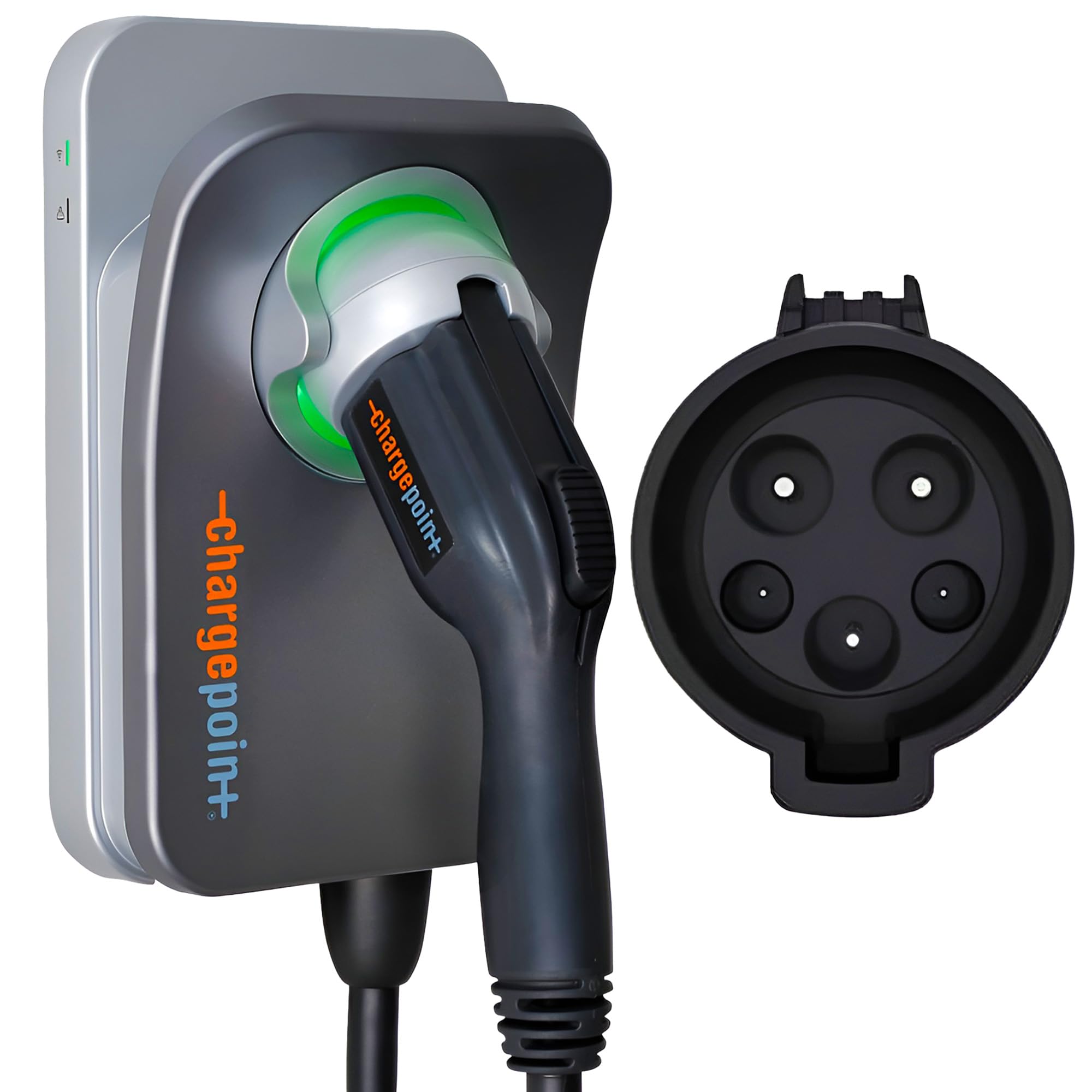
ChargePoint HomeFlex Level 2 EV Fast Charger

This is a solid pick for homeowners who want a flexible, hardwired charger backed by a large public charging network.
Pros
- Adjustable output from 16A to 50A to match circuit capacity
- Indoor/outdoor rated with a cold-resistant 23-foot cable
- Backed by a large public charging network and app
Cons
- Requires professional hardwiring, adding install cost
- Tesla drivers need a separate adapter
- WiFi needed for full smart features
The HomeFlex stands out for its adjustable amperage, letting an electrician configure it anywhere between 16A and 50A depending on the home’s dedicated circuit. That flexibility makes it a good fit for homes with older panels or limited amperage available. The J1772 connector serves nearly every non-Tesla EV on the road.
Because it’s hardwired, installation isn’t a simple DIY task. A licensed electrician needs to run wiring and connect it to a dedicated circuit, which adds to the total project cost. The tradeoff is a permanent, weatherproof setup rated for outdoor use, plus access to ChargePoint’s network of public stations for charging away from home.
EVIQO 40A NEMA 14-50 Charger
This charger suits homeowners who already have (or plan to add) a NEMA 14-50 outlet and want to avoid hardwiring costs.
Pros
- Plugs into a standard NEMA 14-50 outlet, no hardwiring needed
- 25-foot cable reaches across most garages or driveways
- IP66-rated housing for indoor or outdoor use
Cons
- Requires a dedicated 50A circuit and correct outlet type
- Needs 2.4 GHz WiFi for app features
- Fixed at 40A output, less flexible than adjustable models
Because it plugs into a NEMA 14-50 outlet instead of hardwiring, this charger works well for homeowners who already have that outlet installed or plan to add one during a simpler electrical job. It still needs a dedicated 50A circuit, so an electrician is often part of the process even without hardwiring.
The 25-foot cable and sealed housing make it practical for garages and covered driveways. App-based scheduling helps with off-peak charging, and the glow-in-the-dark holster is a nice touch for nighttime plug-ins.
EVIQO 48A Hardwired Charger
This hardwired option fits homeowners who want higher charging output and have a 60A (or 70A) circuit available.
Pros
- Delivers up to 48A, with a DIP switch option for 50A
- Weatherproof IP66 housing for indoor/outdoor placement
- Reset button simplifies troubleshooting
Cons
- Requires professional hardwired installation
- Needs a dedicated 60A or 70A circuit
- No connector for Tesla vehicles without an adapter
This EVIQO model steps up from the plug-in version with a hardwired connection and higher output. A dedicated 60A circuit supports the standard 48A setting, and homes with a 70A circuit can unlock 50A through DIP switch settings, something an electrician can configure during install.
The sealed housing and steel shielding hold up in garages and outdoor spots exposed to weather. J1772 compatibility covers most non-Tesla vehicles, and the app tracks energy use alongside scheduling tools for off-peak charging.
EVIQO NACS 48A Hardwired Tesla Charger
Tesla owners looking for a dedicated NACS charger without adapters will find this version a direct match for their vehicle.
Pros
- Native NACS plug works directly with Tesla vehicles
- Button on the plug pops open the Tesla charge port
- Same 48A output and weatherproofing as the J1772 version
Cons
- Non-Tesla EVs need a separate J1772 adapter
- Requires hardwired installation by an electrician
- Needs a dedicated 60A or 70A circuit
This charger shares the same hardwired design and 48A output as its J1772 sibling, but swaps the connector for a native NACS plug. That means no adapter is needed for Tesla vehicles, and the plug even includes a button to open the car’s charge port.
Non-Tesla EV owners can still use it with a NACS-to-J1772 adapter, though that adds a step and a separate purchase. The same weatherproof housing and app features carry over from the J1772 version, making it a strong match for Tesla-only households.
EMPORIA 48 Amp Hardwired Charger
This charger works well for homeowners who want a compact, hardwired unit with a clean white finish and strong safety certifications.
Pros
- UL listed and ENERGY STAR certified
- 25-foot cable and wall mount included
- Meets multiple national safety standards (NEC 625, SAE J1772)
Cons
- Hardwired install requires an electrician
- No adjustable amperage settings mentioned
- Tesla owners need a different Emporia model
Emporia’s charger comes preconfigured for a hardwired installation with a whip already attached, which can simplify the electrician’s job. Its 48A output charges most EVs overnight, and the white housing blends into garages more discreetly than darker units.
Safety certifications cover a wide range of standards, giving buyers confidence in the build quality. The app handles scheduling and energy tracking over 2.4 GHz WiFi, though this specific model is built for J1772 vehicles only.
ELEGRP 40Amp Portable Charger
This plug-in charger fits budget-minded buyers who want adjustable amperage without a hardwired install.
Pros
- Five adjustable current levels (16 to 40A)
- NEMA 14-50 plug avoids hardwiring costs
- Rated for extreme temperatures, -21°F to 121°F
Cons
- Shorter warranty than competing hardwired models
- Power cord to the outlet is on the shorter side
- Tesla compatibility requires a separate adapter
The ELEGRP charger offers five amperage settings, giving homeowners more control over how much power it draws based on their circuit. That flexibility makes it useful in homes where the electrical panel can’t support a full 50A circuit.
Reviewers note fast, reliable charging performance and responsive customer support when issues come up. The main tradeoff is a shorter power cord on the plug end, which can limit outlet placement flexibility compared to hardwired options.
EXCELFU NEMA 14-50R Outlet Box
This outlet box is the right choice for anyone installing a plug-in charger outdoors and needing weatherproof, lockable protection.
Pros
- ETL listed with a rainproof Type 3R enclosure
- Lockable doors deter tampering and power theft
- Compatible with standard 50A NEMA 14-50P plugs
Cons
- Requires drilling for wiring, no true pre-cut knockouts
- Heavier metal construction adds installation effort
- Sold separately from any charging unit
This outlet box gives plug-in chargers a secure, outdoor-rated home. The metal enclosure resists rain, snow, and dust, and the lockable design helps prevent theft or tampering with a home charging setup.
Reviewers mention the marked circles for wiring aren’t true knockouts, so an electrician will need a drill and hole saw during install. Once mounted, the box holds up well and provides enough interior space for heavy gauge wiring.
MECMO J1772 Holster and Wall Mount
This accessory helps keep a J1772 charging cable organized and off the garage floor after installation.
Pros
- Holds up to 60 pounds, supporting heavy cables
- Stainless steel and thick plastic resist wear and weather
- Dock and J-hook can be mounted separately for flexibility
Cons
- Compatible with J1772 connectors only
- Requires drilling into a wall for mounting
- Sold without any charging equipment
A charging cable left on the ground creates a tripping hazard and wears out faster from repeated coiling. This wall mount holds the J1772 connector securely while the J-hook manages the length of cable between uses.
Stainless steel construction stands up to outdoor exposure, and the separate dock and hook pieces allow for flexible placement based on garage layout. Installation only requires basic screws, making it one of the simpler additions to any home charging setup.
EV Charger Installation Buying Guide
Hardwired vs. Plug-In Installation
Hardwired chargers connect directly to a home’s electrical panel and need a licensed electrician for a safe, code-compliant install. Plug-in chargers use a NEMA 14-50 outlet, which still requires an electrician to install the outlet itself but allows the charger to be unplugged or moved later.
| Factor | Hardwired | Plug-In |
|---|---|---|
| Install complexity | Higher, permanent wiring | Moderate, outlet-based |
| Flexibility | Fixed location | Can be relocated |
| Typical amperage | Often higher (48-50A) | Often 40A |
Amperage and Circuit Requirements
Higher amperage means faster charging, but it also demands a larger dedicated circuit. A 40A charger typically needs a 50A circuit, while a 48A charger often needs a 60A circuit. Check the home’s electrical panel capacity before choosing a charger, since older homes may need a panel upgrade to support higher amperage.
Connector Type
J1772 connectors work with nearly all non-Tesla EVs sold in North America. NACS connectors are built for Tesla vehicles and a growing number of newer EV models. Tesla owners can use a J1772 charger with an adapter, and non-Tesla drivers can use a NACS charger with the reverse adapter.
Cable Length and Reach
A 25-foot cable covers most garages and driveways, reaching a vehicle parked in different spots without repositioning. Measure the distance from the planned mounting spot to where the vehicle typically parks before choosing a charger.
Weather Resistance
Outdoor installations need a charger rated for rain, snow, and temperature extremes. Look for an IP66 or NEMA 4 rating, which indicates a sealed housing that keeps out moisture and dust.
Smart Features
WiFi-connected chargers allow scheduling, energy tracking, and remote start/stop through a mobile app. A 2.4 GHz WiFi connection is standard for most smart chargers, and a stronger antenna helps maintain a stable connection in garages or basements with weak signal.