
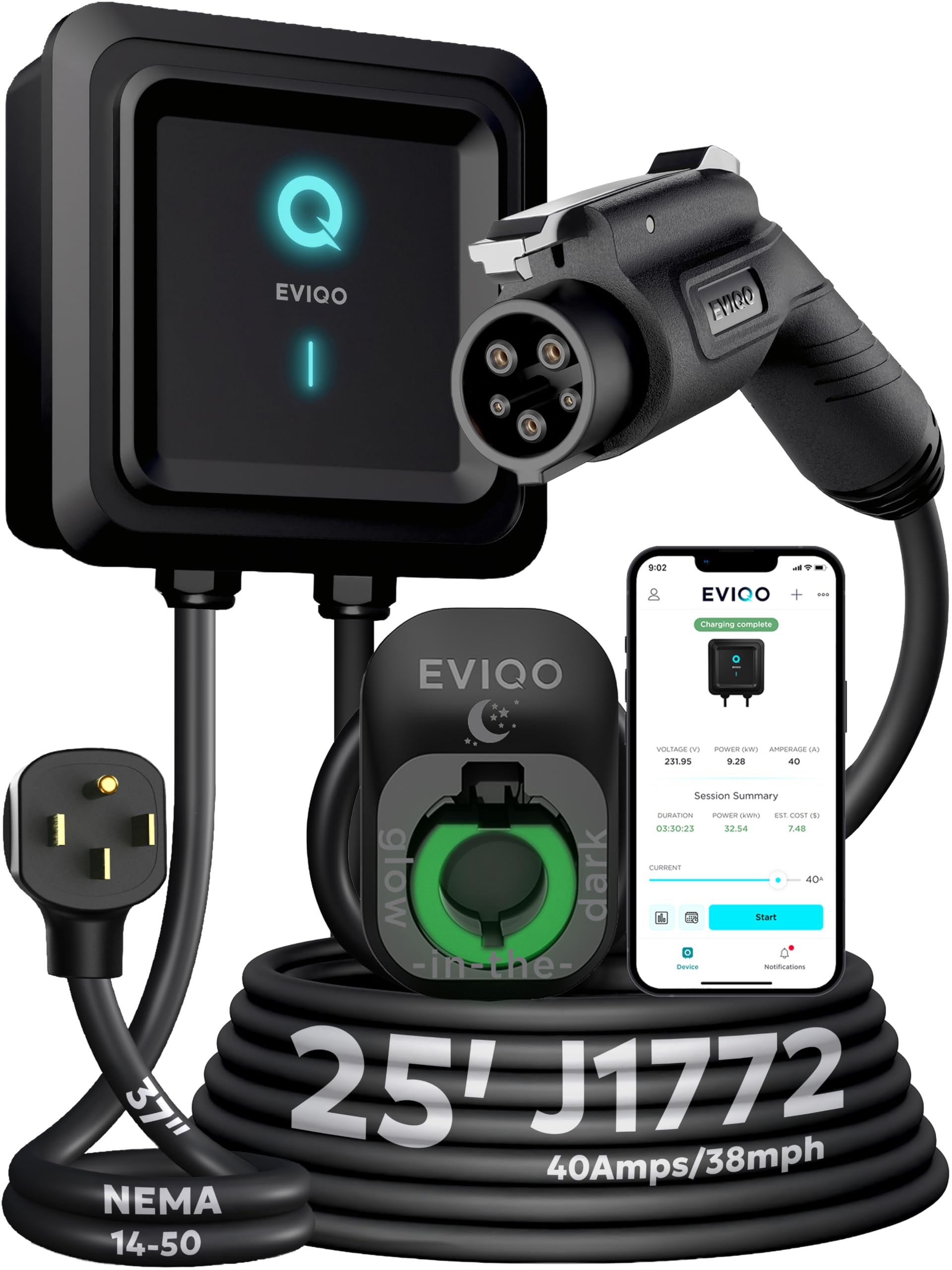
Charging an electric car at home comes down to one choice: how fast do you need to refill the battery overnight. A standard wall outlet trickles in a few miles of range per hour, which works for short commutes but leaves little buffer on busier weeks. A dedicated ev charger home setup, known as a Level 2 charger, uses a 240-volt circuit to add power several times faster, so a depleted battery can return to a full charge in a matter of hours instead of a full day.
Level 2 chargers fall into two installation types. Plug-in models connect to an outlet like a NEMA 14-50, the same style used for RVs and electric ranges, and can be moved or swapped if needed. Hardwired models connect directly to the electrical panel through a dedicated circuit installed by a licensed electrician, and they tend to support higher amperage. Connector type matters too: J1772 is the standard plug for nearly every non-Tesla EV, while NACS (also called the Tesla connector) is now expanding to other automakers as well.
Before buying, confirm the vehicle’s connector type, the charger’s maximum amperage against the home’s electrical panel capacity, and whether the installation will be a plug-in or hardwired setup, since these three factors determine both charging speed and installation cost. Weatherproofing ratings matter for garage or outdoor mounting, and smart features like WiFi scheduling can help shift charging to off-peak electricity hours. The chargers below cover a range of amperages, connector types, and installation styles to match different homes and vehicles.
Best overall: EVIQO Level 2 EV Charger J1772 40A
Best for daily home charging with app control: EMPORIA Level 2 EV Charger
Best hardwired charger with network access: ChargePoint HomeFlex
Best hardwired unit for maximum home charging speed: EVIQO Level 2 EV Charger J1772 48A Hardwired
Best for buyers who want an established charger brand: Autel 40A Level 2 EV Charger
Best budget plug-in charger: AIMILER Level 2 EV Charger
Best portable charger for backup or travel: EVDANCE Level 1&2 EV Charger
Best budget Level 2 charger with adjustable current: EVDANCE Level 2 EV Charger 32Amp
Best for multi-charger homes with load balancing: IYILO Level 2 EV Charger for Tesla
Best Tesla/NACS hardwired charger: EVIQO Level 2 EV Charger NACS 48A
EVIQO Level 2 EV Charger J1772 40A

This plug-in charger suits most households that already have or plan to install a NEMA 14-50 outlet and want strong app features without hardwiring.
Pros
- Plugs into a standard NEMA 14-50 outlet, no electrician needed for the connection itself
- App lets owners schedule off-peak charging and track energy use
- IP66-rated housing suits both garage and outdoor mounting
Cons
- Requires a dedicated 50A circuit, which may need an electrician to install
- WiFi setup can be finicky for some users
- Maximum 40A output is lower than some hardwired competitors
The 25-foot cable reaches across most garages and driveways, and the glow-in-the-dark holster is a small but genuinely useful touch for nighttime plug-ins. Certification through UL, ETL, and Energy Star backs up its safety claims. Reviewers note flawless daily use with vehicles like the Hyundai Kona, though one buyer flagged a shorter-than-expected connecting cable near the unit itself.
EMPORIA Level 2 EV Charger
This charger works well for anyone who wants flexibility to start with a plug-in setup now and convert to hardwired later for higher output.
Pros
- Can run as a 40A plug-in unit or be converted to 48A hardwired
- Compact design at under 17 pounds
- Strong app reviews for ease of setup and data tracking
Cons
- Hardwiring requires professional installation for full 48A output
- Back panel uses eight screws, which adds installation time
- Some early units had connectivity issues reported by a small number of buyers
The dual installation option makes this charger practical for renters or owners planning an electrical upgrade down the road. It carries UL listing and Energy Star certification, and reviewers across several EV models, including the Chevy Bolt and Ioniq 6, report reliable daily charging. One reviewer noted a defective unit needed replacement, a reminder to test the charger soon after installation.
ChargePoint HomeFlex
This hardwired charger fits buyers who want access to ChargePoint’s public charging network alongside home charging.
Pros
- Adjustable output from 16A to 50A to match different circuit sizes
- Backed by one of the largest EV charging networks in North America
- UL certified with a cold-resistant cable for outdoor use
Cons
- Requires professional hardwired installation
- App requires WiFi for full functionality and some troubleshooting
- Rated slightly lower by owners than several competitors in this roundup
ChargePoint’s long track record in the public charging space carries over into this home unit, and the adjustable amperage lets one charger serve circuits from 20A to 80A. The 23-foot cable is a bit shorter than some plug-in competitors’ 25-foot cables. Buyers who value network access and smart home integration will find this a solid hardwired option, even if it costs more than simpler plug-in chargers.
EVIQO Level 2 EV Charger J1772 48A Hardwired
This hardwired charger fits homeowners with a 60A circuit already planned who want the fastest overnight charging in the EVIQO lineup.
Pros
- Delivers up to 48A, with a DIP switch option to unlock 50A on a 70A circuit
- Same weatherproof IP66 housing and app features as the plug-in EVIQO model
- 25-foot cable for reach in larger garages
Cons
- Requires a licensed electrician for hardwired installation
- Needs a 60A (or 70A for the higher setting) dedicated circuit, which may mean a panel upgrade
- No plug-in option if the home’s outlet setup changes later
- EV Charger Home
Hardwiring removes the outlet from the equation entirely, which some homeowners prefer for a cleaner installation and slightly higher reliability. The tradeoff is less flexibility if the charger ever needs to move. Buyers should confirm their panel can support a 60A or 70A dedicated circuit before choosing this model over the plug-in 40A version.
Autel 40A Level 2 EV Charger
This charger suits buyers who want a recognized automotive electronics brand behind their home charging setup.
Pros
- Backed by Autel, a long-standing name in automotive diagnostic equipment
- Five-minute plug-in setup with a NEMA 14-50 outlet
- RFID access adds a security layer against unauthorized use
Cons
- Fewer total reviews than several competitors, so long-term reliability data is thinner
- 40A maximum output caps charging speed on the higher end
- NEMA 4X rating is strong, but direct sun and heavy rain exposure still call for caution
Autel’s engineering background in vehicle electronics lends some credibility to this charger’s build quality claims. The adjustable 16A to 40A range and app scheduling cover the core smart charging features buyers expect. It is a reasonable pick for anyone who prioritizes brand reputation over the largest available review count.
AIMILER Level 2 EV Charger
This charger is a solid budget pick for owners who want Level 2 speeds without paying for a 48A unit they may not need.
Pros
- Adjustable output (16A, 24A, or 32A) to match different circuit breakers
- Built-in leakage protection removes the need for a separate GFCI breaker in most cases
- Touch screen displays amperage, speed, and delay settings clearly
Cons
- Maximum 32A output is lower than several other chargers in this list
- Touch controls require pulling out the charging gun first, which some find inconvenient
- WiFi reset process is more involved than plug-and-play competitors
At 32A, this charger charges more slowly than 40A or 48A units, but 32A still charges roughly six times faster than a standard wall outlet. The adjustable amperage settings make it adaptable to 20A, 30A, or 40A breakers. It is a practical choice for buyers focused on value rather than maximum charging speed.
EVDANCE Level 1&2 EV Charger
This portable charger fits renters, apartment dwellers, or anyone who wants a backup charging option that plugs into a standard household outlet.
Pros
- Works with common NEMA 5-15 (120V) and NEMA 6-20 (240V) outlets
- Included adapter allows switching between Level 1 and Level 2 speeds
- Comes with a carry bag for travel or storage
Cons
- Maximum 16A output is far below dedicated Level 2 chargers
- Not compatible with NEMA 14-50, 14-30, or 6-50 outlets without a separate adapter
- Shorter one-year warranty compared to the three-year terms common elsewhere in this list
This charger will not replace a dedicated Level 2 station for daily full-battery charging, since 16A charging adds only about 10 to 12 miles of range per hour under ideal conditions. It works well as a portable backup for travel, or for plug-in hybrid owners with smaller batteries. The plain LED display keeps the interface simple, with no app required.
EVDANCE Level 2 EV Charger 32Amp
This charger works for buyers who want adjustable Level 2 charging without an app or WiFi dependency.
Pros
- No app required; controls and settings live on the unit’s LED screen
- Adjustable current from 10A to 32A for different circuit breakers
- Comes with a carrying case for portability between locations
Cons
- No smart scheduling or remote monitoring since there’s no companion app
- One-year warranty is shorter than several competitors
- A small number of reviewers reported the connector failing to lock into the vehicle over time
Skipping the app keeps this charger’s setup simple, which some buyers prefer over troubleshooting WiFi connections. The tradeoff is no remote start, scheduling, or energy tracking from a phone. Reviewers who plugged this into a Chrysler Pacifica Hybrid or Mazda CX-90 PHEV reported noticeably faster charging than the factory-included 120V cord.
IYILO Level 2 EV Charger for Tesla
This hardwired NACS charger fits Tesla owners who may add a second EV and want to share one circuit between two chargers.
Pros
- Power Sharing lets two chargers run safely on a single breaker
- Built-in temperature sensor in the connector monitors for overheating
- Supports several utility EV charging incentive programs
Cons
- Requires hardwired installation on a 60A dedicated circuit
- Native NACS connector needs a separate adapter for J1772 vehicles
- Fewer reviews available since this is a newer listing
The temperature sensor and automatic power reduction feature stand out as a safety layer other chargers on this list don’t specify in the same detail. Load balancing support also makes this a forward-looking pick for households expecting to add a second EV. Buyers with only J1772 vehicles should plan for an adapter purchase, since it is not included.
EVIQO Level 2 EV Charger NACS 48A
This hardwired charger is built for Tesla owners who want a native NACS connector with the same app and weatherproofing features as EVIQO’s J1772 models.
Pros
- Native NACS connector opens the Tesla charge port automatically
- Up to 48A (or 50A with a DIP switch change) on a hardwired install
- Same IP66 weatherproof housing and glow-in-the-dark holster as EVIQO’s other chargers
Cons
- Requires professional hardwired installation on a 60A or 70A circuit
- Non-Tesla J1772 vehicles need a separate adapter, not included
- Fewer total reviews than EVIQO’s original J1772 charger
Since NACS is becoming the shared standard across more automakers, this charger gives Tesla owners a direct connection without an adapter, while still working for other NACS-equipped EVs. The hardwired install and higher amperage suit garages already wired for a 60A circuit. Owners of J1772 vehicles should budget for an adapter if they plan to share this charger across multiple cars.
Buying Guide
Charging Speed and Amperage
Amperage determines how fast a charger can refill a battery, but the number on the box is a ceiling, not a guarantee. A 48A charger only delivers 48A if the home’s circuit and the vehicle’s onboard charger both support it. Many EVs cap their charging rate below a charger’s maximum output, so check the vehicle’s specifications alongside the charger’s.
| Amperage | Typical Circuit Needed | Approx. Range Added Per Hour* |
|---|---|---|
| 16A | 20A | 10-12 miles |
| 32A | 40A | 20-25 miles |
| 40A | 50A | 25-30 miles |
| 48A | 60A | 35-46 miles |
*Actual range added varies by vehicle and battery size.
Plug-In vs. Hardwired Installation
Plug-in chargers connect to an outlet, usually a NEMA 14-50, and can be unplugged or moved if needed. Hardwired chargers connect directly to the electrical panel and often support higher amperage, but installation always requires a licensed electrician.
Plug-in models suit renters or anyone who might relocate. Hardwired models suit owners planning to stay long-term and wanting the highest charging speed their panel allows.
Connector Type: J1772 vs. NACS
J1772 is the standard connector for nearly every non-Tesla EV sold in the US. NACS, the Tesla-style connector, is expanding to more automakers as the industry shifts toward a shared standard.
Buyers with a Tesla can choose a native NACS charger or a J1772 charger with the adapter Tesla includes. Buyers with mixed-brand households should check whether an adapter will be needed for either connector type.
Smart Features and Load Management
WiFi-enabled chargers allow scheduling for off-peak electricity rates and app-based energy tracking. These features depend on a stable 2.4GHz WiFi connection, which can be inconsistent in some garages.
Load balancing and power sharing let two chargers operate on one circuit without exceeding its capacity. This feature matters most for households planning to charge two EVs.
Weatherproofing and Certification
Look for an IP66 or NEMA 4 rating if the charger will be mounted outdoors or in an unheated garage. These ratings indicate resistance to dust, rain, and snow.
Certifications like UL, ETL, and Energy Star confirm the charger passed independent safety and efficiency testing. None of these certifications replace the need for correct installation by a qualified electrician, especially for hardwired units.