
Commercial EV charger installation involves more than picking a high-output charging station. Site owners need to weigh circuit capacity, network connectivity, payment processing, and physical mounting before a single charger goes into the ground. A parking lot serving fleet vehicles has different requirements than a workplace lot with a handful of employee chargers, and a multifamily property billing individual tenants needs software that a single-family garage install never touches.
Level 2 chargers, which run on 240-volt circuits, make up the bulk of commercial installations because they balance cost against charging speed. Output ranges from 32 amps up to 80 amps, and that number determines both the range added per hour and the size of the electrical service the site needs. Chargers rated above 48 amps often require a dedicated 60-to-100-amp circuit, which changes the scope and cost of an electrician’s work.
Buyers should look closely at connectivity (Wi-Fi, cellular, or both), OCPP compliance for management software integration, connector type (J1772 versus NACS), and NEMA weatherproofing ratings for outdoor sites. Chargers built for commercial deployment typically include revenue features like per-session billing and access control, while residential-grade units focus on scheduling and app-based monitoring instead. The right combination of charger, mounting hardware, and outlet infrastructure depends on whether the site is a private lot, a public-facing location, or a mixed-use property with multiple charger types.
Best for large fleets and high-traffic sites: Enphase IQ EV Charger 2
Best for AI-driven scheduling and theft protection: Autel MaxiCharger 80A
Best for direct driver billing and revenue share: EV Range Commercial Charger
Best value for multi-unit workplace deployments: EVIQO 48A Charger
Best for Tesla-heavy fleets and lots: Emporia NACS Charger
Best for sites with limited electrical capacity: Emporia Pro with PowerSmart
Best for established networks and roaming access: ChargePoint HomeFlex
Best for dual-charger parking lot installs: Inteset Dual Port Pedestal
Best for receptacle-based charger setups: EXCELFU NEMA 14-50 Outlet Box
Best for cable organization and connector storage: Bussdis J1772 Holder
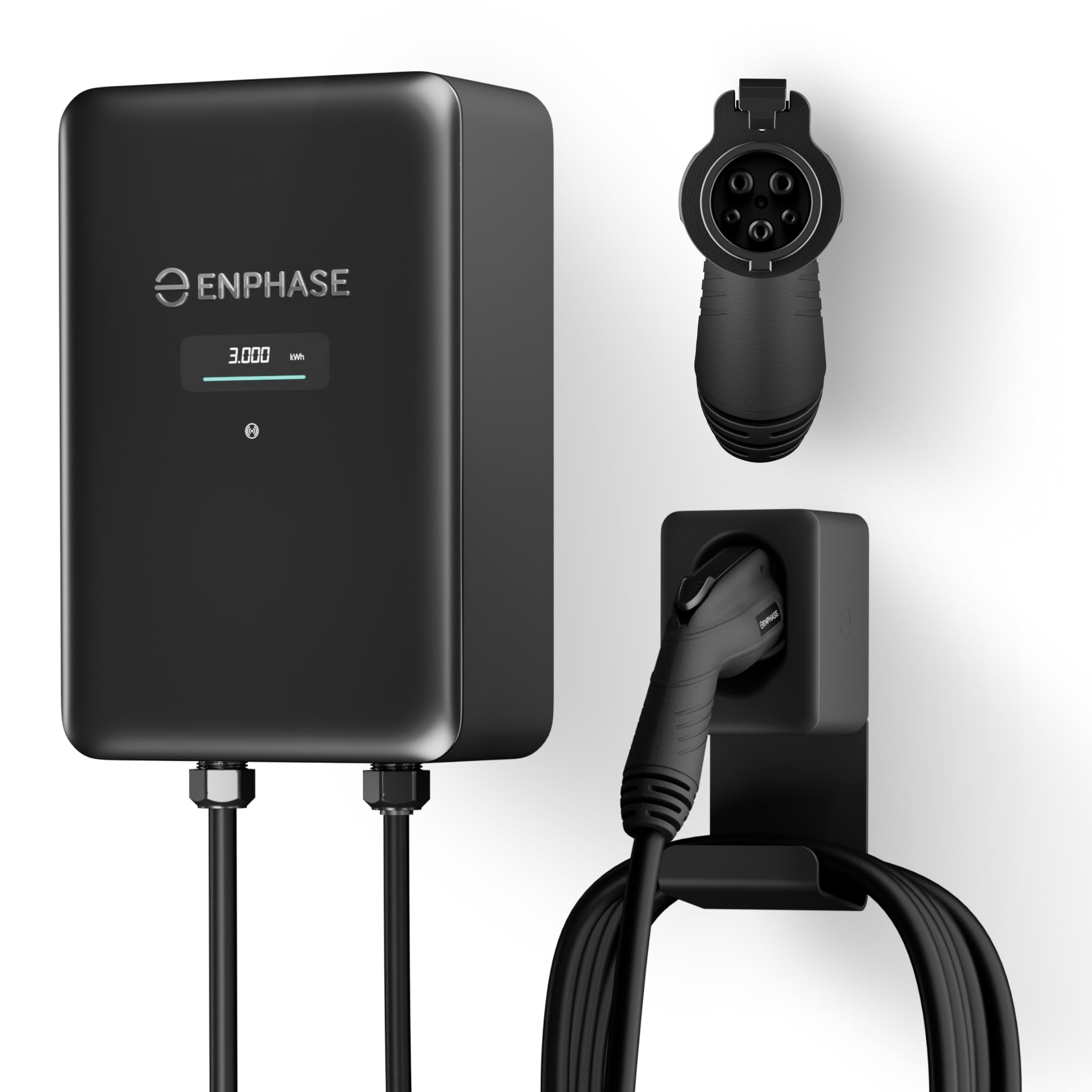
Enphase IQ EV Charger 2

Property owners managing fleets or high-volume commercial sites should consider this charger for its 80-amp output and built-in cellular backup.
Pros
- 80A output delivers up to 22.1 kW (88 miles of range per hour)
- Built-in 4G LTE cellular removes dependence on site Wi-Fi
- Native OCPP 1.6J and 2.0.1 support for any CSMS platform
Cons
- 80A circuit requirement adds electrical installation cost
- Revenue-grade metering targets billing use cases, not simple home charging
- No connector or holster details specified for outdoor cable storage
This charger targets sites where downtime costs money: fleet depots, workplace lots, and commercial properties running dozens of sessions a day. The 80-amp output is the highest in this roundup, which means it needs a robust electrical service, likely a 100-amp dedicated circuit. Cellular connectivity is the standout feature for sites where trenching network cable isn’t practical.
Native OCPP 1.6J and 2.0.1 support means facility managers can plug this into an existing charging station management system without a workaround. The revenue-grade meter also supports cost allocation and rebate eligibility, which matters for fleet operators tracking per-vehicle energy use.
Autel MaxiCharger 80A
This charger suits businesses that want app-based scheduling and theft deterrence without committing to a full commercial network platform.
Pros
- Up to 19.2 kW / 80A output with adjustable amperage in 1A increments
- Dual-network Wi-Fi plus Wi-SUN connectivity for uptime reliability
- Tamper-resistant screws and remote locking for theft protection
Cons
- 100A circuit recommended for full output, which raises install cost
- J1772 connector requires an adapter for Tesla vehicles
- No native cellular backup if site Wi-Fi goes down
The MaxiCharger’s AI-driven scheduling adjusts charging around time-of-use utility rates, a useful feature for workplaces trying to control demand charges. Its flame-retardant enclosure and internal temperature monitoring point to a design built for continuous outdoor use.
Installers can configure a station in about 10 minutes using the one-click setup, which shortens deployment time across multi-unit sites. The 25-foot J1772 cable and 5-year warranty add practical value for properties planning multiple installs.
EV Range Commercial Charger
Property owners who want to charge drivers directly and collect monthly payouts should look at this OCPP-compliant unit built around the EV Range network.
Pros
- Built-in payment processing with custom pricing and idle fees
- RFID and app-based access control for fleet or tenant restrictions
- NEMA 4-rated polycarbonate enclosure with IK10 impact resistance
Cons
- Limited to a 32A / 240V output, lower than most units in this list
- Network operates in the U.S. only, a limitation for cross-border sites
- Smaller user base means fewer independent long-term reliability reports
This charger fits hotels, apartment buildings, and retail lots that want to generate revenue from charging sessions rather than absorb the electricity cost. The EV Range software handles driver payments through a mobile app, with monthly deposits sent to the site owner.
At 32 amps, the output trails the higher-amperage options here, but the tradeoff is a lower circuit requirement and simpler electrical scope. The rugged enclosure suits marine, desert, and snow environments, making it a reasonable fit for exposed outdoor parking.
EVIQO 48A Charger
Facility managers deploying several chargers across a workplace lot will find this unit’s price and certification list a practical fit for multi-unit budgets.
Pros
- 48A standard output, expandable to 50A via DIP switch on a 70A circuit
- IP66 / NEMA 4 sealed housing rated for indoor and outdoor use
- UL, ETL, FCC, and Energy Star certified
Cons
- Requires a dedicated 60A circuit at minimum
- App control depends on a 2.4 GHz Wi-Fi connection, no cellular option
- No native OCPP or CSMS integration listed for fleet-scale management
The 25-foot J1772 cable works across nearly every EV and plug-in hybrid sold in North America, and Tesla owners can use their vehicle’s adapter. The glow-in-the-dark holster is a small but practical touch for low-light parking areas.
A side reset button avoids breaker-box shutdowns for routine troubleshooting, which reduces service calls. For sites without a CSMS requirement, this charger covers the core hardware needs at a lower complexity tier than the OCPP-native models above.
Emporia NACS Charger
Sites serving mostly Tesla vehicles, such as corporate fleets or valet parking, benefit from this charger’s native NACS connector.
Pros
- NACS connector works with Tesla vehicles without an adapter
- 48A output for up to 46 miles of range per hour
- UL listed and Energy Star certified across multiple safety standards
Cons
- NACS-only connector excludes non-Tesla EVs without an adapter
- Requires a dedicated hardwired circuit, adding installation labor
- Limited to a single connector per unit, no multi-vehicle queuing
This charger can remotely open a Tesla’s charging port door, matching a feature Tesla owners expect from the automaker’s own hardware. That detail matters for fleet operators standardizing on Tesla vehicles who want charger behavior to match the vehicle ecosystem.
The preconfigured hardwire whip simplifies the electrician’s work compared to chargers requiring full panel-to-charger wiring on site. For mixed-fleet lots, pairing this with a J1772 unit elsewhere on the property covers both connector types.
Emporia Pro with PowerSmart
Properties with limited electrical service capacity should consider this charger for its load-balancing PowerSmart technology.
Pros
- PowerSmart automatically adjusts charge rate to avoid panel overloads
- Includes a Vue 3 energy monitor for whole-site consumption tracking
- Installs via NEMA 14-50 plug or hardwire, adding flexibility
Cons
- J1772 connector excludes Tesla vehicles without an adapter
- Load-balancing features add setup complexity compared to a fixed-output charger
- Best suited to single-charger or small-scale sites, not large fleets
An estimated half of buildings lack the spare electrical capacity for full-speed EV charging, and panel upgrades can run into the thousands of dollars. PowerSmart addresses that by adjusting output in real time to stay within the site’s existing service limit.
The bundled Vue 3 monitor extends visibility beyond the charger itself, tracking whole-property energy use and peak demand. That combination suits small businesses or multifamily buildings retrofitting older electrical infrastructure rather than large commercial sites built with EV charging in mind from the start.
ChargePoint HomeFlex
Sites that want access to an established public charging network alongside private installation should look at ChargePoint’s adjustable-output unit.
Pros
- Adjustable output from 16A to 50A to match available circuit capacity
- Access to ChargePoint’s network of stations across North America and Europe
- UL certified with a cold-resistant cable for outdoor use
Cons
- Requires Wi-Fi for full app functionality and troubleshooting
- J1772 connector needs an adapter for Tesla vehicles
- No cellular backup connectivity option listed
The adjustable amperage range gives installers flexibility on sites where the available circuit doesn’t support a fixed 50A or 80A draw. That range makes it adaptable to older buildings with constrained electrical service.
ChargePoint’s network access adds value for public-facing installations, since drivers already using the ChargePoint app can find and pay for sessions without the site owner building payment infrastructure from scratch. The 23-foot cable is shorter than some competitors, which may matter for larger parking spaces.
Inteset Dual Port Pedestal
Parking lots installing two chargers per stall location need a mounting solution like this aluminum pedestal to keep cables organized and off the pavement.
Pros
- Supports single or dual Level 2 chargers on one freestanding post
- Pre-designed mounting plates fit Wallbox, Tesla, Grizzl-E, and Autel units
- Integrated cable management with 11 ft retractor reach reduces trip hazards
Cons
- Pedestal only, requires a separate charger purchase
- Concrete anchor mounting adds site-prep labor
- 36-pound unit needs secure installation planning for heavy traffic areas
The one-piece aluminum construction with a powder-coated finish is built for repeated contact and outdoor exposure in commercial lots. A blank customizable mounting plate covers chargers outside the pre-listed brand compatibility list.
This pedestal solves a problem that charger listings often skip over: where the hardware actually mounts and how the cable stays off the ground. For multi-space lots, a dual-port pedestal cuts the number of posts needed in half compared to single-charger stands.
EXCELFU NEMA 14-50 Outlet Box
Sites choosing a plug-in charger over a hardwired unit need an enclosure like this to house the NEMA 14-50 receptacle safely outdoors.
Pros
- ETL listed 50A receptacle rated for 125/250V applications
- Lockable door deters tampering and power theft
- Rated for indoor and outdoor mounting with weatherproof cover
Cons
- No pre-drilled knockout holes; installer must drill for conduit
- Metal enclosure adds weight versus a simple wall-mounted receptacle
- Supports plug-in chargers only, not a substitute for hardwired installs
This outlet box gives site owners a receptacle-based alternative to hardwiring, which some properties prefer for easier charger swaps down the line. The heavy-duty metal construction and lockable cover address theft concerns common in public or semi-public parking areas.
Buyers should plan for the drilling step during installation, since the enclosure ships without pre-cut conduit holes. That extra step is minor for an electrician but worth flagging before installation day.
Bussdis J1772 Holder
Any site running a J1772 hardwired charger benefits from a dedicated holster like this to keep the connector off the ground between sessions.
Pros
- Stainless steel construction resists rust in outdoor installations
- Integrated storage box holds the charging control unit
- Simple wall-mount installation with included screws
Cons
- Fit varies by charger brand; some control boxes are too large for the storage slot
- J1772 only, not compatible with NACS connectors
- Wall or stud mounting required, not suited to freestanding pedestals
This holder addresses a small but common site issue: connectors left dangling or resting on pavement between charging sessions. The hook design supports the cable itself, reducing strain on the connector and cord over time.
Buyers should measure their specific charger’s control box before ordering, since fit varies across brands and some units are too large for the included storage slot. For sites without a pedestal-based cable management system, this wall mount is a lower-cost way to keep the charging area organized.
Commercial EV Charger Installation Buying Guide
Matching Charger Output to Site Electrical Capacity
Amperage determines both charging speed and the electrical work required. A 32A charger needs a smaller circuit than a 48A or 80A unit, and that difference can change a project’s cost significantly.
| Charger Output | Typical Circuit Needed | Best Fit |
|---|---|---|
| 32A | 40A dedicated circuit | Single-vehicle or low-traffic sites |
| 48A | 60A dedicated circuit | Workplace lots, small fleets |
| 80A | 100A dedicated circuit | High-traffic fleets, commercial depots |
Before choosing a charger, a site owner should have an electrician confirm available panel capacity. Retrofitting an older building with insufficient service can cost more than the charger itself.
Hardwired vs. Receptacle-Based Installation
Hardwired chargers connect directly to the electrical panel through conduit, without a plug. This setup is more permanent and generally safer for high-amperage commercial use, but it requires an electrician for any future charger swap.
Receptacle-based setups use an outlet, such as a NEMA 14-50R, allowing a charger to be unplugged and replaced without rewiring. This approach adds flexibility for sites that expect to upgrade hardware over a few years, at the cost of a slightly less weatherproof connection point.
Networking and Software Requirements
Sites that plan to bill drivers, restrict access, or manage multiple chargers need networked equipment with OCPP compliance. OCPP (Open Charge Point Protocol) allows chargers from different manufacturers to connect to a single management platform.
Connectivity options include Wi-Fi, cellular, or both. Cellular connectivity removes dependence on-site internet, which matters for remote or outdoor lots where running network cable is impractical.
Connector Compatibility
J1772 is the standard connector for nearly all non-Tesla EVs sold in North America. NACS (North American Charging Standard) serves Tesla vehicles natively and other automakers adopting the same plug.
Fleet operators managing mixed vehicle types should confirm connector compatibility for every EV model on-site before selecting hardware. Adapters exist, but relying on adapters at a commercial site adds a point of failure and driver confusion.
Weatherproofing and Enclosure Ratings
Outdoor installations need a NEMA-rated enclosure. NEMA 3R protects against rain and snow, while NEMA 4 adds protection against dust and higher-pressure water exposure.
IP ratings (like IP66) serve a similar function under a different rating system. Sites in coastal, desert, or heavy-snow climates should prioritize the higher end of these ratings.
Site Components Beyond the Charger
A complete commercial installation includes more than the charging unit itself.
- Pedestals for freestanding chargers in parking lots, especially dual-port setups
- Outlet boxes for receptacle-based installations requiring weatherproof, lockable housing
- Cable holsters to keep connectors off the ground and reduce wear
- Access control hardware (RFID readers, locks) for restricted or billed charging
Planning for these components during the initial site assessment avoids delays and unbudgeted costs after the charger itself is already installed.