
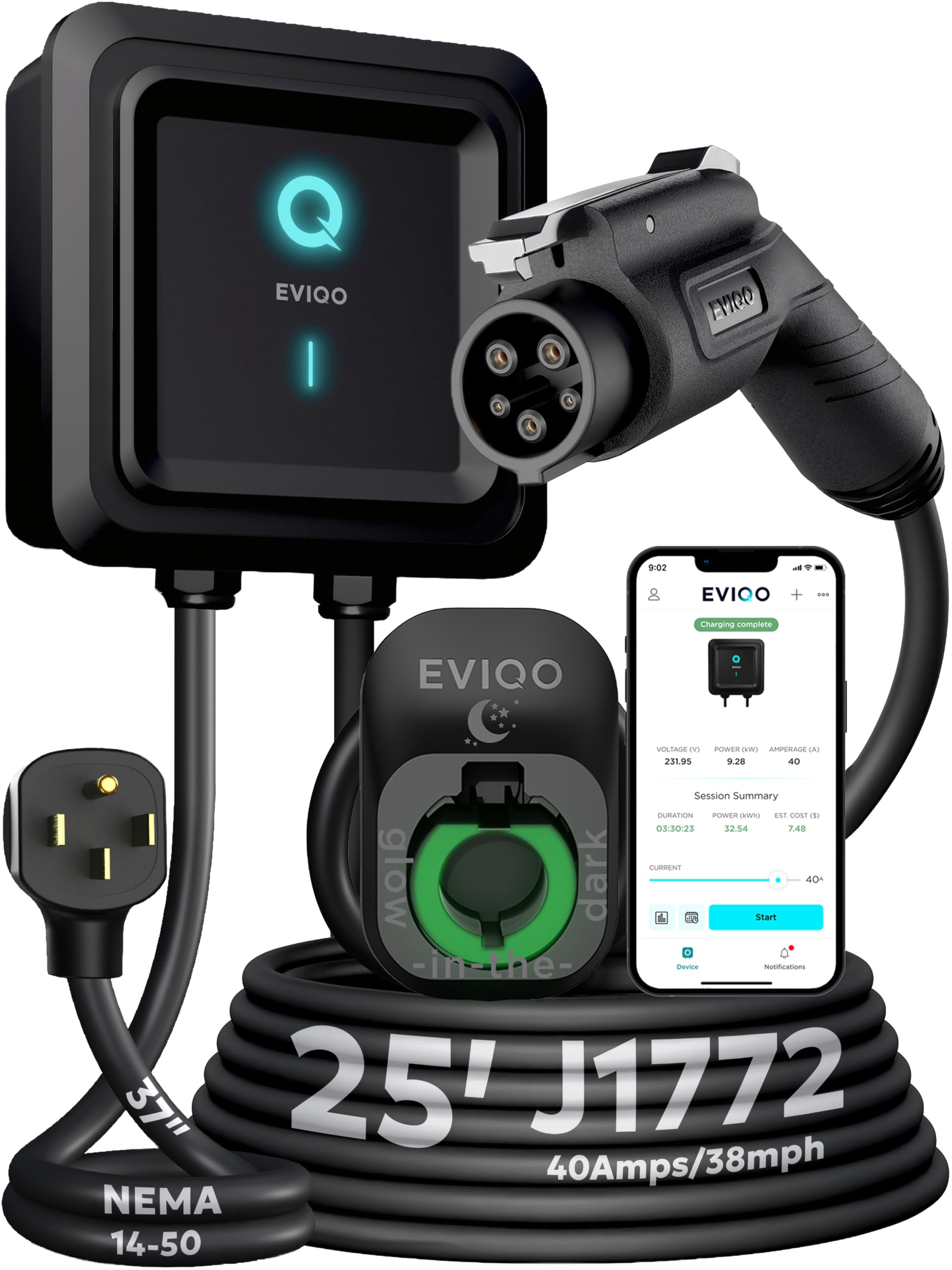
Charging at home cuts the daily hassle of finding a public plug, and a Best Level 2 EV Chargers is what makes that practical. These units run on 240-volt power, the same type used by an electric dryer or range, and they cut charging times from a full day on a standard household outlet down to a few hours overnight. For anyone driving an EV or plug-in hybrid regularly, a level 2 electric vehicle charging setup at home turns range anxiety into a non-issue.
The category splits into two main installation styles: plug-in units that connect to an existing 240V outlet like a NEMA 14-50, and hardwired units that a licensed electrician connects directly to the electrical panel. Plug-in chargers offer flexibility (unplug and take them along during a move), while hardwired models tend to support higher amperage and a cleaner look on a garage wall. Connector type matters too. J1772 is the standard plug for nearly every non-Tesla EV, while NACS (North American Charging Standard) is Tesla’s connector, now adopted by a growing number of other automakers.
Before buying, check the vehicle’s onboard charger rating, the home’s electrical capacity, and whether a dedicated circuit already exists. A charger rated for 48 amps is wasted money if the car only accepts 32 amps, and a 40-amp unit is useless without a 50-amp circuit to feed it. Weatherproofing (look for IP66 or NEMA 4 ratings), cable length, and smart-app features for scheduling off-peak charging also separate a good purchase from a frustrating one.
Best for non-Tesla drivers wanting plug-in convenience: EVIQO Level 2 EV Charger J1772 40A
Best for budget-conscious portable charging: EVDANCE Level 2 EV Charger 32Amp
Best for drivers who want plug-and-go simplicity: AIMILER Level 2 EV Charger 40A
Best for mixed Tesla and non-Tesla households: MACH 1 48 Amp Level 2 EV Charger
Best for high-amperage hardwired installs: EMPORIA Level 2 EV Charger 48 Amp
Best for access to a public charging network: ChargePoint HomeFlex 50A
Best for Tesla owners wanting a native NACS plug: EVIQO Level 2 EV Charger NACS 48A
Best for maximum charging speed with hardwiring: Autel Home Level 2 EV Charger 50Amp
Best for a trusted brand in plug-in form: Autel 40A Level 2 EV Charger
Best for occasional or backup charging needs: VEVOR Level 2 EV Charger 32 Amp
EVIQO Level 2 EV Charger J1772 40A

This charger suits any non-Tesla EV owner who has (or can install) a NEMA 14-50 outlet and wants a straightforward plug-in setup with smart features.
Pros
- No hardwiring required, just plug into a 14-50 outlet
- Weatherproof IP66/NEMA 4 housing for indoor or outdoor mounting
- App-based scheduling and adjustable amperage from 6-40A
Cons
- Requires a dedicated 50A circuit, not just any outlet
- 2.4GHz-only WiFi excludes some newer routers by default
- Tesla owners need their own J1772 adapter
The 25-foot cable reaches most driveways and garage layouts without an extension. Its glow-in-the-dark holster is a small but genuinely useful touch for nighttime plug storage. The app requires 2.4GHz WiFi, which is common but worth checking against a home router’s settings before buying.
EVDANCE Level 2 EV Charger 32Amp
This portable charger fits buyers who want manual amperage control without relying on a phone app.
Pros
- LED screen shows amperage, voltage, and charging speed directly on the unit
- Adjustable from 10A to 32A to match different circuit breakers
- Comes with a carrying case for travel or storage
Cons
- No WiFi or app control
- Cable is stiffer than some competing models
- Shorter 1-year warranty compared to most competitors
Reviewers describe the display as clear and the amperage adjustment as genuinely simple, just a long press on the “A” button. One reviewer noted the connector stopped locking into their car after six weeks, a reminder to test the locking mechanism early and use the warranty window if problems appear.
AIMILER Level 2 EV Charger 40A
This charger works well for drivers who want the option to either plug in and go or manage sessions through an app.
Pros
- Dual operating modes: plug-and-charge or app-controlled start
- Built-in leakage detection means no extra GFCI breaker needed
- Touch screen displays amperage, voltage, and delay settings
Cons
- App setup requires switching routers to 2.4GHz-only mode
- Factory reset process is somewhat involved
- Amperage adjustment requires unplugging the connector first
The built-in anti-leakage protection (CCID-20) is a detail worth noting, since it removes the need for a separate GFCI breaker on the 14-50 receptacle. The adjustable range from 16A to 40A covers most home circuit sizes, from 20A up to 50A breakers.
MACH 1 48 Amp Level 2 EV Charger
This charger fits households with both Tesla and J1772 vehicles, since it ships with a NACS adapter included.
Pros
- Includes both J1772 connector and a NACS Tesla adapter
- Choice of hardwiring (up to 48A) or NEMA 14-50 plug-in
- Long 30-foot cable, longer than most competitors
Cons
- Full 48A output requires hardwiring to a 60A breaker
- Lower sales rank suggests a smaller user base than top competitors
- Some reviewers mentioned early scheduling bugs, since fixed via update
Reviewers who use this to charge Tesla vehicles with the included NACS adapter report reliable results after firmware updates addressed early scheduling issues. The 5-year warranty stands out as longer than most others in this lineup.
EMPORIA Level 2 EV Charger 48 Amp
This hardwired charger suits homeowners who want maximum charging speed and don’t mind professional installation.
Pros
- Delivers up to 48A for faster overnight charging
- UL listed and ENERGY STAR certified
- Well-rated among buyers in this charger category
Cons
- Hardwired-only, no plug-in option
- Professional installation adds to total cost
- Requires 2.4GHz WiFi for app features
At 48A, this charger can add close to 46 miles of range per hour of charging, depending on the vehicle’s onboard charger. That speed only matters if the car can accept it and the home circuit supports a 60A breaker. Buyers without that circuit already in place should budget for electrical work.
ChargePoint HomeFlex 50A
This charger is the pick for drivers who value a large public charging network alongside their home unit.
Pros
- Backed by ChargePoint’s network of hundreds of thousands of stations
- Adjustable output from 16A to 50A to match different circuits
- Cold-resistant cable rated for outdoor installation
Cons
- Hardwired installation only, requiring an electrician
- Slightly shorter 23-foot cable than most competitors
- Some buyers report a steeper learning curve with the app
The name recognition here comes with a broader ecosystem: the ChargePoint app also finds public stations while traveling, which the other chargers in this list don’t offer. That network access is worth factoring in for anyone who road-trips frequently.
EVIQO Level 2 EV Charger NACS 48A
This hardwired charger is built specifically for Tesla owners who want a native NACS connector instead of an adapter.
Pros
- Native NACS plug works directly with Tesla vehicles
- DIP switch option to unlock 50A on a 70A circuit
- Reviewers report reliable performance across several EV brands using adapters
Cons
- Requires professional hardwired installation
- Non-Tesla drivers need a separate NACS-to-J1772 adapter
- Higher amperage settings need a larger electrical circuit
Several reviewers mention using this with non-Tesla vehicles like the Kia EV6, Rivian R1T, and Hyundai IONIQ 9 through adapters, describing smooth performance. The button on the plug that pops open a Tesla’s charge port is a small but practical convenience for daily use.
Autel Home Level 2 EV Charger 50Amp
This hardwired charger fits buyers who want the highest available charging speed in this lineup, at 12kW and 50A.
Pros
- Highest output in this roundup at up to 50A
- NEMA 4 rated for outdoor exposure to snow, rain, and hail
- Cable stays flexible in cold temperatures down to -40°C
Cons
- Hardwired installation required
- Some reviewers report inconsistent WiFi connectivity
- A few long-term users reported faults after extended use
Autel’s engineering background in automotive diagnostics shows in the build quality reviewers describe. The app-based scheduling and off-peak charging features work well for most buyers, though a handful mention needing a wired network connection to resolve WiFi drops.
Autel 40A Level 2 EV Charger
This plug-in version brings Autel’s engineering to a simpler NEMA 14-50 setup for buyers who don’t want to hardwire.
Pros
- 5-minute plug-in installation into a 14-50 outlet
- RFID start/stop access adds a layer of security
- NEMA 4X rated for dust, water, and ice resistance
Cons
- Maximum output caps at 40A versus 50A on the hardwired Autel model
- Fewer customer reviews than some competitors
- Requires an existing 240V outlet to work
This model trades some top-end speed for the flexibility of plugging into an existing outlet. RFID access is a feature not found on most of the plug-in chargers in this roundup, useful for shared driveways or multi-unit housing where unauthorized use is a concern.
VEVOR Level 2 EV Charger 32 Amp
This budget-friendly portable charger suits drivers who need occasional Level 2 charging without a permanent installation.
Pros
- Comes with a carrying bag for travel between locations
- LCD screen shows voltage, current, power, and time
- IP66 waterproof rating for outdoor use
Cons
- Lower amperage ceiling at 32A compared to most others here
- Newer product with a smaller number of buyer reviews
- No app or WiFi connectivity
At 32A, this unit charges more slowly than the 40A and 48A options in this list, but it costs less and travels easily. The 1-12 hour scheduling delay is a simple way to take advantage of off-peak electricity rates without needing an app.
Best Level 2 EV Chargers Buying Guide
Match the Charger to the Vehicle’s Onboard Limit
Every EV has a maximum charging rate built into its onboard charger, and that number caps how fast it can accept power regardless of what the wall unit offers. A car limited to 32A gains nothing from a 48A charger. Check the owner’s manual or manufacturer specs before choosing amperage.
Plug-In vs. Hardwired Installation
| Factor | Plug-In (NEMA 14-50) | Hardwired |
|---|---|---|
| Installation | Electrician installs outlet once; charger plugs in | Electrician wires charger directly to panel |
| Portability | Can be unplugged and moved | Permanent, stays with the home |
| Max amperage | Often capped around 40A | Often supports up to 48-50A |
| Upfront cost | Lower if outlet exists | Higher due to labor |
A plug-in charger suits renters or anyone who expects to move. A hardwired unit suits a permanent home setup where higher speed matters more than portability.
Connector Type: J1772 vs. NACS
J1772 works with nearly every non-Tesla EV and plug-in hybrid sold in North America. NACS is Tesla’s standard connector, now used by some other automakers as they adopt the format. Buyers should confirm their vehicle’s port type, and Tesla owners without a NACS-native charger will need a J1772 adapter (usually included with the car).
Circuit and Breaker Requirements
A charger’s rated amperage needs a matching breaker. As a rule, the breaker size should be about 25% higher than the charger’s continuous draw. A 40A charger typically needs a 50A breaker; a 48A charger typically needs a 60A breaker. An electrician can confirm whether the home’s panel has capacity for this addition.
Cable Length and Mounting Location
Cable lengths in this category commonly range from 23 to 30 feet. Measure the distance from the planned mounting spot to where the vehicle parks, including any offset for the charging port location on the car.
Weatherproofing and Certifications
Look for an IP66 or NEMA 4 rating for any charger mounted outdoors or in an uninsulated garage. UL, ETL, and Energy Star certifications confirm the unit has passed independent safety and efficiency testing.
Smart Features Worth Checking
- App control: lets the owner start, stop, and schedule charging remotely
- Off-peak scheduling: shifts charging to cheaper electricity hours
- Adjustable amperage: matches the charger’s output to different circuit sizes
- WiFi band: many chargers only support 2.4GHz networks, not 5GHz
Confirm a home router supports 2.4GHz before buying a charger that depends on app connectivity for scheduling or monitoring features.