
The 10 best portable EV car chargers balance safe power, useful cable length, broad fit, and easy daily use.
You pull into a hotel, cabin, or a friend’s garage and find no public charger nearby. A portable EV charger can turn a suitable wall outlet into a useful backup charging point. I compared these ten models by plug type, charging level, cable reach, current control, portability, and value. This list includes J1772 chargers for most North American EVs and plug options for both 120-volt and 240-volt use. Always match the charger to your vehicle, outlet, and circuit before you buy.
See the differences between my top picks at a glance.
EVDANCE 24A NEMA 10-30 EV Charger

The EVDANCE 24A charger suits drivers who have a NEMA 10-30 outlet in a garage. Its 240-volt design offers Level 2 charging for compatible J1772 vehicles. The current can adjust from 10 to 24 amps, which gives you more control over the circuit load. The 25-foot cable also helps when the outlet sits far from the parking space.
This model makes sense for older dryer-style outlets that use the 10-30 format. It does not fit a NEMA 14-50 outlet without the correct equipment, so check the receptacle first. The J1772 plug works with many North American EVs and plug-in hybrids. Tesla drivers need a suitable J1772 adapter.
Pros:
- Long 25-foot charging cable
- Adjustable 10–24 amp output
- Useful 240-volt Level 2 design
- Fits NEMA 10-30 outlets
- Portable format for travel or backup use
Cons:
- Not a direct fit for NEMA 14-50 outlets
- Requires a suitable 240-volt circuit
- J1772 design needs an adapter for Tesla vehicles
What Amazon Buyers Are Saying
Buyer feedback for this type of EVDANCE listing tends to focus on easy setup, useful cable length, and the value of adjustable current. Users also pay close attention to plug fit and charging speed. The main concerns to check before purchase are outlet compatibility, cable handling, and long-term outdoor storage. Read the current Amazon reviews for the latest reports because listings and batches can change.
My Recommendation
I recommend this charger for a J1772 EV owner with a verified NEMA 10-30 outlet. It offers a practical mix of reach and control without forcing a 14-50 installation.
EVDANCE 32A NEMA 14-50 Portable Charger
This EVDANCE model targets drivers who use a NEMA 14-50 outlet. It delivers up to 32 amps and lists a 7.68 kW Level 2 charging rate. The 25-foot cord gives it strong reach for a driveway or garage. Adjustable current and delayed charging add useful control for home routines.
I like this model as a balanced option for owners who want more speed than a 120-volt charger can provide. The 14-50 plug is common in EV-ready garages, but the outlet and wiring must support the planned load. Your vehicle may also limit the actual charging rate. Use the settings to match your circuit and vehicle needs.
Pros:
- Up to 32 amps of Level 2 power
- 25-foot cable reaches many parking spots
- Common NEMA 14-50 plug
- Adjustable current setting
- Delayed charging supports off-peak schedules
Cons:
- Needs a 240-volt NEMA 14-50 setup
- Heavier than a basic Level 1 unit
- Actual speed depends on the vehicle and circuit
What Amazon Buyers Are Saying
Review themes for portable 32-amp chargers often include faster overnight charging and the convenience of a long cable. Buyers commonly value the display and the ability to lower current when needed. As with any high-current EVSE, some users focus on plug heat, installation quality, and weather use. I suggest checking recent reviews for reports that match your outlet and vehicle.
My Recommendation
This is one of my strongest picks for a J1772 driver with a NEMA 14-50 outlet. It offers a useful balance of power, reach, and travel flexibility.
BETUMODA 40A Level 2 EV Charger
The BETUMODA charger is built for drivers who want a high-output portable Level 2 unit. Its listing specifies 40 amps, 240 volts, and up to 9.6 kW. A 25-foot cable gives good reach, while the LED display can make charging status easier to read. The NEMA 14-50 plug fits a common high-power EV outlet.
This charger needs more careful electrical planning than a low-current model. A 40-amp continuous EV load normally requires a properly sized circuit, installation, and receptacle. The car may accept less power than the EVSE can offer. Tesla owners should plan on a compatible adapter because this is a J1772 charger.
Pros:
- High listed 40-amp output
- Up to 9.6 kW charging capacity
- 25-foot cable for flexible parking
- LED display shows charging information
- Adjustable current can suit different setups
Cons:
- Needs a suitable high-current circuit
- Less compact than low-amp chargers
- Tesla vehicles need an adapter
What Amazon Buyers Are Saying
High-power charger buyers usually praise faster home charging and the convenience of a portable design. They also tend to discuss display clarity, cable weight, and plug temperature. Some users may find a 40-amp unit more power than they need for a travel backup. Check the latest buyer comments for installation and long-term use details.
My Recommendation
I recommend BETUMODA when your circuit, outlet, and vehicle can use its higher output. It is less appealing for a simple emergency kit, but strong for regular Level 2 use.
SEGUMA 32A Adjustable J1772 Charger
SEGUMA gives J1772 drivers a flexible 240-volt charging option. It supports adjustable current from 10 to 32 amps and includes a 25-foot UL-listed cord according to the product listing. The NEMA 14-50 plug suits many home charging locations. Its wide current range lets you lower the load when sharing power with other appliances.
I see this as a practical middle ground between basic and high-output chargers. It can work at a lower setting for a conservative setup, but it still needs a compatible 240-volt circuit. The long cord helps with driveway layouts and guest use. Confirm the vehicle inlet and circuit rating before relying on the maximum setting.
Pros:
- Wide 10–32 amp adjustment range
- 25-foot UL-listed cord in the listing
- NEMA 14-50 plug for Level 2 use
- Useful for EVs and plug-in hybrids
- Portable design suits home and travel
Cons:
- Requires a NEMA 14-50 outlet
- Maximum output may exceed some vehicle limits
- Not the smallest travel charger
What Amazon Buyers Are Saying
Users shopping for adjustable J1772 chargers often like the broad amp range and long cable. Buyers also look for clear status information and reliable connection at the vehicle port. Common concerns center on outlet fit and the need for a proper circuit. Review the current Amazon feedback for details on your exact vehicle.
My Recommendation
SEGUMA is worth considering if you want one portable charger that can adapt to several circuit settings. I rate it highly for flexibility, provided the NEMA 14-50 installation is ready.
AIXINE Dual-Voltage J1772 EV Charger
The AIXINE charger stands out because it supports both Level 1 and Level 2 use. The listing includes 6-20P and 5-15 adapters, with 12- and 16-amp charging choices. Its 25-foot cable gives it good range around a home or travel stop. This makes it useful for drivers who use different outlets from one location to another.
Dual-voltage flexibility often matters more than peak speed for a backup charger. A 120-volt outlet can work when no 240-volt outlet exists, while a compatible 240-volt outlet can provide faster charging. I would still inspect each receptacle before use and avoid loose or damaged outlets. This unit targets J1772 BEVs and PHEVs rather than a direct Tesla connection.
Pros:
- Supports 120- and 240-volt charging
- Includes 5-15 and 6-20 adapter options
- Long 25-foot cable
- 12- and 16-amp choices add flexibility
- Good backup option for changing locations
Cons:
- Lower output than many dedicated Level 2 units
- More parts to store and manage
- Outlet condition affects safe use
What Amazon Buyers Are Saying
Buyers of dual-voltage EVSE products often appreciate having one unit for home, work, and travel. They commonly mention the value of adapter choices and the reach of a long cable. The main point to watch is correct adapter and outlet use. Read current customer feedback for comments about display behavior, connector fit, and storage.
My Recommendation
AIXINE is a smart choice for drivers who value flexibility over maximum speed. It is one of the more practical picks for travel, rentals, and homes with more than one outlet type.
Lectron 15A Level 1 EV Charger
The Lectron model is a simple Level 1 charger for a standard 120-volt outlet. It lists 15 amps, ETL certification, a NEMA 5-15 plug, and a 16-foot extension cord. This setup suits drivers who can charge overnight and do not need rapid home charging. It also keeps the plug format familiar and easy to find.
Level 1 charging adds range slowly, but it can work well for low-mileage drivers. It can also serve as a backup when traveling to a home with only standard outlets. The 16-foot reach is shorter than the 25-foot cables on several other picks. I would choose it for simplicity, not speed.
Pros:
- Works with common 120-volt outlets
- ETL-certified listing
- 15-amp Level 1 output
- Simple setup for overnight charging
- Portable size suits emergency use
Cons:
- Much slower than Level 2 charging
- Shorter 16-foot cable
- Needs a suitable J1772 vehicle inlet
What Amazon Buyers Are Saying
Level 1 charger buyers often value easy plug-in use and the ability to charge without electrical work. They also compare cable length and the time needed to add range. Common complaints in this category relate to slow charging or limited reach, not the basic concept. Check the latest listing feedback for fit and durability reports.
My Recommendation
I recommend Lectron for low-mileage drivers, renters, and emergency kits. If you drive far each day, choose a Level 2 model instead.
Toptoo 16A Level 1 and 2 Charger
Toptoo combines Level 1 and Level 2 charging in a compact J1772 package. The listing states 16 amps, 3.5 kW, 110–240-volt input, and a 1.8-inch LCD display. The display can help you see charging information without opening a vehicle app. Its 6-20P plug points toward compatible household or garage outlets.
This unit works best for someone who wants a clear display and moderate output. It does not compete with 32-, 40-, or 50-amp chargers for the fastest home charging. The 6-20P connection also limits where you can use it unless the proper outlet is available. Confirm the plug, adapter policy, and vehicle compatibility before ordering.
Pros:
- Level 1 and Level 2 capability
- Useful 1.8-inch LCD display
- 16-amp charging option
- 110–240-volt input range in the listing
- J1772 compatibility for many EVs and PHEVs
Cons:
- 6-20P plug is not universal
- Lower output than high-power Level 2 units
- Verify cable length before purchase
What Amazon Buyers Are Saying
Buyers who choose display-equipped portable chargers often like seeing live charging information at the control box. They also value the ability to use the unit at more than one voltage. The most common points to review are plug compatibility, display readability, and actual cable reach. Current Amazon comments offer the best view of recent user experience.
My Recommendation
Toptoo is a good fit for a buyer who wants moderate power and a clear LCD. I would choose it when the 6-20P outlet is already available.
ELEGRP 40A Portable J1772 Charger
ELEGRP offers another high-output option for drivers with a 240-volt NEMA 14-50 outlet. The listing specifies 40 amps, a J1772 connector, ETL certification, and a 25-foot extension cable. That combination fits a driveway or garage where the outlet sits away from the car. It is designed for regular Level 2 charging rather than only emergency use.
The main question is whether your electrical system can support the output. A long cable adds convenience, but it also adds weight and takes more room to store. Your vehicle may charge below the EVSE rating, which is normal. I would compare this model with the BETUMODA if display features and current adjustment matter to you.
Pros:
- High 40-amp Level 2 output
- ETL-certified listing
- 25-foot extension cable
- NEMA 14-50 connection
- Useful for regular home charging
Cons:
- Needs a properly sized 240-volt circuit
- Heavy cable may be harder to coil
- J1772 plug needs an adapter for Tesla vehicles
What Amazon Buyers Are Saying
Customers comparing 40-amp chargers often mention faster charging, long reach, and the convenience of a portable format. They also pay attention to ETL labeling, plug fit, and heat at the receptacle. A few buyers may find high-output units too large for occasional travel. Check current reviews for the latest information on handling and reliability.
My Recommendation
ELEGRP is worth considering for a fixed home spot that also needs portable storage. I recommend it when you already have the correct circuit and want strong output without a 33-foot cable.
SubSun 50A Extra-Long EV Charger
SubSun is the reach specialist in this group. Its listing describes a 50-amp, 240-volt Level 2 J1772 charger with a 33-foot cable and NEMA 14-50 plug. That extra length can help when the outlet sits at the front of a garage or on the opposite side of a driveway. It also supports use with many North American EVs.
Fifty amps is a serious electrical load, so this model requires careful circuit planning. The NEMA 14-50 plug does not automatically mean every existing receptacle can support the maximum setting. The long cable can also add weight and take more effort to store. I would buy it mainly for reach, not because every car needs 50 amps.
Pros:
- Very long 33-foot cable
- High listed 50-amp output
- 240-volt Level 2 design
- NEMA 14-50 plug
- Useful for wide or difficult parking layouts
Cons:
- Needs a properly designed high-current circuit
- Long cable adds weight and storage bulk
- Most vehicles may not use the full output
What Amazon Buyers Are Saying
Extra-long charger buyers usually value the ability to reach a vehicle without moving the outlet or parking position. They also discuss cable flexibility, storage, and the practical weight of a 33-foot lead. High-current users often check plug and receptacle behavior with special care. Read the latest reviews before outdoor or frequent use.
My Recommendation
SubSun is my reach pick. Buy it when 33 feet solves a real parking problem and a qualified professional confirms that the circuit can support the intended load.
EVDANCE 16A Dual-Voltage EV Charger
This EVDANCE model aims to be a flexible travel companion. It supports 120- to 240-volt input, offers 16 amps, and includes a 25-foot cable. The listing also highlights adjustable current and delayed start. Those features can help you charge from different locations while keeping a simple daily schedule.
This charger will not match the speed of a 32- or 40-amp Level 2 unit, but that may not matter for overnight use. Its dual-voltage design is more useful when you visit homes, cabins, and workplaces with different outlets. Check which plug or adapter configuration comes with the listing before purchase. It works with J1772 EVs rather than directly with Tesla’s native connector.
Pros:
- 120- to 240-volt flexibility
- 16-amp adjustable charging
- 25-foot cable
- Delayed start feature
- Useful travel and backup format
Cons:
- Not the fastest option for large batteries
- Adapter and outlet details need checking
- Requires a J1772-compatible vehicle or adapter
What Amazon Buyers Are Saying
Buyers of dual-voltage EVDANCE chargers tend to look for easy travel use, a long cable, and simple current control. They may also compare this model with a basic Level 1 cord and a faster 32-amp unit. The most important feedback concerns plug options, delayed start operation, and cable handling. Check the latest customer reviews for the current package contents.
My Recommendation
I recommend this EVDANCE model for drivers who want one moderate-power charger for home and travel. It offers better flexibility than a fixed Level 1 unit, though not maximum speed.
How to Choose the 10 Best Portable EV Car Charger
Choosing among the 10 best portable EV car charger options starts with your car and your outlet. A high amp number does not make a charger right for every home. Use the points below to match speed, fit, and safety.
1. Match the J1772 Plug and Outlet
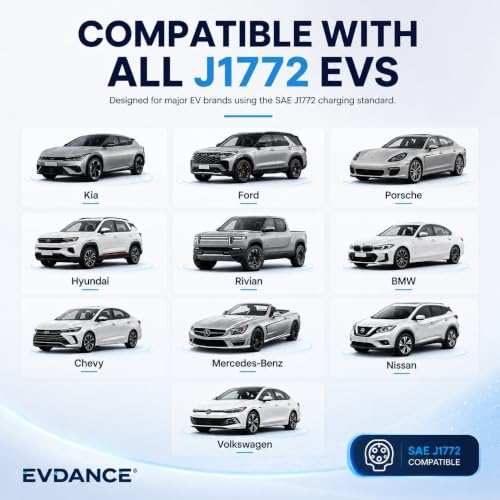
Most chargers in this guide use a J1772 vehicle connector. That plug fits many North American EVs and PHEVs. Tesla drivers usually need a compatible J1772 adapter. On the wall side, check whether you have NEMA 5-15, 6-20, 10-30, or 14-50. These plugs are not interchangeable by appearance alone.
2. Choose the Right Voltage, Amps, and Cable Length
Level 1 uses 120 volts and charges at a slow pace. Level 2 uses 240 volts and can add range much faster. Still, the car, EVSE, outlet, and circuit must all support the chosen rate. A 25-foot cable works for many garages. A 33-foot cable helps when the parking spot sits far away, but it weighs more and costs more to store.
3. Check Safety, Controls, and Long-Term Value
Look for clear electrical ratings and recognized certification details, such as ETL when the listing provides them. Current adjustment helps you lower the load on a shared circuit. A display can show useful status information, while delayed start may help with charging schedules. Do not use a damaged outlet, hot plug, wet connection, or indoor extension cord. If you need a new high-current circuit, ask a qualified electrician to inspect it.
Final Verdict: Which Should You Buy?
For most J1772 owners, the EVDANCE 32A NEMA 14-50 model is my best overall pick. Choose AIXINE or the 16A EVDANCE for dual-voltage travel, SubSun for extra reach, and Lectron for simple Level 1 charging.
The 10 best portable EV car charger choices work best when plug, circuit, vehicle, and cable length match. Check the current Amazon listing, installation needs, and recent buyer feedback before ordering.
FAQs Of 10 best portable ev car charger
What is the best portable EV car charger for most drivers?
The EVDANCE 32A NEMA 14-50 model is my best overall choice for many J1772 drivers with a suitable 240-volt outlet. It combines useful power, adjustable charging, and a 25-foot cable.
Can a portable EV charger charge a Tesla?
A J1772 charger can charge a Tesla only when you use a compatible J1772-to-Tesla adapter. Check your Tesla model and adapter rating before use.
Is Level 2 charging better than Level 1 charging?
Level 2 charging is faster because it uses 240 volts. Level 1 can still work well for low-mileage drivers who charge for many hours overnight.
Can I use a 40A EV charger on any NEMA 14-50 outlet?
No. The outlet, wiring, breaker, and installation must support the intended continuous load. Ask a qualified electrician to confirm the circuit before using a high-current setting.
How long should a portable EV charger cable be?
A 25-foot cable fits many garages and driveways. Choose a 33-foot cable when the outlet sits far from the normal parking spot, but expect more weight and storage bulk.