
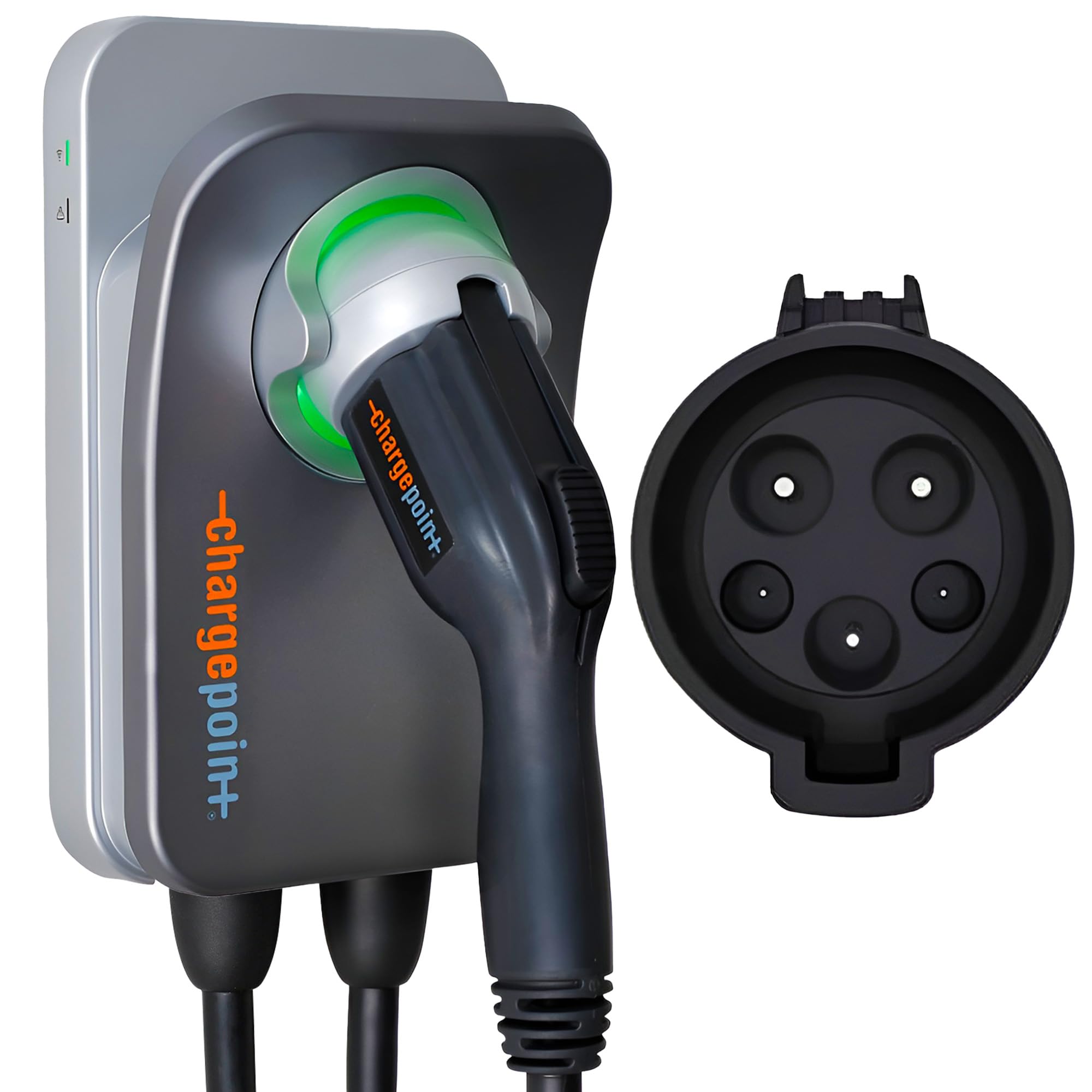
Searching for a Level 3 Charger Alternatives for home use usually leads to a surprising discovery: true DC fast charging equipment isn’t practical or legal for most residential garages. Level 3 chargers require industrial-grade power connections and cost tens of thousands of dollars, which is why they’re reserved for public charging stations along highways and commercial lots.
What homeowners actually want is the fastest, safest home charging setup available, and that means Level 2 chargers. These 240V units plug into (or are hardwired to) a dedicated home circuit and can add 20 to 45 miles of range per hour, depending on the charger’s amperage and the vehicle’s onboard charger. The right Level 2 charger can cut overnight charging time by more than half compared to a standard wall outlet, without the cost or complexity of commercial DC fast charging equipment.
Picking the right unit means looking past marketing speed claims and focusing on amperage, connector type, installation method, and weather resistance. Hardwired models tend to support higher amperage and skip the risk of a melting plug, while plug-in units are easier to move or replace. Connector type matters too: J1772 covers most non-Tesla EVs, while NACS suits Tesla owners and newer vehicles adopting the same port. The following chargers cover the range from high-amperage hardwired systems to portable Level 1/2 units for travel and backup charging.
Best overall hardwired charger: ChargePoint HomeFlex
Best high-amperage hardwired option: EVIQO 48A Hardwired J1772
Best plug-in charger for simple installs: EVIQO 40A NEMA 14-50
Best for smart home integration: Autel MaxiCharger AC Home
Best value hardwired charger: Emporia Level 2 Charger
Best touchscreen plug-and-play unit: NexCyber 48A Charger
Best budget plug-in charger: AIMILER 32A NEMA 14-50
Best for Tesla and multi-EV households: ApexCharger Mach 3
Best hardwired charger for Tesla/NACS: EVIQO NACS 48A Hardwired
Best portable charger for travel: EVDANCE Level 1/2 Charger
ChargePoint HomeFlex Level 2 EV Fast Charger

This charger suits owners who want a well-established brand with a large public charging network and adjustable amperage settings. Level 3 Charger Alternatives
Pros
- Adjustable from 16A to 50A to match different circuit sizes
- Backed by ChargePoint’s large North American charging network
- Cold-resistant 23-foot cable rated for indoor or outdoor use
Cons
- Requires WiFi for full smart features
- Tesla owners need a separate adapter
- Hardwired install means an electrician is required
The HomeFlex charger stands out for its flexibility. Instead of locking a household into one amperage, an electrician can configure it anywhere between 16A and 50A depending on the home’s panel capacity. At the top setting, it can add up to 37 miles of range per hour, though actual speed depends on the vehicle’s onboard charger.
The ChargePoint app adds scheduling, reminders, and smart home connections, useful for households on time-of-use electricity plans. The J1772 connector fits nearly every non-Tesla EV on the road, and a three-year warranty backs the hardware.
EVIQO 48A Hardwired J1772 Charger
This is a strong pick for households wanting maximum charging speed from a hardwired setup with a long cable reach.
Pros
- Delivers up to 48A on a dedicated 60A circuit, expandable to 50A
- IP66/NEMA 4 sealed housing withstands outdoor conditions
- 25-foot cable with glow-in-the-dark holster
Cons
- Some buyers report a short internal wire for connecting to the circuit
- Requires professional hardwired installation
- 2.4GHz-only WiFi limits router compatibility
At 48A on a 60A circuit, this charger can add close to 45 miles of range per hour on compatible EVs. DIP switches allow a jump to 50A with a 70A circuit for owners chasing the fastest home charging speeds available without commercial equipment.
The sealed housing rating supports installation in exposed outdoor locations, and the reset button lets owners restart the unit without cutting breaker power. Reviewers highlight reliable performance after months of daily use, though one noted the factory cable connecting to the junction box is shorter than expected.
EVIQO 40A NEMA 14-50 Plug-In Charger
This charger fits homeowners who want strong charging speed without hiring an electrician for a hardwired install.
Pros
- Plugs into a standard NEMA 14-50 outlet on a 50A circuit
- Same weatherproof housing and app features as the hardwired EVIQO model
- Easy to relocate or replace without rewiring
Cons
- Requires an existing or newly installed 14-50 outlet
- Maximum output caps at 40A, below the top hardwired options
- Same short-cable complaint noted on the hardwired version
Plugging into a NEMA 14-50 outlet (the same type used for RVs and electric ranges) makes this charger simple to swap or take along during a move. At 40A, it delivers close to 38 miles of range per hour on many EVs.
The app mirrors the hardwired EVIQO’s scheduling and monitoring tools, letting owners track energy use by session. A sealed housing and steel internal shielding aim for multi-year durability in garages and driveways alike.
Autel MaxiCharger AC Home
This charger works well for tech-focused households wanting Bluetooth setup alongside WiFi connectivity.
Pros
- Dual Bluetooth and WiFi connection for app pairing
- NEMA Type 4 housing rated for harsh outdoor weather
- Up to 50A output for up to 37 miles of range per hour
Cons
- A few buyers report inconsistent WiFi reliability
- Installation involves removing panels, which adds electrician time
- Mid-range pricing sits above some plug-in competitors
Autel built its reputation on automotive diagnostic tools, and the MaxiCharger reflects that engineering background with fire, overcurrent, and overvoltage protections built in. The 25-foot cable stays flexible even in cold weather, rated to -40°C.
The companion app supports scheduled charging around off-peak utility rates, and Ethernet is available as a backup to WiFi. Some owners needed a hardwired network connection after experiencing WiFi drops, a workaround worth budgeting for during install.
Emporia Level 2 EV Charger
This charger appeals to buyers who want 48A hardwired performance at a competitive price point.
Pros
- Delivers up to 46 miles of range per hour at 48A
- Certified to a wide range of UL and SAE safety standards
- Well-reviewed customer support based in the U.S.
Cons
- Hardwired only, so professional installation is required
- No load-management feature (available only on Emporia’s Pro model)
- WiFi limited to 2.4GHz networks
Emporia built this charger for households with a dedicated 60A circuit ready to go. The 1-amp adjustment increments in the app let owners fine-tune charging speed to match their EV’s ideal charge curve, which some reviewers use to stay in the 20-80% battery range for longer battery life.
The 25-foot cable and included wall mount simplify installation, and the J1772 connector covers nearly all non-Tesla EVs sold in North America. Reviewers consistently mention the company’s responsive support team when troubleshooting install questions.
NexCyber 48A Level 2 Charger
This charger suits buyers who want a built-in touchscreen for adjusting settings without opening an app.
Pros
- Touchscreen display shows amperage, speed, and voltage without a phone
- Plug-and-play NEMA 14-50 setup with no app required to start charging
- Adjustable from 16A to 48A directly on the unit
Cons
- A few buyers reported the unit stopping mid-charge
- Larger enclosure than some competing chargers
- App connection can be finicky on setup
NexCyber’s charger works right out of the box in plug-and-play mode, useful for buyers who prefer physical controls over a smartphone app. The touchscreen displays live charging data, and long-pressing the amperage button adjusts output from 16A up to 48A.
The WiFi app adds scheduling and cost tracking for owners who want more detail. NEMA Type 3 protection covers most garage and covered-driveway installs, though the brand doesn’t recommend direct sun or heavy rain exposure for extended periods.
AIMILER 32A Plug-In Charger
This charger fits budget-conscious buyers who don’t need the highest amperage available.
Pros
- Built-in ground fault protection skips the need for a separate GFCI breaker
- NEMA Type 4 / IP66-rated housing for outdoor use
- Adjustable from 16A to 32A to match different circuit sizes
Cons
- Maximum 32A output is lower than most other chargers on this list
- Requires a NEMA 14-50 outlet already installed
- Touch controls need the connector removed before adjusting settings
At 32A, this charger tops out lower than the 40A-48A units above, translating to a slower but still useful charging rate for overnight sessions. It works well for plug-in hybrids and EVs with smaller batteries that don’t need maximum throughput.
The built-in leakage detection means installers can skip adding a separate GFCI breaker for the outlet, which can simplify installation costs. A portable carrying bag and wall-mounted holster come included, giving owners flexibility to move the unit between locations.
ApexCharger Mach 3
This charger works for households with both Tesla and non-Tesla EVs thanks to its dual connector design.
Pros
- Includes both J1772 and Tesla NACS connectors in one unit
- Works on 120V or 240V outlets for Level 1 or Level 2 charging
- Backed by a longer five-year manufacturer warranty
Cons
- Lower amperage ceiling (40A) than dedicated hardwired chargers
- Limited review history compared to other brands on this list
- NEMA 14-50 plug-in design means an outlet must already exist
The dual NACS and J1772 connectors make this charger useful for multi-EV households or anyone unsure which connector future vehicles will use. On a 240V/40A circuit, it can add roughly 20-25 miles of range per hour depending on the car.
Its portability and 25-foot cable suit garages, driveways, and even travel scenarios where a 120V backup outlet is the only option. The five-year warranty stands out as longer than most competitors, which cluster around three years.
EVIQO NACS 48A Hardwired Tesla Charger
This charger gives Tesla owners a hardwired, high-amperage option with a native NACS connector.
Pros
- Built-in NACS plug works directly with Tesla vehicles, no adapter needed
- Delivers up to 48A on a 60A circuit, expandable to 50A
- Same sealed, weatherproof housing as EVIQO’s J1772 model
Cons
- Non-Tesla EVs need a separate NACS-to-J1772 adapter
- Hardwired installation requires an electrician
- WiFi limited to 2.4GHz networks
Tesla drivers get a plug that pops open the vehicle’s charge port with a built-in button, removing a small daily friction point. At 48A, charging speed matches EVIQO’s J1772 hardwired model, adding close to 45 miles of range per hour on compatible vehicles.
Reviewers with Rivian, Kia, and Cadillac EVs report smooth use through NACS-to-J1772 adapters, suggesting broader compatibility beyond Tesla alone. The same rugged housing and app features carry over from EVIQO’s other hardwired chargers.
EVDANCE Level 1/2 Portable Charger
This charger fits buyers who want one portable unit for both standard outlets and basic 240V charging.
Pros
- Works with both 120V and 240V outlets using included adapters
- Compact and portable with a carrying bag for travel
- LED display shows charging status and errors clearly
Cons
- Maximum 16A output is lower than dedicated Level 2 chargers
- Only a one-year warranty, shorter than most competitors
- Not compatible with several common outlet types without extra adapters
This charger works best as a backup or travel unit rather than a primary home charging solution. At 16A on a 240V NEMA 6-20 outlet, it adds around 10-12 miles of range per hour, a useful boost over a standard wall outlet without matching dedicated 40A-48A chargers.
The included adapter also allows 120V charging at 12A for situations without any 240V access. Its light weight and bag make it easy to store in a trunk for road trips or shared charging setups.
Buying Guide
Understand What “Level 2” Really Means
Every charger in this guide is a Level 2 AC charging station, not a Level 3 (DC fast charging) unit. Level 3 equipment uses direct current at industrial voltage levels and isn’t designed for home electrical panels.
Level 2 chargers run on 240V power, similar to an electric dryer outlet, and convert AC power into a rate the car’s onboard charger can accept. This makes them the fastest realistic option for most homes.
Match Amperage to Your Circuit
A charger’s amperage rating determines its top charging speed, but the home’s electrical panel and circuit breaker set the real limit. Higher amperage means faster charging, but it also requires heavier wiring and a larger dedicated breaker.
| Amperage | Typical Circuit Needed | Approx. Miles of Range/Hour |
|---|---|---|
| 16A-24A | 20A-30A | 10-15 |
| 32A | 40A | 15-20 |
| 40A | 50A | 25-30 |
| 48A-50A | 60A-70A | 35-45 |
An electrician can confirm what a home’s panel supports before buying a charger rated above its available capacity.
Choose the Right Connector
J1772 connectors fit almost every non-Tesla EV and plug-in hybrid sold in North America. NACS connectors work natively with Tesla vehicles and a growing number of newer EVs adopting the same standard.
Buyers with a Tesla can use a charger with a J1772 connector plus an adapter (often included with the vehicle), or choose a charger with a native NACS plug for a more direct connection.
Hardwired vs. Plug-In Installation
Hardwired chargers connect directly to a home’s electrical panel through a dedicated circuit, without a plug or outlet in between. Plug-in chargers use a NEMA outlet (commonly a 14-50), similar to what powers an RV or electric range.
- Hardwired: Usually supports higher amperage, reduces fire risk from a loose plug, but always needs professional installation.
- Plug-in: Easier to replace or take when moving, but limited to the outlet’s rated amperage and requires the correct outlet already installed.
Weather Resistance and Cable Length
Outdoor installations need a charger rated for rain, snow, and temperature swings. Look for an IP66 or NEMA Type 4 rating for full outdoor protection; NEMA Type 3 units handle less severe exposure.
Cable length affects where the charger can be mounted relative to a parking spot. Most chargers in this category offer 23 to 25 feet of cable, enough to reach most garage and driveway configurations without repositioning the vehicle.
Smart Features and App Control
Many chargers connect to a smartphone app over WiFi, usually requiring a 2.4GHz network rather than 5GHz. App features commonly include:
- Charging schedules to take advantage of off-peak electricity rates
- Energy use tracking by session or by month
- Remote start/stop control
- Firmware updates delivered automatically
A charger without WiFi still functions through manual controls or a physical touchscreen, which some buyers prefer for simplicity and fewer connectivity issues.