
Choosing a Commercial EV Chargers means evaluating infrastructure, not just a piece of hardware. A property manager installing chargers for tenants has different needs than a fleet operator running vehicles overnight or a retail site owner looking to generate revenue from public charging. Power output matters, but so does how the station connects to a network, whether it supports payment collection, and how well it holds up outdoors over years of daily use.
Level 2 chargers, often called EVSE (electric vehicle supply equipment), deliver 240-volt power at rates far faster than a standard wall outlet. For commercial deployments, the differences that matter most are hardwired versus plug-in installation, amperage and kW output relative to the circuit available, OCPP compatibility for third-party network management, and physical protections like NEMA-rated enclosures for outdoor exposure. Cellular connectivity can also matter at sites without reliable Wi-Fi.
The right charger for a business depends on the use case: fleet depots need high throughput and load management, public and retail sites benefit from OCPP and payment integration, and workplace or multifamily charging often works best with simpler networked units that emphasize reliability over complexity. Certification (UL, CSA, Energy Star), warranty length, and RFID access control also separate units built for shared or public use from those meant for a single driveway.
Best for high-power fleet and multifamily sites: Autel MaxiCharger 80A
Best for large commercial and CSMS-managed deployments: Enphase IQ EV Charger 2
Best for revenue-generating public charging: EV Range Commercial Station
Best for shared parking with power sharing: Splitvolt Smart Wall Station
Best for straightforward tenant or employee charging: Emporia J1772 Charger
Best for multi-user access with RFID and no app requirement: Battery Tender eCharge 48A
Best for buyers who want a long-established electrical brand: Leviton EV480
Best for outdoor sites needing rugged waterproofing: WOLFBOX E48
Best for budget-conscious, no-frills reliability: Grizzl-E Classic
Best for Tesla and NACS fleets: Emporia NACS Charger
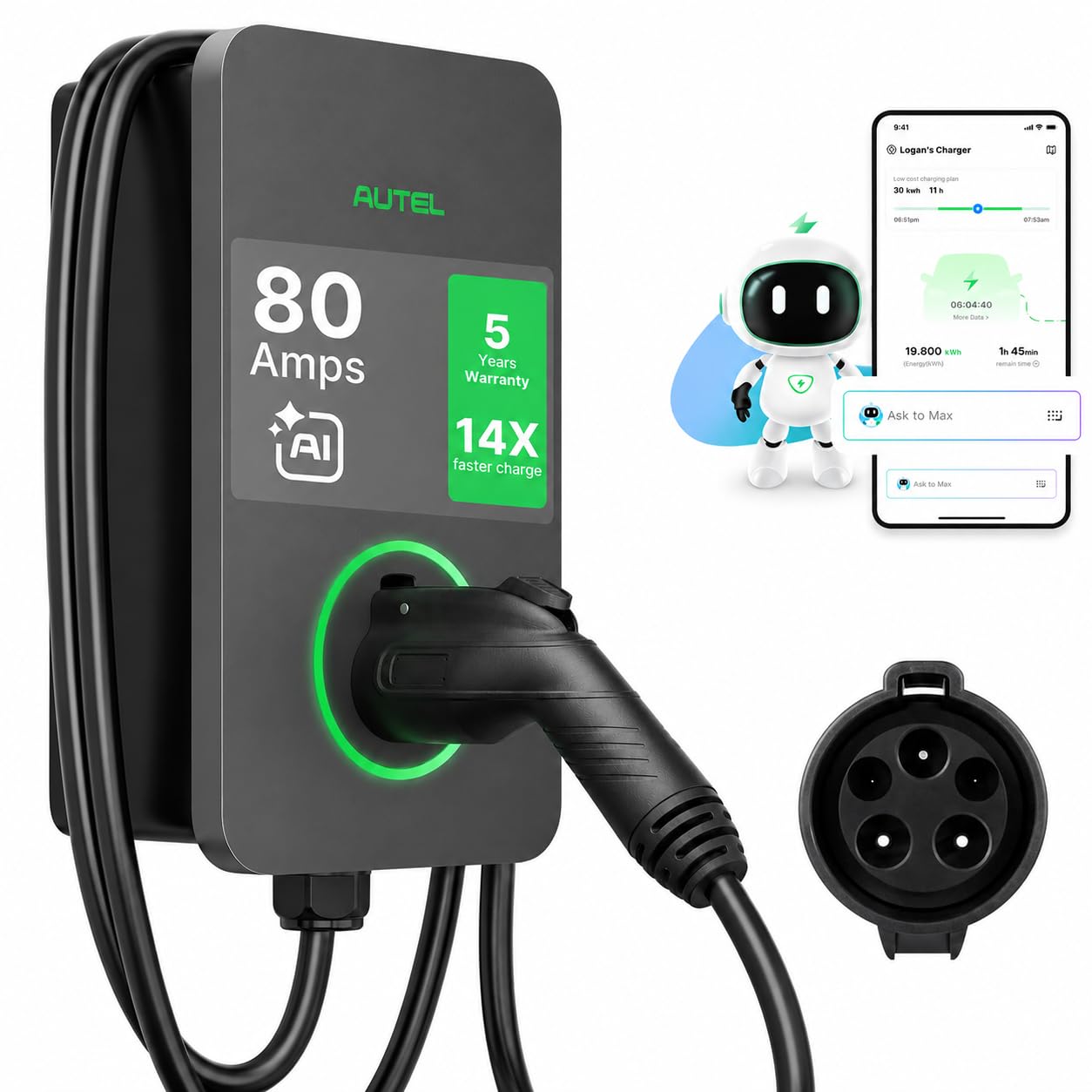
Autel MaxiCharger 80A EV Charger

This charger fits sites that need maximum output and remote fleet-style management in one hardwired unit.
Pros
- Up to 80A / 19.2 kW output for fast overnight charging
- Dual-network Wi-Fi plus Wi-SUN for high uptime
- Tamper-resistant hardware and remote locking for theft deterrence
Cons
- Requires a 100A circuit for full output
- Tesla drivers need a separate NACS adapter
- Professional installation is effectively mandatory
The Autel MaxiCharger stands out for load capacity, delivering close to 70 miles of range per hour, which suits fleet depots or multifamily garages with many vehicles cycling overnight. Its app supports scheduling around time-of-use rates and remote start/stop, useful for managers overseeing several units. The CSA certification and 5-year warranty add confidence for commercial-scale rollouts, though the 100A circuit requirement means installation costs should be budgeted carefully.
Enphase IQ EV Charger 2
This is the pick for operators who need open-platform network integration and cellular backup at scale.
Pros
- Built-in 4G LTE cellular, no dependence on site Wi-Fi
- Native OCPP 1.6J and 2.0.1 support for any CSMS
- Revenue-grade metering for billing and rebate eligibility
Cons
- Positioned for commercial deployment, so setup is more involved
- No listed customer reviews yet to gauge field reliability
- Best suited to sites with IT or facilities support
The Enphase IQ EV Charger 2 targets businesses that already run or plan to join a charging network. Its cellular connectivity removes a common point of failure at sites with weak Wi-Fi, and OCPP compliance means it can plug into fleet management software or a third-party CSMS without proprietary lock-in. At 80A and 22.1 kW, it matches or exceeds most home-grade chargers, but its real value is in integration, not raw speed.
Read more: Commercial EV Chargers
EV Range Commercial Charging Station
This station is built for site owners who want to charge drivers directly and collect payment through a network.
Pros
- Built-in driver pay app with monthly revenue payouts
- OCPP 1.6J compliant, works with RFID or app-based access
- Rugged NEMA 4, IK10-rated enclosure for tough environments
Cons
- Lower amperage output (32A) than most other picks here
- Very limited customer review history so far
- Requires enrollment in the EV Range network to unlock full features
For hotels, retail centers, or apartment complexes that want charging to generate income rather than just be an amenity, this station’s built-in payment and reporting system is the differentiator. The rugged polycarbonate enclosure suits exposed outdoor installs, from coastal to snowy climates. Its 32A output is modest next to 48A-plus competitors, so it fits lower-urgency charging rather than fast-turnaround fleet use.
Splitvolt Level 2 Smart Wall Station
This charger works well for shared parking or multi-tenant sites that need power sharing across several vehicles on one circuit.
Pros
- Power sharing lets multiple EVs charge from a single circuit
- Both plug-in (NEMA 14-50) and hardwire installation options
- RFID access control and OCPP compatibility for network management
Cons
- 50A max output is lower than several other commercial-grade units
- Weather rating (NEMA 3S) is less robust than NEMA 4 competitors
- Some reviews mention circuit-related issues over time
Splitvolt’s flexibility, plug-and-play or hardwired, makes it adaptable for retrofits where running new circuits is difficult. Power sharing is a meaningful feature for parking garages or small fleet lots where the electrical panel can’t support a dedicated circuit per charger. The adjustable 8A to 50A range lets installers match output to available capacity without buying a different unit.
Emporia Level 2 J1772 Charger
This charger suits workplaces and multifamily properties that want reliable Level 2 charging without complex network setup.
Pros
- 48A output with UL listing and Energy Star certification
- Simple WiFi app for scheduling and monitoring
- Well-rated for reliability among verified buyers
Cons
- No native OCPP/CSMS support for large networked deployments
- Hardwired-only installation requires an electrician
- J1772 only; Tesla vehicles need a separate charger or adapter
Emporia’s charger is a dependable option where the goal is straightforward employee or tenant charging rather than public revenue generation. It meets the core certifications (NEC 625, UL 817, UL 2231, and others) that facilities managers should check for on any commercial install. Its lack of OCPP support limits it for operators who need centralized fleet or network billing, but for single-site simplicity, it performs well.
Battery Tender eCharge 48A
This unit is built for sites that need multi-user access control without relying on a smartphone app.
Pros
- Includes 2 RFID cards for secure, app-free access
- LCD display shows charging status and output directly on the unit
- Works as plug-in (NEMA 14-50) or hardwired
Cons
- No app means no remote scheduling or monitoring
- 48A output ties for mid-pack among these picks
- Smaller installed base than some competitors
Battery Tender’s approach removes the smartphone dependency that some facilities managers see as a liability, especially at sites where guests or tenants may not want to download another app. The RFID system keeps access controlled in shared parking or workplace settings. Its 3-year warranty and ETL/Energy Star certifications support a straightforward, low-maintenance commercial install.
Leviton EV480
This charger appeals to buyers who prioritize a long-standing electrical equipment brand over smart features.
Pros
- From an established electrical manufacturer with over a century in the industry
- NEMA Type 3R enclosure suited for indoor or outdoor mounting
- Optional RFID access control that can be enabled after install
Cons
- No scheduling or app-based smart charging functions
- Some buyers report reliability issues after limited use
- Shorter 2-year warranty compared to several competitors here
The Leviton EV480 is a hardwired 48A charger built with basic commercial reliability in mind rather than smart features. Its RFID access control is disabled by default, giving installers the choice to activate it for shared or public sites. Reviews are mixed on long-term durability, so buyers should weigh the brand recognition against a shorter warranty window than competitors like Emporia or Autel offer.
WOLFBOX E48 Level 2 Charger
This charger is built for exposed outdoor installations where weatherproofing is the top priority.
Pros
- NEMA 4X waterproof housing rated for harsh conditions
- CSA certified and meets UL 2594 safety standards
- Voice control support through Alexa and Google Assistant
Cons
- No OCPP or CSMS support for networked commercial billing
- Requires a 60A+ circuit breaker for full output
- Multi-user simultaneous app access could complicate access logs
WOLFBOX’s NEMA 4X rating makes it one of the more weather-resistant options in this group, a useful trait for uncovered parking lots or coastal properties. The 4.3-inch LCD display gives on-unit visibility into charging status without needing the app. It lacks OCPP support, so it fits private or semi-private installations better than public networked charging.
Grizzl-E Classic
This charger fits businesses that want a durable, no-frills unit without app or network dependencies.
Pros
- Heavy-duty metal enclosure with strong reliability track record
- Adjustable output (16A to 40A) to match circuit capacity
- UL certified and eligible for federal rebate programs
Cons
- No smart app, scheduling, or remote monitoring
- No RFID or access control for shared-use sites
- 40A max output is lower than several competitors
The Grizzl-E Classic trades smart features for mechanical simplicity and a widely reported reputation for durability. Its metal case and multiple protection systems (ground fault, over-voltage, over-temperature) make it a dependable option for businesses that just need a charger to work every day without app maintenance. It fits single-site installs better than networked, multi-location commercial deployments.
Emporia NACS Charger for Tesla
This charger is the direct pick for fleets or properties standardizing on Tesla and NACS-compatible vehicles.
Pros
- Native NACS connector, no adapter needed for Tesla charging
- Remote charge port door release, matching Tesla’s own charger behavior
- UL listed and Energy Star certified at 48A / 11.5 kW
Cons
- Not compatible with J1772 vehicles without a separate adapter
- Hardwired-only installation adds electrician cost
- No OCPP/CSMS support for multi-site network billing
As NACS adoption grows across non-Tesla brands, this charger positions well for fleets or dealerships standardizing on the connector. The remote port-release feature mirrors Tesla’s proprietary charger experience, a detail that matters for driver convenience at scale. Businesses running mixed fleets should confirm adapter availability for J1772 vehicles before committing to NACS-only infrastructure.
Buying Guide
Match Output to Real Installation Capacity
Rated amperage only tells part of the story. A charger rated for 80A needs a 100A circuit to deliver full power, while a 48A unit typically needs a 60A breaker. Site electrical capacity, not just the charger’s spec sheet, determines real-world charging speed.
| Charger Output | Typical Circuit Needed | Best Fit |
|---|---|---|
| 32A | 40A | Lower-turnover public sites |
| 40-48A | 50-60A | Workplace, multifamily, single-fleet vehicles |
| 80A | 100A | High-turnover fleets, multi-vehicle depots |
Decide Between Networked and Standalone
Networked chargers connect to an app or cloud platform for monitoring, scheduling, and sometimes billing. OCPP (Open Charge Point Protocol) support means the charger can integrate with third-party charging station management software (CSMS), which matters for businesses running multiple locations or needing centralized reporting. Standalone chargers skip this complexity and work well for single-site, low-maintenance installs.
Consider Access Control Needs
Shared or public charging sites benefit from RFID cards or app-based authentication to prevent unauthorized use. Private driveway or single-tenant installs often don’t need this layer. Match the access control method to how many drivers will use the station and whether billing is required.
Check Weatherproofing and Certification
Outdoor installations should carry a NEMA 3R, 4, or 4X rating for water and dust resistance, especially in coastal, snowy, or high-humidity regions. Look for UL or CSA certification and, where applicable, Energy Star status, which confirm the unit has passed independent safety testing.
Confirm Connector Compatibility
J1772 remains the standard connector for most non-Tesla EVs and plug-in hybrids in North America. NACS (North American Charging Standard) chargers serve Tesla vehicles directly and a growing number of other manufacturers adopting the same port. Fleet buyers should confirm which connector matches their vehicle mix before purchasing.
Weigh Cable Length and Installation Type
Cable lengths in commercial chargers usually range from 18 to 25 feet, which affects how many parking spaces one unit can serve. Hardwired installation offers higher reliability and supports higher amperage, while plug-in units (NEMA 14-50) allow easier relocation but often cap out at lower output.