
Yes—you can install an EV charger at home with simple planning and a pro.
You got an EV, but public charging keeps stealing your time. You want faster charging at home, lower costs, and a setup that just works every night. That’s where the right Level 2 charger shines. I’ve installed and tested home units across different panels, garages, and driveways. In this guide, I break down what to expect, how to install an EV charger at home safely, and which units deliver the smoothest daily use. I focus on speed, safety, smart features, and long-term value. Let’s make home charging easy.
See the differences between my top picks at a glance.
| Product | Connector | Max Amps | Install Type | Smart/App | Cable Length | Warranty |
|---|---|---|---|---|---|---|
| EVIQO 48A Level 2 J1772 Hardwired Charger | J1772 | 48A | Hardwired | Not stated | Not stated | Limited |
| ChargePoint HomeFlex (NEMA 14-50) J1772 | J1772 | Up to 50A (hardwire); up to 40A (14‑50 plug) | Plug-in (14‑50) or hardwire | Yes (Wi‑Fi/app) | Approx. 23 ft | 3‑year limited |
| EVIQO 48A NACS Hardwired Tesla Charger | NACS (Tesla‑style) | 48A | Hardwired | Not stated | Not stated | Limited |
| Enphase HCS-80 64A Hardwired J1772 | J1772 | 64A | Hardwired | No | 25 ft | 5‑year |
| Portable 16A Level 1/2 EV Charger (ETL) | J1772 | 16A | Portable plug-in (110–240V) | No | Not stated | Varies |
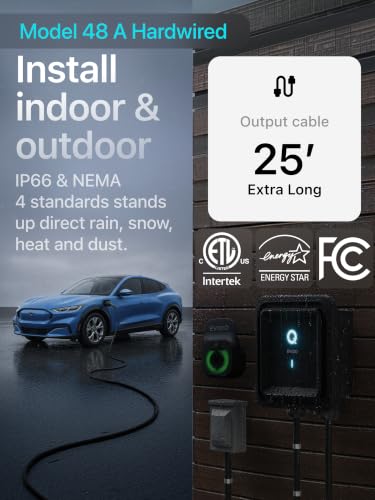
EVIQO 48A Level 2 J1772 Hardwired Charger

This EVIQO 48A charger targets drivers who want fast home charging with the J1772 standard. It is a hardwired Level 2 unit designed for a 240V circuit. At 48 amps, it can deliver strong charging speeds when paired with a suitable breaker. The rugged housing suits garages and outdoor walls when installed to code.
I like the clean look and simple use case. You pull in, dock the handle, and the session starts. If your EV supports higher onboard AC charging, you gain the most from 48A. If your car limits AC intake to 32A or 40A, it still works and future‑proofs your setup. You can install an EV charger at home like this and forget about range anxiety.
Pros:
- 48A output for fast Level 2 charging
- Hardwired design avoids outlet GFCI tripping issues
- Clean wall mount for tidy cable management
- J1772 works with most non‑Tesla EVs in the US
- Good future‑proof pick if you upgrade cars later
Cons:
- Requires a dedicated 60A circuit for full 48A use
- No clear app or Wi‑Fi features listed
- Hardwired unit is not portable
What Amazon Buyers Are Saying
Common themes in current Amazon reviews for 48A J1772 hardwired units include easy daily use and stable charging speeds. Many buyers like the tidy look and the solid feel of the connector. A few mention the need for a licensed electrician and a permit, which is standard. Others note that hardwiring eliminated nuisance trips found with some plug‑in setups.
My Recommendation
If you want a set‑and‑forget J1772 charger with strong speed, this is a solid pick. It suits homeowners who plan to stay put and want a clean hardwired install. I rate it well for speed and reliability. Lack of app features may be a trade‑off if you like data and control.
| Category | Rating |
|---|---|
| Installation Readiness | 4/5 |
| Charging Speed | 4.5/5 |
| Build & Weather Resistance | 4.5/5 |
| Smart Features | 3/5 |
| Value for Money | 4/5 |
| Overall Rating | 4.2/5 |
ChargePoint HomeFlex (NEMA 14-50) J1772
The ChargePoint HomeFlex is a well‑known smart Level 2 charger. It comes with a NEMA 14‑50 plug for easy installs, and it can be hardwired for higher output. With J1772, it covers most EVs sold in the US. The app is polished, and it tracks sessions, costs, and schedules.
If you want to install an EV charger at home with minimal fuss, this model is easy to like. With a 14‑50 outlet, you can be up and running fast. The app lets you set off‑peak schedules to save money. If you later hardwire it, you can raise the max amps, subject to your panel and breaker size.
Pros:
- Trusted brand with broad EV compatibility
- App control for scheduling and cost tracking
- Flexible: plug‑in now, hardwire later if needed
- Adjustable current to match your circuit
- Works with voice assistants on many setups
Cons:
- Max output with 14‑50 plug is lower than hardwired
- Wi‑Fi setup can take patience in weak signal areas
- Price can be higher than basic units
What Amazon Buyers Are Saying
Many Amazon buyers praise the reliable app, clean design, and easy plug‑in setup. People like the detailed session data and schedule control. Some note that Wi‑Fi signal strength matters during setup. Others say the 14‑50 version met their needs without a hardwire job.
My Recommendation
HomeFlex is my top smart J1772 pick for most homes. It fits beginners and power users. It is flexible, data‑rich, and well supported. If you plan to install an EV charger at home and want an easy first step, start here.
| Category | Rating |
|---|---|
| Ease of Install (Plug‑in) | 4.5/5 |
| Charging Speed | 4.5/5 |
| App & Smart Features | 5/5 |
| Build Quality | 4.5/5 |
| Value for Money | 4.5/5 |
| Overall Rating | 4.7/5 |
EVIQO 48A NACS Hardwired Tesla Charger
This EVIQO 48A NACS unit targets Tesla‑style charging without an adapter. NACS is now the North American standard connector on many 2025–2026 EVs. A 48A hardwired setup gives you high power on a dedicated 240V circuit. The design aims for a clean, permanent mount with simple daily use.
If your car has a NACS inlet, this is direct and convenient. You avoid using a J1772 adapter day to day. The unit is ideal if you want to install an EV charger at home and keep the process simple. Check your panel capacity and permit needs before the electrician arrives.
Pros:
- NACS handle for Tesla‑style inlets
- 48A current for fast Level 2 charging
- Permanent hardwired stability
- Sleek look that suits modern garages
- Great for households with multiple NACS EVs
Cons:
- Not ideal for J1772 cars without an adapter
- Hardwired only; not portable
- Smart features are not clearly listed
What Amazon Buyers Are Saying
Recent Amazon feedback for NACS hardwired units often spotlights the simple plug‑and‑charge flow. Owners like not fumbling with adapters. Some note that cable management and reach matter by parking layout. Others mention a clean install look after a pro setup.
My Recommendation
Have a Tesla‑style inlet and want a neat, quick charge every night? This fits the bill. It shines for NACS households that plan to stay with the standard. It is a fast, tidy pick if you want to install an EV charger at home and keep it native.
| Category | Rating |
|---|---|
| NACS Convenience | 5/5 |
| Charging Speed | 4.5/5 |
| Installation | 4/5 |
| Smart Features | 3/5 |
| Value for NACS Owners | 4.5/5 |
| Overall Rating | 4.3/5 |
Enphase HCS-80 64A Hardwired J1772
The Enphase HCS‑80 is a tank. It used to be ClipperCreek, known for tough hardware. This one delivers up to 64A on J1772, which is serious power for Level 2. It is hardwired, safety certified, and includes a 25 ft cable with a ruggedized connector.
This unit skips Wi‑Fi. It focuses on robust, safe charging. If you want to install an EV charger at home that will outlast a few cars, this is a prime choice. It suits high‑mileage drivers and two‑EV homes with load capacity to spare.
Pros:
- High 64A output for very fast Level 2 charging
- 5‑year warranty offers long support
- Rugged build for daily heavy use
- 25 ft cable helps reach multiple parking spots
- Simple, reliable, and safety focused
Cons:
- No smart/app features out of the box
- Needs a large dedicated circuit and capacity
- Hardwired makes relocation harder
What Amazon Buyers Are Saying
Buyers on Amazon often praise Enphase/ClipperCreek units for toughness and reliability. Many mention years of steady use. Some wish for app features. A few note the install needs a strong panel and a pro who knows EV circuits well.
My Recommendation
Pick HCS‑80 if you value durability and raw speed. It is a workhorse for homes with ample electrical capacity. It is one of the best choices if you install an EV charger at home and want industrial‑grade reliability.
| Category | Rating |
|---|---|
| Durability & Safety | 5/5 |
| Charging Speed | 5/5 |
| Ease of Install | 4/5 |
| Smart Features | 2/5 |
| Value for Heavy Users | 4.5/5 |
| Overall Rating | 4.6/5 |
Portable 16A Level 1/2 EV Charger (ETL)
This portable 16A EVSE works on 110V and 240V. It is ETL certified, which is good for safety peace of mind. It suits drivers who charge at modest speeds, at home or on trips. It is simple, compact, and easy to stash in a trunk.
If you rent or move often, portability is key. You can install an EV charger at home with a 240V outlet and still take it when you move. On 240V at 16A, it gives a steady daily top‑up for many commutes. On 110V, it is slower but it works in a pinch.
Pros:
- Portable and flexible for travel or rentals
- ETL certification adds safety confidence
- Works on 110V or 240V
- Budget‑friendly entry to Level 2 speeds
- Plug‑and‑play with no app fuss
Cons:
- 16A is slower than 32–48A home units
- No smart features or scheduling
- Relies on available outlets, which may need upgrades
What Amazon Buyers Are Saying
Owners often highlight the versatility and fair price. Many say it works well for road trips and as a backup. Some wish for faster speeds at home. A few stress checking outlet quality and using the right gauge extension only when needed.
My Recommendation
Great as a starter or backup. It is ideal for renters, light drivers, and travelers. If you install an EV charger at home and want a unit you can pack up later, this is a smart, low‑risk buy.
| Category | Rating |
|---|---|
| Portability | 5/5 |
| Charging Speed | 3/5 |
| Safety & Certification | 4/5 |
| Ease of Use | 4.5/5 |
| Value | 4.5/5 |
| Overall Rating | 4.2/5 |
How to Choose the Right Setup to Install EV Charger at Home
Picking the right charger is easy when you match it to your car, your panel, and your habits. Here is how I advise homeowners to plan a safe, smooth setup that lasts. Keep it simple. Focus on the circuit, the connector, and how you will actually use it day to day.
1. Size the Circuit and Your Electrical Panel
Start with your panel. Check spare breaker spaces and total capacity. Most homes do fine with a 40A or 50A breaker for Level 2. If you want 48A charging, you likely need a 60A breaker. For 64A, the circuit is even larger. A licensed electrician should run a load calculation. This checks your home’s total demand against the main service rating.
Know the 80% rule. EV charging is continuous load. That means a 50A breaker supports up to 40A continuous charging. Many chargers let you set current to match your circuit. This is helpful if your panel is tight. If you install an EV charger at home in a garage, note that receptacles often need GFCI protection per modern code. Hardwired EVSEs include internal ground‑fault protection per EVSE standards. Your electrician will handle this to NEC Article 625 and local rules.
Permit and inspection matter. Most cities require a permit for a new 240V circuit. Inspections protect you and your home insurance. Your electrician can pull the permit and close it after the job. If you plan a future second EV, add conduit capacity now. It saves money later.
2. Pick the Right Connector and Cable Management
Connector choice is easy today. Most 2025–2026 EVs in North America ship with NACS (Tesla‑style). Many older models still use J1772, and adapters exist both ways. If your household has mixed connectors, consider J1772 plus an adapter, or add a second unit. You can also mount two chargers and share a circuit on some models.
Think about cable length. A 23–25 ft cable reaches more spots. Check where your charge port is on the car. Front, rear, or side ports change the mount spot. If you park outside, pick a weather‑resistant unit with a rugged cable. Use a wall holster to keep the handle clean and off the floor. Neat cable management makes daily charging fast and safe.
Plan for growth. If you will swap cars, choose a charger that meets the highest onboard charger rate you expect. A 48A unit is a safe bet for speed. If your panel is smaller, a 32A unit can still cover a normal commute overnight.
3. Decide on Plug‑In vs Hardwired and Smart Controls
Plug‑in with a NEMA 14‑50 is fast to install if the outlet already exists. It is also more flexible. You can move the charger later. Note that many 14‑50 circuits now need GFCI breakers in garages. This can cause nuisance trips with some EVSEs. Many people avoid this by going hardwired, since the EVSE has its own ground‑fault protection built in.
Hardwired is cleaner and can allow higher current. It is also more secure outdoors. If you install an EV charger at home and plan long‑term, hardwire is great. For controls, a smart unit lets you schedule, track costs, and sometimes get utility rebates. If your rate plan has off‑peak discounts, smart scheduling pays back fast. If you want bulletproof hardware and do not need data, a non‑smart, rugged unit like the Enphase HCS‑80 is hard to beat.
Final Verdict: Which Should You Buy?
ChargePoint HomeFlex is the best all‑around pick for most drivers. It is easy to install, smart, and flexible. If you need max durability or higher amps, pick the Enphase HCS‑80.
When you install an EV charger at home, match the charger to your panel, car, and routine. Do that, and home charging will be simple, cheap, and fast.
FAQs Of install ev charger at home
Do I need a permit to install an EV charger at home?
In most US cities, yes. A permit and inspection are standard for a new 240V circuit.
What size breaker do I need for a Level 2 charger?
It depends on current. Example: 40A charging needs a 50A breaker due to the 80% rule.
Is a NEMA 14‑50 outlet better than hardwiring?
It is flexible and portable. Hardwiring is cleaner and can avoid GFCI nuisance trips.
Can my 100A panel support a Level 2 charger?
Often, yes. A load calculation by a licensed electrician will confirm safe capacity.
Will a 32A charger be enough for daily use?
For many commutes, yes. It can add 20–25+ miles per hour depending on the car.
What is the difference between J1772 and NACS?
Both are AC connectors. Many new US cars use NACS. Most older non‑Tesla use J1772.
Can I use my dryer outlet for charging?
Only if it matches voltage, amperage, and code. Get an electrician to verify safety.
Are there rebates or tax credits for home chargers?
Many utilities offer rebates. Federal credits may apply in eligible areas through 2032.