
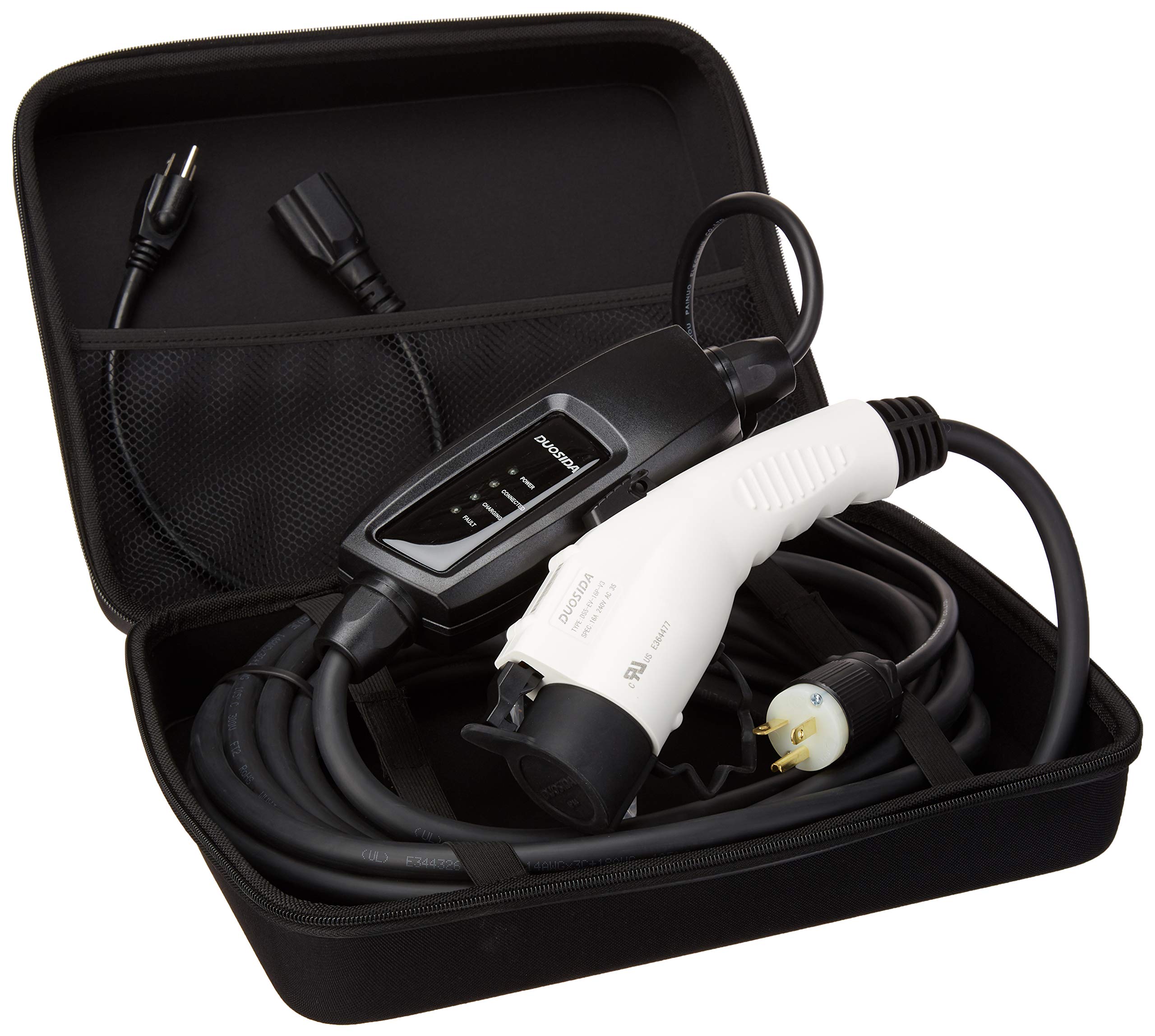
A EVSE Level 1 plugs into a standard household outlet and delivers power slowly but reliably, adding roughly 3 to 5 miles of range per hour for most EVs and plug-in hybrids. That pace works fine for drivers who charge overnight or don’t rack up heavy daily mileage. It also serves as a practical backup for anyone whose Level 2 home charger fails or who needs a charging option while traveling.
An EVSE (electric vehicle supply equipment) is the box and cable assembly that manages the connection between an outlet and a car’s charging port, handling communication and safety functions like ground fault protection. Level 1 EVSEs use a standard NEMA 5-15 household plug and typically supply 12 to 16 amps at 120 volts. Some newer portable units add a second mode for 240-volt outlets, blurring the line between Level 1 and Level 2 in a single device.
Picking the right one means checking connector type first: J1772 fits most non-Tesla EVs and PHEVs, while NACS is built for Tesla and newer NACS-equipped models. Amperage, cable length, weather resistance, and whether the unit needs a dedicated circuit all affect how well a charger fits daily use. Adjustable current, delay timers, and Wi-Fi app control add convenience but aren’t essential for basic charging. The following picks cover a range of budgets, connector types, and features for shoppers who want a dependable plug-in charging solution.
Best for dual-voltage flexibility: Duosida Level 1+2 EV Charger
Best for simple 120V charging: Lectron Level 1 EV Charger
Best for long-cable driveway reach: EVDANCE Level 1&2 EV Charger
Best for adjustable current control: bokman Portable Level 1&2 EV Charger
Best for budget dual-voltage charging: VEVOR Level 1&2 EV Charger
Best for compact portability: Morec 15A EV Charger
Best for a straightforward spare charger: BESENERGY Level 1 EV Charger
Best for Tesla owners wanting app control: Lectron Level 1 Tesla Charger (WiFi)
Best for future Level 2 upgrades: WOLFBOX Portable Level 1&2 EV Charger
Best for native NACS Tesla charging: SEGUMA Level 1/2 Tesla Charger
Duosida Level 1+2 EV Charger

This charger suits shoppers who want one unit that handles both a standard outlet and a 240V connection without buying separate equipment.
Pros
- Includes a free 110V adapter for Level 1 use
- 25-foot cord reaches most driveways and garages
- Comes with a carrying case for storage or travel
Cons
- Requires a NEMA 6-20 outlet for full Level 2 speed
- Older design compared to newer adjustable-current models
- 1-year support window mentioned in listing details is shorter than some rivals
The Duosida works as a NEMA 6-20 Level 2 charger at 16 amps, delivering up to 3.84 kW, and converts to Level 1 with the included 110V adapter. That flexibility makes it a solid choice for drivers who might upgrade their outlet later but need Level 1 charging now. The LED status box gives basic feedback without a full digital display. J1772 compatibility covers most non-Tesla EVs, though Tesla owners need a separate adapter.
Lectron Level 1 EV Charger
This is a dedicated Level 1 charger for anyone who wants a no-frills, plug-and-go solution on a standard household circuit.
Pros
- ETL certified to UL2594 safety standards
- IP65 weather resistance for outdoor use
- Energy Star certified for efficiency
Cons
- Limited to 120V, no Level 2 mode
- 15-amp output caps charging speed
- Shorter 16-foot cord than some competitors
At 15 amps and 1.65 kW, this charger delivers a modest but steady overnight charge, adding roughly 40 to 50 miles of range for most EVs left plugged in overnight. It supports J1772-equipped vehicles from brands like Ford, Kia, and Nissan. The certifications matter here: ETL and Energy Star backing give buyers confidence in safety and efficiency without relying on unverified claims.
EVDANCE Level 1&2 EV Charger
This charger fits drivers who want the option to switch between a standard outlet and a 240V NEMA 6-20 connection using the same unit.
Pros
- 25-foot cable offers generous reach
- LED display shows charging status and errors
- IP66 housing rated for outdoor exposure
Cons
- Not compatible with NEMA 6-15, 10-30, 14-30, 14-50, or 6-50 outlets
- Excludes several models like Porsche Taycan and Toyota Prius Prime
- 1-year warranty is shorter than some competitors
Dual-voltage operation is the main draw here, with 12A/120V for basic Level 1 charging and 16A/240V for faster Level 2 speeds when a compatible outlet is available. The compatibility list has notable exceptions, so checking a vehicle against it before buying avoids problems. Tesla drivers need a separate J1772 adapter.
bokman Portable Level 1&2 EV Charger
This charger stands out for drivers who want fine control over charging current and the ability to schedule off-peak sessions.
Pros
- Adjustable current from 6 to 16 amps
- Built-in delay timer up to 12 hours
- Tactile buttons work well in cold or wet conditions
Cons
- Requires a NEMA 6-20 outlet for Level 2 speed, adapter needed for standard outlets
- Higher-amp versions (32A, 40A) sold separately at different price points
- Newer product with a shorter track record
The delay timer lets owners start charging during off-peak electricity hours, which can lower costs over time. ETL certification and an IP65 rating support reliable outdoor use, and the TPE cable is rated from -22°F to 130°F. Reviewers note strong performance on both 120V and 240V circuits, with one mentioning consistent 15.6-amp charging on a Nissan Leaf using a NEMA 6-20 outlet.
VEVOR Level 1&2 EV Charger
This charger works well for budget-conscious buyers who still want dual-voltage flexibility and solid weather protection.
Pros
- NEMA 6-20 plug plus included NEMA 5-15 adapter
- IP66 waterproof control box
- 25-foot cable suits multi-car households
Cons
- Fewer customer reviews than more established competitors
- No adjustable current settings
- Basic LED indicators instead of a digital display
VEVOR’s charger covers both a standard outlet and a 240V circuit with one cable, using an intelligent chip for overvoltage, overcurrent, and overheating protection. The 25-foot cable and carrying bag make it practical for households with more than one EV or shared parking. J1772 compatibility applies broadly, though Tesla owners need an adapter.
Morec 15A EV Charger
This is a straightforward Level 1 charger built for drivers who just need dependable overnight charging from a household outlet.
Pros
- 20-foot cable offers solid reach for most parking setups
- Real-time monitoring of current and plug temperature
- Automatic shutoff on overheating or voltage issues
Cons
- Limited to 120V, no Level 2 mode
- 15-amp output caps overnight range gains
- No Wi-Fi or app features
Morec’s charger sticks to Level 1 basics, delivering 15 amps and 1.65 kW through a NEMA 5-15 plug. Built-in chips monitor temperature and current, cutting power automatically if something goes wrong. It’s compatible with J1772 vehicles across major brands, with Tesla requiring a separate adapter. The company backs it with round-the-clock customer support.
BESENERGY Level 1 EV Charger
This charger is a reasonable pick for drivers who want a compact, no-frills backup unit to keep in the trunk.
Pros
- Compact and lighter than many OEM-supplied chargers
- IP66 waterproof rating
- 20-foot cord for flexible parking positions
Cons
- Requires a dedicated 20-amp circuit despite the 15A plug, per some user reports
- Mixed durability feedback in customer reviews
- Only 1 USB port and basic LED indicators
BESENERGY’s charger delivers 15 amps at 120V through a standard NEMA 5-15 plug, doubling the charging speed of some OEM-included cables. Reviewers report reliable results with vehicles like the Chevy Volt and Nissan Leaf, though a few mention moisture issues or difficulty removing the connector after charging. It’s a functional spare charger, not necessarily the most rugged.
Lectron Level 1 Tesla Charger (WiFi)
This charger targets Tesla and NACS drivers who want app-based monitoring and scheduling built into a Level 1 unit.
Pros
- Wi-Fi app control for scheduling and monitoring
- Native NACS connector, no J1772 adapter needed for Tesla
- IP67-rated control box
Cons
- Limited to 120V and 12 amps, no Level 2 option
- App dependency adds a layer of complexity some drivers may skip
- 16-foot cable is shorter than several competitors
Delivering 1.44 kW through a NEMA 5-15 plug, this charger suits Tesla and other NACS-equipped EVs needing overnight top-offs of about 30 to 40 miles. The Lectron app lets owners track charging sessions and set kWh limits remotely. It skips J1772 compatibility entirely, so non-Tesla drivers should look elsewhere unless their vehicle uses NACS natively.
WOLFBOX Portable Level 1&2 EV Charger
This charger fits drivers who want a portable unit today with the option to install it as a wall-mounted 40-amp station later.
Pros
- Adjustable current from 6 to 40 amps
- Doubles as a wall-mounted unit or portable charger
- 3-year warranty, longer than most competitors
Cons
- Full 40A speed requires a NEMA 14-50 outlet, not a standard household plug
- Heavier at nearly 15 pounds
- Newer product with a limited review history
WOLFBOX’s charger goes well beyond typical Level 1 output, capable of up to 40 amps on a NEMA 14-50 outlet while still supporting 120V and 240V via included adapters. That range makes it a longer-term investment for drivers anticipating an electrical upgrade. ETL and NEMA 4 certification, plus an IP66 rating, support outdoor use in tough conditions. J1772 compatibility covers most non-Tesla EVs.
SEGUMA Level 1/2 Tesla Charger
This charger is built for Tesla and newer NACS-equipped vehicles that want native connector compatibility without a J1772 adapter.
Pros
- Native NACS/J3400 connector, no adapter required
- Adjustable current from 6 to 16 amps
- Color TFT display with real-time voltage and energy data
Cons
- Limited to Tesla and NACS-equipped EVs, not J1772 vehicles
- 12A cap when using the NEMA 5-15 plug
- Newer to market with fewer long-term reviews
SEGUMA’s charger supports both a standard household outlet and a 240V NEMA 6-20 adapter for faster charging, with adjustable current settings to match circuit limits. A one-touch remote button opens the Tesla charge port door, mimicking the OEM experience. The IP66 rating and UL94-V0 flame-retardant materials support outdoor use across a wide temperature range.
EVSE Level 1 Buying Guide
Connector Type: J1772 vs. NACS
The connector determines which vehicles a charger can serve. J1772 covers most non-Tesla EVs and plug-in hybrids sold in the US, including models from Ford, Chevrolet, Nissan, and Kia. NACS (also called J3400) is Tesla’s connector, now adopted by several other automakers for 2025 and newer models.
Tesla owners have two paths: buy a charger with a native NACS connector, or use a J1772 charger with a Tesla-specific adapter. Buying native NACS skips the adapter step but limits the charger to Tesla and NACS-equipped vehicles only.
Voltage and Amperage
| Feature | What It Means |
|---|---|
| 120V / NEMA 5-15 | Standard household outlet, true Level 1 charging |
| 240V / NEMA 6-20 | Dedicated circuit, faster Level 2-style charging |
| 12-16 amps | Common current range for portable EVSEs |
| Adjustable current | Lets the charger match a circuit’s safe limit |
Higher amperage charges faster, but only if the outlet and home wiring can support it safely. A 16-amp charger plugged into a 15-amp circuit can trip breakers or overheat the outlet. Checking a home’s electrical panel and outlet rating before buying avoids this problem.
Cable Length and Portability
Cable length affects how easily a charger reaches a vehicle’s charging port from the outlet. Cables between 20 and 25 feet cover most driveways and garage setups without needing an extension cord. Shorter cables around 16 feet work fine for tighter spaces but limit flexibility.
Weight and included carrying cases matter for drivers who travel with their charger. A compact, bagged unit slips into a trunk without taking up much space.
Weather Resistance and Certification
Look for an IP65 or IP66 rating if the charger will sit outside or in an uncovered carport. These ratings indicate resistance to dust and water intrusion. ETL certification confirms the product has been tested against recognized US safety standards, similar to UL certification.
Extra Features Worth Considering
- Adjustable current: useful for matching different outlets or circuits
- Delay timers: help shift charging to off-peak electricity hours
- Wi-Fi and app control: adds remote monitoring and scheduling, though it requires a stable home network
- LED or digital displays: show charging status, voltage, and errors at a glance
None of these features replace the core requirements of matching connector type and voltage to a vehicle and outlet. They add convenience once compatibility is confirmed.