
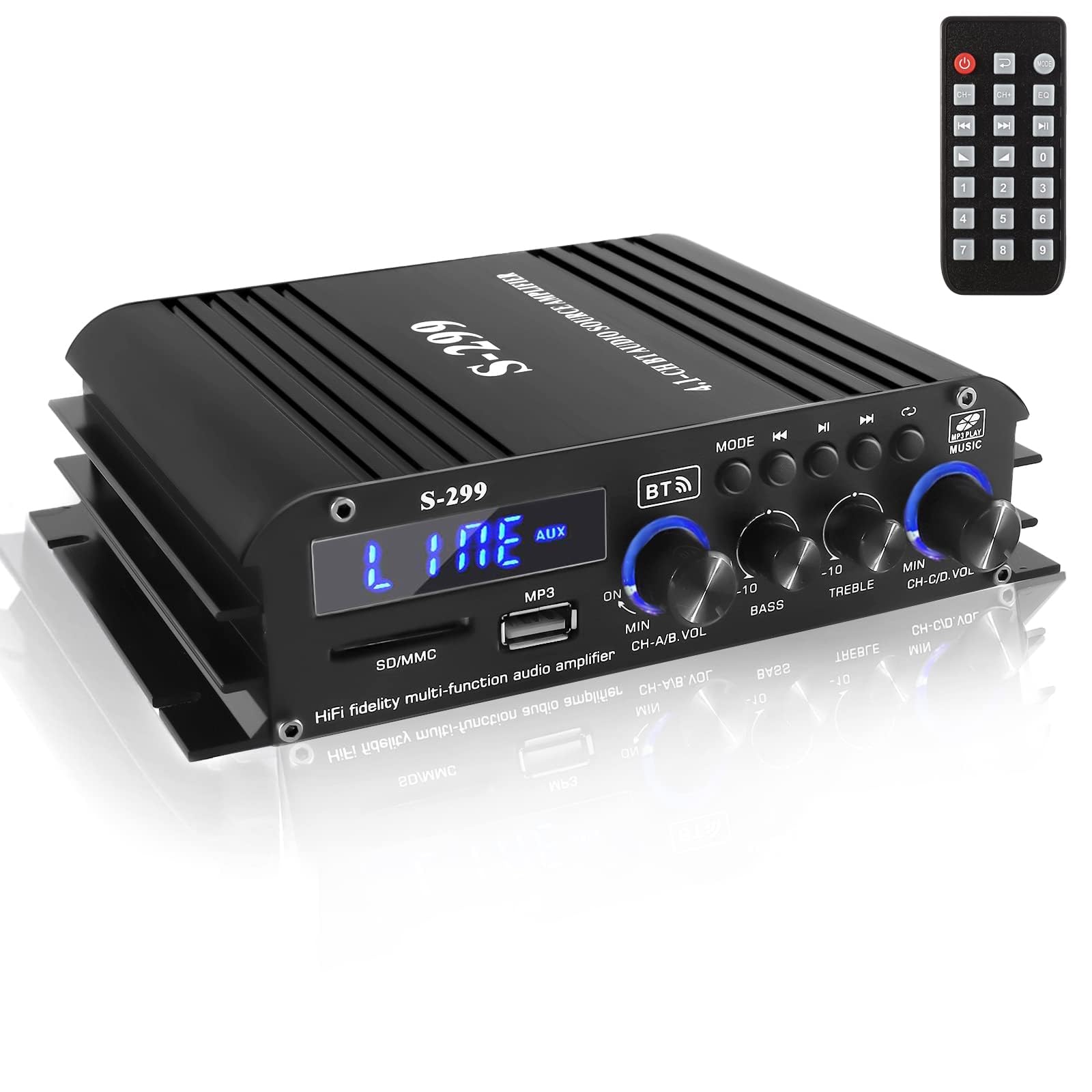
A Bluetooth car amplifier boosts audio quality and adds wireless streaming and power to your car sound.
I’ve spent years installing and testing car audio gear, and I know what makes a bluetooth car amplifier truly useful. This guide cuts through specs and marketing to show what a bluetooth car amplifier does, how to choose one, how to install it, and how to get the best sound in real cars. Read on for practical tips, common pitfalls, and clear buying advice so you can upgrade your ride’s audio with confidence.

What is a Bluetooth car amplifier?
A bluetooth car amplifier combines a power amplifier with a Bluetooth receiver. It lets you stream audio from phones and tablets while powering speakers or subwoofers. Most units replace a head unit or add to an existing system. They range from compact single-channel amps to multi-channel systems with DSP and advanced tuning.
Why it matters:
- Adds wireless convenience and modern codec support.
- Delivers more power than factory systems.
- Simplifies installs by reducing wire runs in some setups.
Source: jbl.com
Key features to look for in a bluetooth car amplifier
Choose features that match your goals. Here are the essentials.
- Power ratings and RMS clarity. Look for true RMS power per channel at specified impedance.
- Bluetooth version and codecs. Newer Bluetooth versions and aptX/LDAC support better quality.
- Channels and bridging options. Decide between mono amps for subs and multi-channel for full systems.
- Built-in DSP and EQ. Useful for tuning and correcting factory speaker placement.
- Inputs and outputs. RCA preouts, speaker-level inputs, and remote turn-on options matter.
- Protection features. Thermal and short-circuit protection prevent failures.
Match features to use:
- Daily streaming: prioritize Bluetooth stability and codecs.
- High SPL or custom builds: focus on RMS power and cooling.
Source: crutchfield.com
Benefits of adding a bluetooth car amplifier
A bluetooth car amplifier delivers both convenience and performance. Benefits include:
- Better sound clarity and headroom than stock systems.
- Wireless streaming without changing the factory head unit.
- Flexible system design for adding subwoofers and speakers.
- Tuning options that improve bass, imaging, and overall balance.
- Potentially cleaner installs with fewer retrofits.
These gains make long drives more enjoyable and let you extract more from quality audio files and services.
Types of bluetooth car amplifiers
Understanding types helps narrow choices quickly.
- Compact all-in-one amps
- Small footprint and often include Bluetooth receivers.
- Good for tight spaces and easy upgrades.
- Multi-channel amps
- 4 or 5 channels for full speaker loads and a sub output.
- Best for replacing a head unit with fewer components.
- Mono (sub) amplifiers
- Designed to drive one or two subwoofers.
- Deliver high current and deep bass control.
- DSP-equipped amps
- Offer crossover, time alignment, and parametric EQ.
- Ideal for custom tuning and audiophile setups.
Source: pickedlast.se
How to choose the right bluetooth car amplifier
Make a plan. Follow these steps to choose wisely.
- Define goals
- Do you want louder sound, better clarity, or wireless streaming?
- Check speaker impedance
- Match amp channel ratings to speaker ohms (2Ω, 4Ω).
- Set a power target
- Aim for amp RMS power near or slightly above speaker RMS rating.
- Consider space and ventilation
- Amplifiers need airflow to avoid thermal cutout.
- Evaluate Bluetooth needs
- Choose aptX or LDAC if you stream high-res audio often.
- Plan inputs and integration
- Ensure the amp can take factory head-unit outputs or speaker-level inputs.
- Budget for wiring and extras
- Good cables, a reliable ground, and a high-amp fuse are essential.
These steps keep purchases practical and avoid mismatched systems.
Installation basics and wiring tips
A clean install improves both sound and reliability. Here are core steps and tips.
- Plan the amp location
- Under seats or in trunks are common. Allow airflow and easy wiring routes.
- Use the right gauge wire
- Match power wire gauge to amp current draw. Undersized wire causes voltage drop.
- Secure a solid ground
- Short ground run to chassis metal. Sand paint for a bare-metal contact.
- Add a proper fuse
- Fuse close to the battery within 12 inches for safety.
- Remote turn-on and signal routing
- Use RCA cables for low-noise input. Use speaker-level inputs only when needed.
- Cooling and mounting
- Avoid enclosing the amp in tight boxes. Use vibration-resistant mounting.
Safety tip: disconnect the battery before wiring. Test power and ground with a multimeter.
Bluetooth versions, codecs, and audio quality
Bluetooth tech affects real-world sound. Key ideas to know:
- Bluetooth version
- Newer versions reduce latency and improve connection stability.
- Codecs
- SBC is basic. aptX and AAC improve fidelity. LDAC offers higher bitrates for compatible devices.
- Latency
- Low latency matters for video sources. Look for aptX LL if you watch video.
- Interference
- Metal and other wireless devices can cause dropouts. Keep antennas clear.
If you stream Spotify or low-bitrate sources, codec differences matter less. For high-res files, prefer amps with advanced codec support.
Sound tuning, DSP, and achieving great in-car audio
Tuning makes a system sound professional. Use these steps.
- Start with gain structure
- Set gains to avoid clipping while maximizing signal-to-noise ratio.
- Use high-pass and low-pass crossovers
- Protect speakers from unwanted bass and shape sub output for clarity.
- Time alignment and imaging
- DSP can delay channels to improve the soundstage.
- Parametric EQ
- Fix resonances and smooth frequency response in targeted bands.
- Test with reference tracks
- Use well-mastered songs to judge balance and accuracy.
Small adjustments often yield large improvements. Measure with a mic if you can.
Troubleshooting and maintenance
Common problems and fixes are straightforward.
- No sound
- Check RCA and speaker connections. Verify remote turn-on and fuses.
- Noise or hum
- Look for ground loops and poor grounding. Run signal cables away from power cables.
- Bluetooth dropouts
- Update device firmware and re-pair. Check for interference and antenna placement.
- Overheating
- Improve ventilation or move amp to a cooler spot. Reduce gain or add cooling.
- Distortion at high volume
- Reduce gain and confirm speaker RMS match. Consider a higher-power amp.
Routine check: inspect wiring annually and clean terminals to prevent corrosion.
Personal experience: mistakes to avoid and practical tips
From years of installs, here are honest lessons I learned.
- Don’t guess power needs
- I once used an undersized amp for a sub and heard clipping. Match RMS ratings precisely.
- Use good wiring the first time
- Cheap wire leads to voltage drop and poor bass. Spend on quality power and ground cables.
- Test before final mounting
- I fastened an amp then found a bad RCA. Leave access until testing is complete.
- Tune, then re-check after road time
- Cars change acoustically once driven with passengers. Revisit tuning after a few drives.
- Keep firmware updated
- I fixed a pairing bug on a Bluetooth amp with a simple firmware update.
These small corrections save time and money and keep your car sounding great.
PAA-style common questions
How does a bluetooth car amplifier differ from a regular amp?
A bluetooth car amplifier includes a built-in Bluetooth receiver for wireless input. A regular amp typically needs an external receiver or head unit for signal.
Can I add a bluetooth car amplifier to a factory stereo?
Yes. Many amps accept speaker-level inputs or use line outputs through adapters to integrate with factory systems. Proper wiring and gain setting are key.
Will a bluetooth car amplifier improve bass?
Yes, especially if the stock system lacks power. A dedicated mono amp for a subwoofer gives cleaner, deeper bass. Pairing with the right sub and enclosure matters.
Frequently Asked Questions of bluetooth car amplifier
What power rating should I choose for my speakers?
Pick an amplifier with RMS power near or slightly above the speaker RMS rating to avoid distortion and damage. Matching impedance is also essential for safe operation.
Is aptX or LDAC worth it in a car?
If you stream high-bitrate music and your phone supports these codecs, aptX or LDAC can improve detail. For compressed streams, gains are smaller but still noticeable to careful listeners.
Can I install a bluetooth car amplifier myself?
Yes, many owners install amps with basic tools and careful reading. If you’re unsure about wiring or grounding, consult a professional to avoid damage or fire risk.
How do I prevent Bluetooth dropouts?
Keep the amp’s antenna unobstructed, use updated firmware, and avoid routing signal cables near power wires. Sometimes repositioning the source device helps.
Will a bluetooth car amplifier drain my battery when parked?
Properly installed amps use a remote turn-on lead that powers off with the car. If miswired or set to remain on, an amp can drain the battery, so verify wiring and settings before use.
How long do bluetooth car amplifiers last?
With good ventilation and solid wiring, amps can last many years. Life expectancy depends on use, thermal stress, and build quality; regular checks extend longevity.
Conclusion
A bluetooth car amplifier is one of the most practical upgrades for better sound and modern convenience in a vehicle. It adds power, wireless streaming, and tuning flexibility while keeping installs relatively simple. Start by matching power and impedance, prioritize features that fit your listening habits, and follow safe wiring practices. If you take one step today, inspect your car’s wiring and measure speaker specs—this will clarify which amp fits best. Try a modest upgrade first, tune carefully, and share your results or questions below to keep the conversation going.