
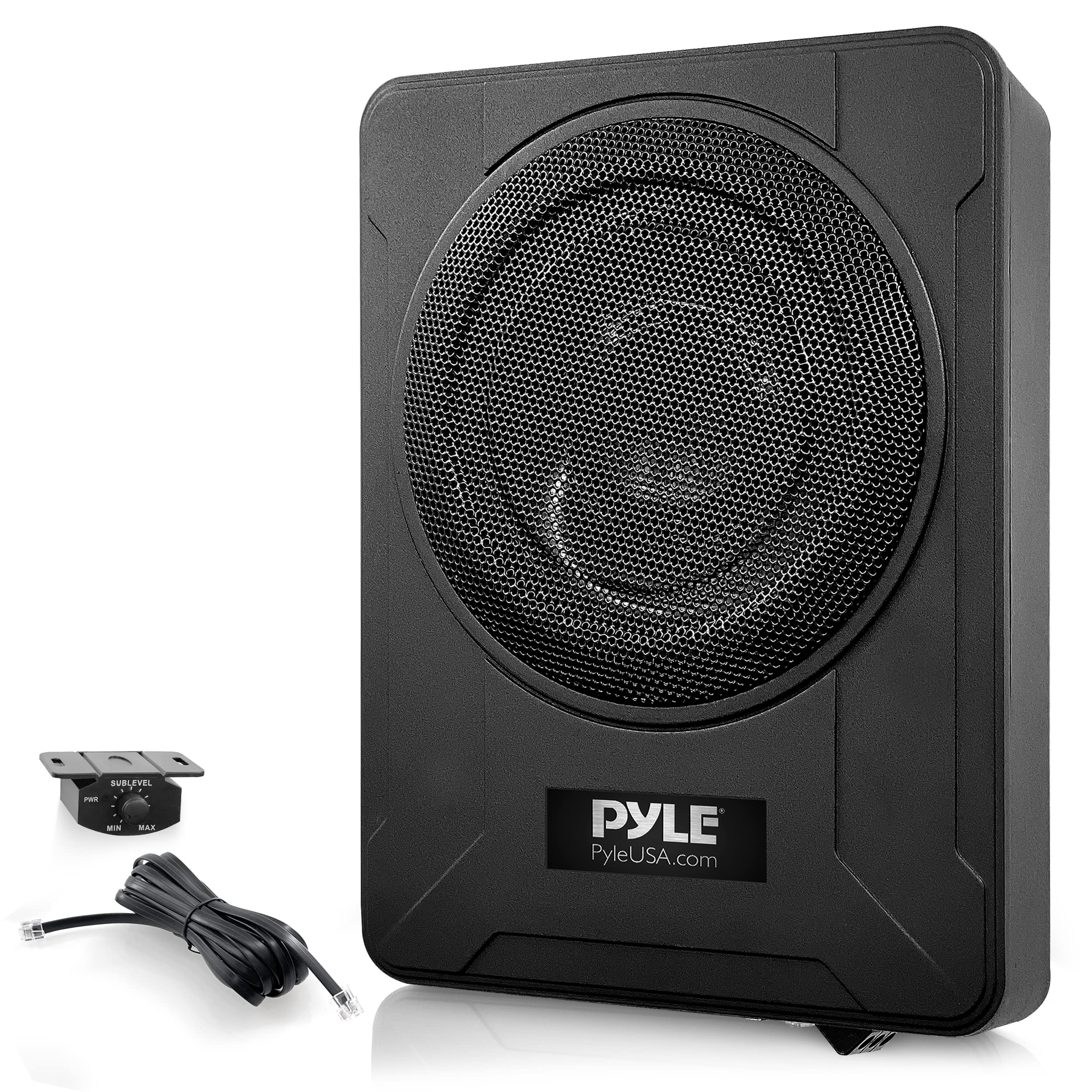
A car powered subwoofer boosts bass using its own built-in amplifier for simpler installs.
I write from long experience installing and testing car audio gear, and I know how much a clean, punchy low end changes your drive. This article explains what a car powered subwoofer is, how it works, when it helps, and how to choose, install, and tune one for the best sound. Read on for clear, practical steps and real-life tips that make buying and using a car powered subwoofer easy and reliable.

What is a car powered subwoofer?
A car powered subwoofer is a self-contained bass speaker that includes its own amplifier. This design combines the driver, enclosure, and amp in one unit. A car powered subwoofer is often called an active or self-powered sub. It simplifies wiring and can be a great upgrade for factory stereos or tight spaces.
How a car powered subwoofer works
The amplifier inside a car powered subwoofer receives a signal from the head unit. The amp boosts the signal and sends power to the woofer. Most units accept line-level inputs and speaker-level inputs. Some include a remote bass knob to control gain from the dash. This all-in-one setup removes the need for a separate external amplifier and simplifies grounding and power runs.
Benefits of a car powered subwoofer
A car powered subwoofer offers useful gains for many drivers. Key benefits include:
- Easier installation: fewer components and simpler wiring.
- Space savings: compact builds fit in trunks, under seats, or as a slim enclosure.
- Built-in tuning: internal crossovers and bass controls make setup quicker.
- Cost-effective: often cheaper than buying a separate amplifier and sub.
- Lower risk of wiring mistakes: factory-level wiring or simple power kits usually suffice.
Source: amazon.com
Limitations and trade-offs
A car powered subwoofer is not always the best choice. Consider these trade-offs:
- Power limits: built-in amps tend to be less powerful than dedicated amps.
- Heat and ventilation: compact units can run hot under heavy use.
- Upgradability: replacing or upgrading the amp or woofer can be harder.
- Sound ceiling: serious audio enthusiasts may prefer separates for more precise tuning.
Source: kicker.com
Types and enclosure styles
Understanding types helps match a car powered subwoofer to your needs. Common options include:
- Compact sealed enclosures for tight, accurate bass.
- Ported enclosures for louder, boomier low end.
- Shallow or under-seat subs for limited space.
- Slim-line subs that fit against the rear deck or behind seats.
Each style changes bass character and the fit for your vehicle. Choose based on space, preferred bass, and power needs.
Source: crutchfield.com
Key specs to compare when buying
To pick the right car powered subwoofer, check these specs closely:
- RMS power rating to match head unit and expected volume.
- Peak power rating for short bursts, though RMS is more important.
- Frequency response to see how low the sub will go.
- Sensitivity number for efficiency and output.
- Inputs and remote control options for easy integration.
- Enclosure type and dimensions to fit your car.
Source: amazon.com
Installation basics
A smooth install avoids noise and performance issues. Follow these steps:
- Plan placement first, test-fit the sub before drilling.
- Use the correct gauge power wire to the battery and a good fuse near the battery.
- Ground to clean metal; avoid painted or rusty spots.
- Run a reliable remote turn-on lead from the head unit or use a sense wire if supported.
- Connect line-level or speaker-level inputs per the manual.
- Use a bass knob if you want quick cabin control.
Source: mtx.com
Tuning tips for better bass
Good tuning makes a car powered subwoofer sound like a careful system, not a single gadget. Steps that work:
- Set the head unit EQ flat and gain low to avoid clipping.
- Adjust the subwoofer gain until bass is full but not distorted.
- Set the low-pass crossover around 80–120 Hz depending on speakers.
- Check phase (0/180) and change if bass sounds thin or cancels.
- Drive with familiar tracks and fine-tune gain and crossover in small steps.
Source: amazon.com
Common problems and troubleshooting
When a car powered subwoofer misbehaves, these fixes often help:
- No power: check battery fuse and remote turn-on wire.
- Rattles and noise: secure the enclosure and check for loose trim.
- Distorted bass: lower gain and check source output; clipping damages the driver.
- Hum or ground loop buzz: verify clean ground and try a ground loop isolator.
- Overheating: allow ventilation and avoid extreme gain for long periods.
Maintenance and care
Keep your car powered subwoofer working well with simple care:
- Inspect wiring annually for corrosion or wear.
- Keep vents clean and avoid covering them.
- Avoid long sessions at max volume to reduce stress on the amp.
- If the sub shuts down, let it cool and check for thermal protection triggers.
Personal experience and real-world tips
I’ve installed many car powered subwoofers in different cars. I learned these clear lessons:
- Fit matters more than specs on paper. A well-placed slim sub often sounds better than an oversized, cramped unit.
- Always test with the owner present. Their music shows what matters to them.
- Avoid maxing gain to chase volume. That leads to clipping and blown drivers.
- Use a quality fuse near the battery. I’ve saved clients from fires this way.
If you follow these tips, your car powered subwoofer will last longer and sound better.
Frequently Asked Questions of car powered subwoofer
What is the main difference between a powered subwoofer and a passive subwoofer?
A powered subwoofer has a built-in amplifier, while a passive subwoofer needs an external amp. Powered subs simplify wiring and reduce component count.
Can I install a car powered subwoofer myself?
Yes, many people can install one with basic tools and wiring knowledge. Follow the manual, use correct wire gauge, and fuse at the battery.
Will a powered subwoofer draw too much battery power?
When installed correctly with a proper fuse and wiring, a car powered subwoofer should not drain the battery during typical use. Long, repeated heavy use with the engine off can deplete the battery.
Do I need a special head unit for a powered subwoofer?
No special head unit is required. Most powered subs accept line-level or speaker-level inputs and include a remote turn-on option.
How loud can a car powered subwoofer get compared to a separate amp and sub?
A powered subwoofer can be loud and satisfying for most listeners, but a separate high-power amp and sub combo usually offers higher maximum output and finer tuning.
Conclusion
A car powered subwoofer is a practical, space-saving way to add strong bass without complex gear. It excels for daily drivers, tight spaces, and quick upgrades. Think about power ratings, enclosure type, and install space when choosing one. Take action: measure your car, set a budget, and pick a sub that fits your music and space. If you installed one already, share your results or ask questions below — I’ll help troubleshoot and tune it with you.