
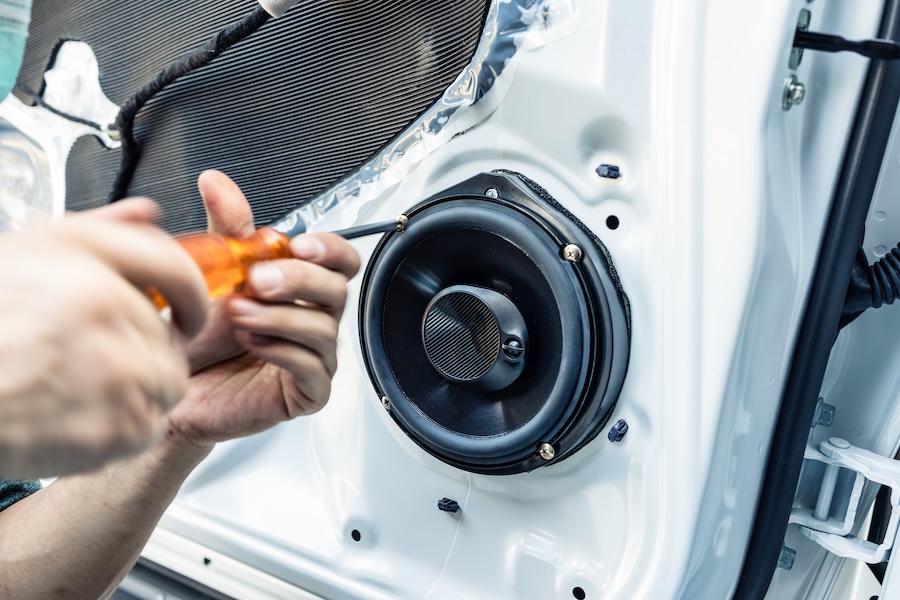
A car sound system blends quality gear and smart tuning to deliver clear, rich audio.
If you want music that feels alive while you drive, you need more than loud speakers. You need the right car sound system, set up with care and tuned with a plan. I have built and tuned dozens of systems across sedans, trucks, and SUVs. This guide shows you what matters, what to buy, and how to avoid common mistakes so your car sound system sounds great every day.

What Is a Car Sound System and How It Works
A car sound system is the chain that turns music files into sound. It starts with a head unit or a factory radio. It passes sound to a digital processor and then to amplifiers. The final link is the speakers and subwoofers.
Each part adds or limits quality. Power and clean signal matter at every step. When parts match well, you get clear vocals, tight bass, and smooth highs. When they do not, you hear noise, boom, or harsh treble.
Most factory systems cut corners. They use small amps and weak speakers. A smart upgrade fixes those limits. It can keep factory looks and add huge gains in sound.
Core Components You Need to Know
Understanding the parts helps you plan the right car sound system. These are the key pieces.
Source and head unit
The head unit controls inputs and volume. Many drivers keep the factory radio and add a processor. Others swap to a unit with Android Auto or Apple CarPlay. Look for clean pre-outs, easy menus, and strong Bluetooth.
Digital-to-analog conversion and DSP
Your music is digital. A DAC turns it into analog sound. A DSP shapes that sound. It sets time alignment, crossovers, and EQ. A good DSP can make stock speakers sound better and help blends between front stage and sub.
Amplifiers
Amps add power without distortion. Class D amps run cool and fit tight spaces. Use RMS power ratings, not peak. Match amp power to speaker power handling. Leave 20–30 percent headroom.
Speakers and subwoofers
Coaxial speakers are simple and fit most doors. Component sets split the woofer and tweeter for better imaging. Subwoofers handle low bass. A sealed box gives tight control. A ported box adds volume and depth.
Crossovers and wiring
Crossovers send the right notes to the right drivers. Good wiring keeps voltage stable and noise low. Use copper wire, proper gauge, and quality RCA cables.
When these parts work as one, your car sound system feels natural and strong, even at low volume.
Plan Your Upgrade: Goals, Car, and Music
Start with clear goals. Do you want more clarity, more bass, or both? List the music you play most. Hip-hop and EDM love strong subs. Acoustic and jazz love a clean front stage.
Think about your car. A small hatch has less space but simple paths for sound. A big SUV holds more gear and more cabin gain. Road noise sets your noise floor. If the car is loud, add sound deadening early.
From my installs, the best path is front stage first, then sub, then processing. One client with a compact sedan got a big jump in joy from a better front set and a DSP alone. The sub came later as a treat.
Budget Tiers and What You Can Expect
Your car sound system can shine at any budget. Spend where it counts.
- Starter upgrade: Basic front speakers, small sub with built-in amp, line output converter. Expect clear vocals and real bass on a tight budget.
- Mid-tier: Component fronts with a 4-channel amp, 10 or 12 inch sub on a mono amp, entry DSP. Expect strong stage, tight bass, and low noise.
- High-end: Active 3-way front stage, premium DSP, high power amps, treated doors. Expect live feel, wide stage, and clean detail at all volumes.
Leave room for install parts and tuning time. They matter as much as gear.
Installation Essentials and Wiring Safety
A clean install is the base of a reliable car sound system. Follow these steps.
- Plan power. Choose the right wire gauge for amp draw and length. Fuse within 12 inches of the battery.
- Ground well. Use bare metal, short length, same gauge as power. Tighten hard.
- Run signal and power on opposite sides to cut noise.
- Mount amps with airflow. Avoid wet or hot zones.
- Secure the sub box. A loose box is unsafe in a stop.
I once fixed a car with dim lights and random shutoffs. The cause was a missing fuse near the battery. One $10 fuse saved the whole build.
Tuning Basics: Gains, Crossovers, and Time Alignment
Good tuning can make a modest car sound system feel high end.
- Set gains by ear or, better, with a scope or test tracks. Match amp gain to the source to avoid clip.
- Use crossovers to protect each driver. For many sets, try 12 dB slopes around 80 Hz for sub, 80–100 Hz for midbass, and 2.5–3.5 kHz for tweeters.
- Add time alignment to center the image. Delay the near-side speakers a few milliseconds so sound reaches you at once.
- Equalize in small steps. Cut peaks before boosting dips. Aim for a smooth curve, not a ruler-flat line.
In my truck, a 3 ms delay on the left mid and a 1.5 dB cut at 2.8 kHz took the stage from “left heavy” to “centered and clean.” Small moves matter.
Common Mistakes and How to Avoid Them
- Too much sub, too little front stage: Balance is key. Build the front first.
- Skipping deadening: Doors act like thin drums. Treat them and seal holes.
- Chasing power numbers: Quality watts beat big peak claims. Trust RMS specs.
- Ignoring charging limits: Big amps need strong power. Upgrade the Big Three if needed.
- No tune: Even great gear can sound bad if gains and crossovers are wrong.
These traps waste time and money. A careful plan protects your car sound system and your wallet.
Soundproofing and Acoustics That Pay Off
Sound deadening lowers noise and boosts midbass. Treat outer door skins, then inner skins. Seal the speaker to the baffle with foam. Add a foam ring to couple the speaker to the door card.
Floors, trunk, and roof reduce drone and rain noise. Wheel wells can help a lot too. You hear more detail at lower volume. That saves your ears and your battery.
Smart Features and Future Trends
Modern car sound system gear blends sound and tech.
- CarPlay and Android Auto bring clean digital audio and safer control.
- High-res support up to 24-bit/96 kHz is common in DSPs and some head units.
- Class D amplifiers give high power in small cases with low heat.
- App-based DSP tuning lets you tweak from the driver seat.
- Active systems, where each driver has its own amp channel, give fine control.
Codecs like AAC and aptX help Bluetooth sound better. Wired still wins for the best quality.
Maintenance and Troubleshooting Tips
Keep your car sound system healthy with simple checks.
- Look for loose grounds and corrosion twice a year.
- Vacuum amp bays. Dust traps heat.
- If you hear alternator whine, check grounds and RCA routing first.
- If the sub cuts out, test the fuse, then the remote turn-on lead.
Most problems are simple power or signal issues. A small checklist solves them fast.
Buying Guide: Where and How to Shop
Buy from trusted dealers or brands with clear specs and support. Check return policies. Ask about real RMS power, sensitivity, and impedance. Look for measured data when you can.
Match gear as a system. For example, pair a 4 ohm sub with the right mono amp at its rated load. Plan for space and airflow. Keep warranty cards and install photos. They help with support later.
Legal, Safety, and Hearing Health
Drive safe with your car sound system. Keep alerts and sirens audible. Do not block airbags with pods or grills. Secure all gear so it cannot fly in a stop.
Protect your hearing. Long drives at very high volume can cause fatigue or loss. Enjoy your music, but give your ears breaks. Your system will still sound good at sane levels.
Frequently Asked Questions of car sound system
What is the best first upgrade for a car sound system?
Upgrade the front speakers and add a small sub with an amp. This brings clear vocals and real bass without a full rebuild.
Do I need a DSP for a car sound system?
You do not need one, but it helps a lot. A DSP fixes factory EQ, sets crossovers, and centers the stage.
How much power do I need for my speakers?
For most doors, 50–100 watts RMS per channel is enough. Use a mono amp that matches your sub’s RMS rating.
Will a new head unit improve sound by itself?
Sometimes, but gains are often small. The big jump comes from better speakers, clean power, and smart tuning.
How do I stop alternator whine in my car sound system?
Check grounds, then run signal and power on opposite sides. If needed, use a better line output converter or a DSP with balanced inputs.
Conclusion
Great sound on the road is not luck. It is a plan. Choose the right parts, install with care, and tune with intent. Your car sound system will reward you with clear voices, tight bass, and stress-free drives.
Pick one step to start today. Maybe front speakers, a small sub, or a simple DSP. Then build from there. If this helped, subscribe for more guides, ask a question, or share your build story.