
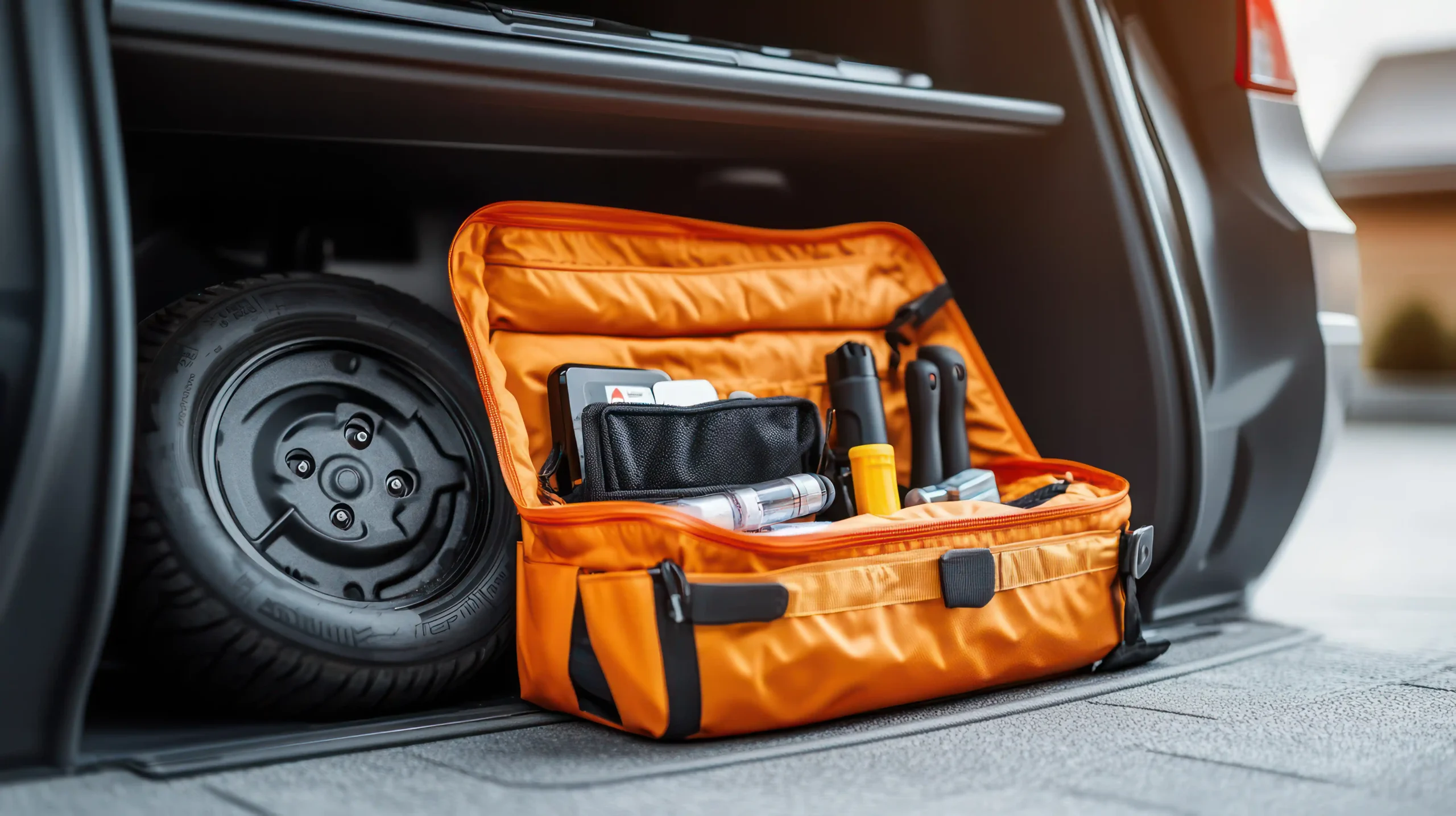
If your car breaks down on a busy road, in bad weather, or far from home, the right supplies can make a stressful moment much easier to handle. I have seen many drivers keep jumper cables in the trunk and call it a day, but a useful car emergency kit should do more than help with a dead battery.
In this guide, I’ll walk you through what to keep in your car emergency kit, why each item matters, and how to organize everything without filling your whole trunk. This is not about building a survival bunker on wheels. It is about simple, smart gear that helps everyday drivers stay safer until help arrives.
Quick Answer
A good car emergency kit should include safety gear, basic repair tools, first aid supplies, water, snacks, a flashlight, phone charging options, weather protection, and items for tire or battery problems. At minimum, I like to keep jumper cables or a jump starter, a first aid kit, reflective triangles, gloves, a flashlight, a tire pressure gauge, bottled water, and a warm blanket.
You should also adjust your kit for your climate. A driver in Minnesota needs winter gear. A driver in Arizona needs extra water and sun protection. The best kit is the one that fits your car, your route, and the people who ride with you.
Why Every Driver Needs a Car Emergency Kit
Most car problems do not happen at a good time. A flat tire can show up during your commute. A dead battery can happen in a grocery store parking lot. Bad weather can turn a short drive into a long wait.
That is why I think every driver should keep a basic emergency kit in the car. You do not need to be a mechanic. You just need enough gear to stay visible, stay warm or cool, handle small problems, and contact help.
The U.S. government’s car safety guidance from Ready.gov recommends items like jumper cables, reflective triangles, a blanket, a phone charger, and water for vehicle emergencies. Those are smart basics because they cover the most common roadside problems.
A strong kit helps with four things:
- Visibility: so other drivers can see you.
- Communication: so you can call for help.
- Basic fixes: so you may solve simple problems safely.
- Comfort and safety: so you can wait without panic.
Alex’s Tip: Do not build your kit around rare disasters first. Start with the problems most drivers actually face: dead battery, flat tire, low phone battery, bad weather, minor injury, and waiting for roadside help.
What to Keep in Your Car Emergency Kit: The Core Checklist
Here is the basic kit I recommend for most American drivers. You can add more later, but this list is a solid starting point.
- Jumper cables or a portable jump starter
- First aid kit
- Flashlight with extra batteries
- Reflective warning triangles or LED road flares
- Phone charger and backup power bank
- Work gloves and a reflective vest
I also like to keep water, shelf-stable snacks, a blanket, tire pressure gauge, tire inflator, basic tool kit, paper towels, duct tape, and a small rain poncho. None of these items are exciting, but they can save you time and stress.
| Emergency Kit Item | Why It Matters | Where to Keep It |
|---|---|---|
| Jumper cables or jump starter | Helps with a dead battery | Trunk or cargo area |
| First aid kit | Helps with small cuts, burns, or scrapes | Glove box or center console |
| Reflective triangles | Makes your car easier to see | Trunk, easy to reach |
| Flashlight | Helps at night or in dark parking areas | Door pocket or glove box |
| Water and snacks | Useful during long waits | Trunk or rear storage bin |
| Blanket | Helps in cold weather or shock | Trunk or rear seat storage |
Safety and Visibility Items You Should Not Skip
If I had to choose one part of the kit that people overlook, it would be visibility. When your car is stopped near traffic, being seen matters just as much as fixing the problem.
Keep reflective triangles, LED warning lights, or road flares in the car. I prefer reflective triangles or battery-powered LED lights because they are simple and safe for most drivers to use. A reflective vest is also a smart buy. It helps other drivers spot you when you are outside the vehicle.
The National Highway Traffic Safety Administration focuses on reducing crashes and injuries on U.S. roads, and roadside visibility is one of those basic habits that supports safer driving. If you are pulled over, the goal is simple: get out of the traffic path, make the car visible, and call for help when needed.
Warning: Never stand behind or beside your car in moving traffic if you can avoid it. Move to a safe place away from the road before checking damage or waiting for help.
Battery and Charging Gear
A dead battery is one of the most common reasons drivers get stuck. Jumper cables are useful, but they only work if another vehicle is available. That is why a portable jump starter is one of my favorite upgrades for a car emergency kit.
Look for a jump starter that matches your vehicle size. A small compact car does not need the same power as a large truck. Charge it every few months so it is ready when needed.
You should also keep:
- A 12V car phone charger
- A USB-C or Lightning cable that fits your phone
- A charged power bank
- A small flashlight or headlamp
Your phone is your map, flashlight, and lifeline in many emergencies. A phone with 2% battery is almost useless. Keep backup charging simple and dependable.
Tire and Basic Repair Supplies
Many drivers do not feel comfortable changing a tire, and that is okay. Still, you should carry the basic supplies that help you check the problem and explain it clearly when you call for help.
At a minimum, keep a tire pressure gauge and know where your spare tire, jack, and lug wrench are stored. If your car does not have a spare, check whether it came with a tire repair kit or inflator.
Useful tire and repair items include:
- Tire pressure gauge
- Portable tire inflator
- Tire sealant, if approved for your vehicle
- Work gloves
- Small tool kit
- Duct tape and shop towels
For general ownership planning, you may also want to read our guide to essential car tools for beginners. A few basic tools can help with small problems, but do not take risks with repairs you do not understand.
| Problem | Helpful Item | What It Can Do |
|---|---|---|
| Dead battery | Jump starter | May restart your car without another vehicle |
| Low tire pressure | Tire inflator | Can add air long enough to reach service |
| Flat tire | Spare tire and jack | Can help replace the damaged tire if safe |
| Dark roadside stop | Headlamp or flashlight | Keeps both hands free while you inspect |
| Minor loose part | Duct tape or zip ties | May provide a short temporary hold |
First Aid, Food, and Personal Comfort
A car emergency kit is not only for the vehicle. It is also for the people inside it. A small first aid kit can help with cuts, scrapes, headaches, or minor burns while you wait for help.
Your first aid kit should include bandages, gauze, antiseptic wipes, medical tape, gloves, pain reliever, tweezers, and any personal items your family may need. If someone in your household has allergies or special medical needs, plan for that too.
The Ready.gov emergency kit guide also recommends building supplies around the people who may need them. That advice makes sense for cars too. A parent with small kids needs different supplies than a single commuter.
For comfort, I like to keep:
- Bottled water
- Granola bars or other shelf-stable snacks
- Blanket or emergency thermal blanket
- Hand warmers in cold areas
- Small pack of tissues or wipes
Alex’s Tip: Replace water and snacks before they get old. Heat can damage plastic bottles and ruin food faster than you may expect, especially in summer.
Seasonal Items for Winter, Summer, and Road Trips

Your kit should change with the season. I do not keep the exact same setup in July that I keep in January. The core items stay the same, but weather gear changes.
Winter Add-Ons
In cold areas, add an ice scraper, snow brush, warm gloves, knit hat, blanket, small shovel, and traction aid like sand or cat litter. These items can help if you get stuck in snow or have to wait in freezing weather.
Summer Add-Ons
In hot areas, add extra water, sunscreen, a hat, and a towel. Heat can become dangerous quickly, especially for kids, pets, and older adults. Do not leave people or animals inside a parked vehicle while waiting for help.
Road Trip Add-Ons
For longer drives, I add a paper map, extra snacks, extra phone cable, portable air compressor, and a printed copy of roadside assistance details. Cell service is not perfect everywhere, so old-school backup still has value.
Common Mistakes to Avoid
A car emergency kit only helps if it is complete, easy to reach, and still usable. Here are the mistakes I see most often.
- Buying a cheap kit and never checking it: Some pre-made kits have weak tools or expired items.
- Keeping everything buried under luggage: Emergency gear should be easy to reach.
- Forgetting phone charging: A dead phone can make a simple problem much harder.
- Skipping visibility gear: Reflective triangles and vests are not optional in my book.
- Not adjusting for weather: Winter and desert driving need different supplies.
Warning: Do not store gasoline inside your car. An empty gas can may be useful, but carrying fuel in the cabin or trunk can be dangerous.
Expert Tips from Alex
Keep the Kit in One Bag
I prefer one sturdy bag or plastic bin. Loose items roll around, get lost, and are harder to grab in a hurry. Use a bag with a bright color if possible, so it is easy to find.
Check It Twice a Year
I like checking a kit when the clocks change or when I rotate seasonal gear. Test the flashlight. Charge the jump starter. Replace old snacks, water, and batteries.
Do a Five-Minute Practice Run
Find your spare tire, jack, tow hook, and owner’s manual before you need them. A dark roadside shoulder is the worst place to learn where your tools are stored.
Match the Kit to Your Vehicle
A compact sedan, pickup truck, minivan, and EV do not need the exact same setup. EV owners should also keep charging network apps ready and may want to read our EV road trip accessories checklist.
Key Takeaways
- A good car emergency kit covers safety, visibility, communication, basic repairs, and comfort.
- Start with jumper cables or a jump starter, first aid kit, flashlight, reflective triangles, water, snacks, and a blanket.
- Adjust your kit for winter, summer, long trips, kids, pets, and your vehicle type.
- Check your kit at least twice a year so batteries, food, water, and chargers still work.
- Keep the kit easy to reach, not buried under luggage or random trunk clutter.
Frequently Asked Questions
What should be in a basic car emergency kit?
A basic car emergency kit should include jumper cables or a jump starter, a first aid kit, flashlight, reflective triangles, phone charger, work gloves, water, snacks, and a blanket. These items help with common problems like a dead battery, flat tire, minor injury, or long roadside wait.
How often should I check my car emergency kit?
You should check your car emergency kit at least twice a year. Replace old water, expired first aid items, weak batteries, and stale snacks. Also recharge your jump starter and power bank during each check.
Is a pre-made car emergency kit enough?
A pre-made car emergency kit can be a good start, but it is usually not enough by itself. Many kits need extra water, better gloves, a stronger flashlight, a phone charger, and seasonal items. I suggest using a pre-made kit as a base and then adding what fits your car and climate.
Should I keep a portable jump starter in my car?
Yes, a portable jump starter is a smart item to keep in your car if you maintain it properly. It can help start your vehicle without waiting for another driver. Just make sure it has enough power for your engine and recharge it every few months.
What should I keep in my car for winter emergencies?
For winter emergencies, keep an ice scraper, snow brush, warm gloves, blanket, hat, small shovel, flashlight, jumper cables or jump starter, and traction aid like sand or cat litter. Extra water and snacks are also useful if you get stuck or have to wait in cold weather.
Where should I store my car emergency kit?
Store your car emergency kit in the trunk, cargo area, or under a rear seat if your vehicle has space. Keep the most urgent items, like a flashlight, phone charger, and first aid kit, in the glove box or center console. The goal is to reach the kit quickly when you need it.
Conclusion
A good car emergency kit does not need to be expensive or complicated. It just needs to cover the problems most drivers face: dead batteries, flat tires, bad weather, low phone battery, minor injuries, and waiting safely for help.
Start with the basics, then build around your climate, driving habits, passengers, and vehicle type. Once your kit is packed, check it twice a year and keep it easy to reach. That simple habit can make a bad roadside moment much easier to manage.
For your next step, review your trunk today and compare what you already have with this checklist. You can also visit our car maintenance products guide for more beginner-friendly tools and supplies.