
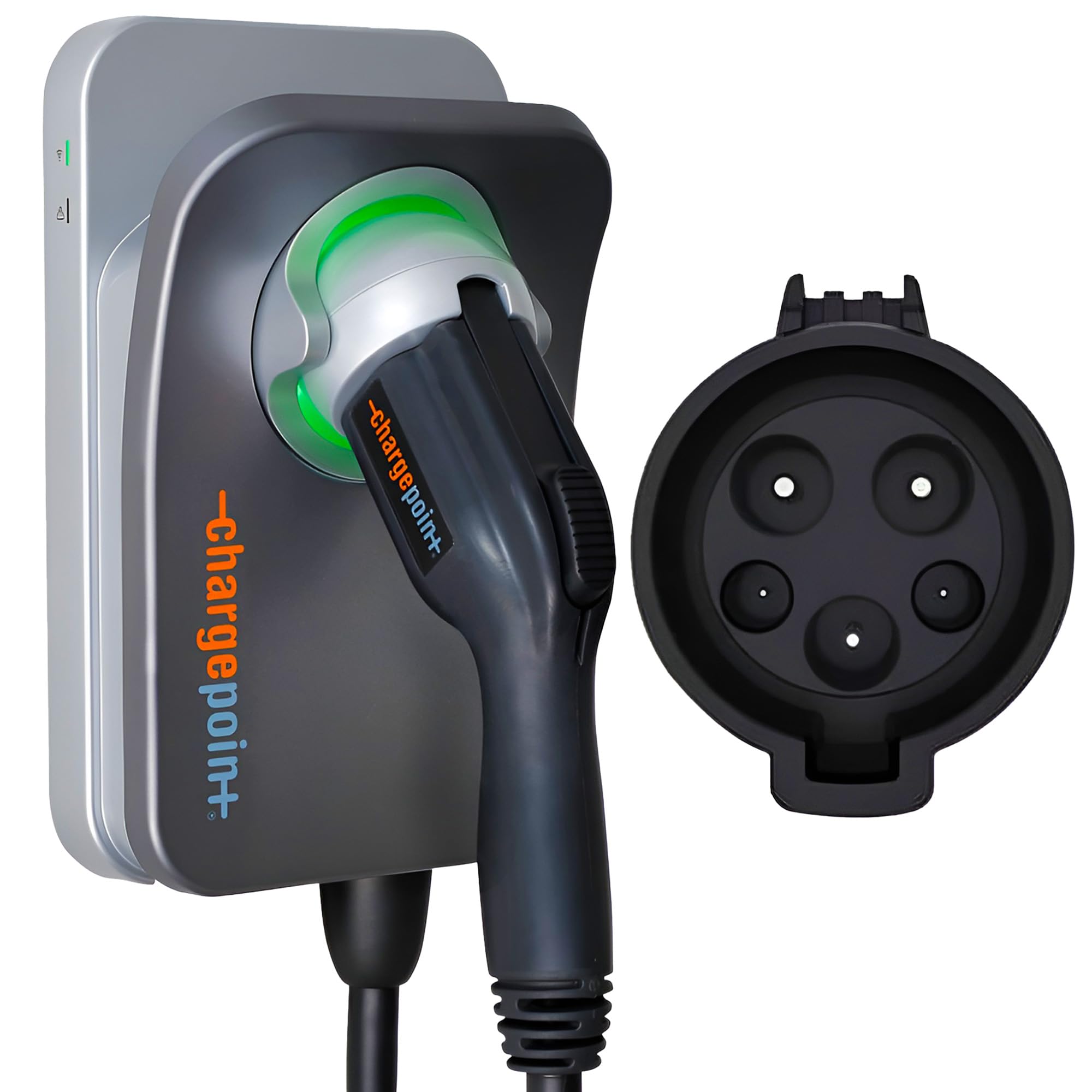
A gas car takes five minutes at a pump, but electric vehicles work differently at home. Plugging into a regular wall outlet delivers only a few miles of range per hour, which can leave a battery topped off but never full overnight. Level 2 EV Charging changes that by using a 240-volt circuit, the kind that powers a clothes dryer or oven, to push much more energy into a car’s battery in the same amount of time.
Most Level 2 home chargers fall into two setups: plug-in units that connect to a NEMA 14-50 outlet, and hardwired units that connect directly to a home’s electrical panel. Plug-in chargers are easier to install and move if needed. Hardwired units often support higher amperage but require a licensed electrician and a permanent connection. Connector type matters too. J1772 is the standard for most non-Tesla EVs, while NACS (Tesla’s connector) has become the newer standard as more automakers adopt it.
The right charger depends less on brand and more on matching amperage to a home’s electrical circuit and matching the connector to a vehicle’s charging port. A 40A charger needs a 50A circuit to run safely at full output, and a car’s onboard charger has to be able to accept that much power for the higher amperage to matter. Shoppers should check their electrical panel capacity, outlet type, and vehicle’s maximum charging rate before choosing a unit.
Best for smart scheduling and outdoor installs: EVIQO Level 2 EV Charger J1772 40A
Best for maximum plug-in amperage: EMPORIA Level 2 EV Charger 48 Amp
Best for a wide public charging network: ChargePoint HomeFlex
Best for Tesla owners wanting no adapter: EMPORIA NACS EV Charger
Best for a budget-friendly backup charger: EVDANCE Level 1&2 Portable Charger
Best for touchscreen control without an app: AIMILER Level 2 EV Charger
Best for portable full-power charging: EVDANCE 40Amp Level 2 Charger
Best for simple plug-and-play use: Lectron Level 2 EV Charger
Best for dual Level 1 and Level 2 flexibility: bokman Level 1 & Level 2 EV Charger
Best for Tesla drivers wanting app-based scheduling: EVIQO NACS 40A Charger
EVIQO Level 2 EV Charger J1772 40A
 Drivers who want a weatherproof plug-in charger with reliable app control should consider this model first.
Pros
- Plugs into a NEMA 14-50 outlet, no electrician needed for hardwiring
- IP66-rated housing works indoors or outdoors
- 25-foot cable reaches most garages and driveways
Cons
- Requires a dedicated 50A circuit for full 40A output
- Non-Tesla connector only; Tesla owners need their own adapter
- WiFi limited to 2.4GHz networks
This charger works with any EV or plug-in hybrid that uses a J1772 port, covering most non-Tesla vehicles sold today. The 40A output charges most EVs overnight, and the app lets owners schedule off-peak charging to lower electricity costs. Buyers report solid build quality and straightforward installation, though a few electricians noted the connecting cable between the unit and circuit runs shorter than expected. The glow-in-the-dark holster is a small but useful touch for nighttime garage use.
EMPORIA Level 2 EV Charger 48 Amp
Drivers who want the option to upgrade from plug-in to hardwired for maximum amperage will find this charger flexible.
Pros
- Converts from 40A plug-in to 48A hardwired setup
- Compatible with nearly all North American EVs via J1772
- UL listed and Energy Star certified
Cons
- Reaching 48A requires professional hardwiring
- NEMA 14-50 plug configuration caps output at 40A
- No published customer reviews available yet
This charger ships preconfigured for a NEMA 14-50 outlet at up to 40A, but an electrician can convert it to a hardwired connection for the full 48A rating. That flexibility suits owners who might upgrade their electrical service later. The compact housing and 25-foot cable make it a practical fit for garages of most sizes. Vehicles need an onboard charger rated for 48A to actually see the benefit of the higher setting.
ChargePoint HomeFlex
Drivers who value a long-established charging network and adjustable amperage settings should look at this hardwired option.
Pros
- Adjustable output from 16A to 50A to match circuit capacity
- Access to a large public charging network through the ChargePoint app
- Cold-resistant 23-foot cable rated for outdoor use
Cons
- Requires professional hardwiring, no plug-in option
- Some owners report app connectivity issues
- Lower amperage settings mean slower charging on smaller circuits
This charger installs directly into a home’s wiring, which means no outlet to worry about but a required electrician visit. Once installed, the adjustable amperage lets it work on circuits ranging from 20A to 80A, giving flexibility for different home setups. Owners describe the physical installation and daily charging as reliable, though a handful mention inconsistent WiFi performance during setup. ChargePoint’s public network access is a genuine advantage for drivers who also charge away from home.
EMPORIA NACS EV Charger
Tesla owners who want a charger with a native NACS plug, including the charge-port-opening button, should choose this model.
Pros
- Built-in NACS connector works with Tesla vehicles without an adapter
- Convertible from 40A plug-in to 48A hardwired
- Opens Tesla’s charging port remotely via button press
Cons
- Not compatible with J1772 vehicles without a separate adapter
- Full 48A rating requires hardwiring
- Fewer customer reviews than the J1772 version
This charger mirrors Emporia’s J1772 model but swaps the connector for Tesla’s NACS plug, letting Tesla owners skip the adapter altogether. The remote charge-port button is a detail Tesla drivers will recognize from Tesla’s own wall connector. Non-Tesla EVs that have adopted NACS ports, an increasing number as of 2026, can also use this charger directly. Owners who need J1772 compatibility should choose Emporia’s other model instead. Level 2 EV Charging
EVDANCE Level 1&2 Portable Charger
Drivers who want a budget-friendly, travel-ready charger that works on both standard and 240V outlets should consider this one.
Pros
- Works with both 120V and 240V outlets
- Compact and travels well with an included carry bag
- Lower price point than most hardwired competitors
Cons
- Maxes out at 16A on 240V, slower than dedicated Level 2 chargers
- Not compatible with NEMA 6-15, 10-30, 14-30, 14-50, or 6-50 outlets directly
- Tesla vehicles need a separate J1772 adapter
This charger splits the difference between a basic Level 1 cord and a full Level 2 station. On a 240V NEMA 6-20 outlet it charges faster than a wall plug, though its 16A ceiling is well below the 32A to 48A range of dedicated Level 2 units. Owners who need occasional backup charging, or who travel between locations without a dedicated charger, find it a practical companion. It is not built to replace a full-speed home charging station.
AIMILER Level 2 EV Charger
Drivers who want a touchscreen display and adjustable amperage without relying on an app should look at this charger.
Pros
- LED touchscreen shows amperage, speed, and voltage directly on the unit
- Adjustable from 16A to 32A to match different circuit breakers
- No additional GFCI breaker required for NEMA 14-50 installs
Cons
- Maximum 32A output is lower than 40A or 48A competitors
- App setup requires 2.4GHz WiFi and can be finicky to pair
- Touchscreen buttons only respond when the connector is unplugged
This charger gives owners a choice between plug-and-charge simplicity or app-based scheduling, based on how much control they want day to day. The physical screen displays live charging data, which is useful for owners who prefer not to open an app every time. Its 32A ceiling suits most overnight charging needs on a 30A or 40A circuit, though drivers wanting the fastest possible home charge should look at 40A or 48A models instead.
EVDANCE 40Amp Level 2 Charger
Drivers who want adjustable amperage settings and a portable design with full 40A output should consider this model.
Pros
- Adjustable current from 10A to 40A in six preset steps
- Delay-start timer helps shift charging to off-peak hours
- Large TFT display shows real-time charging stats
Cons
- Fewer customer reviews than more established competitors
- Requires a 50A circuit for full 40A output
- Tesla vehicles need a separate J1772 adapter
This charger targets owners who want granular control over charging speed without needing a smartphone app. Six preset amperage levels let it adapt to different circuit breakers, from a 20A circuit up to a full 50A setup. The delay-timer feature is a straightforward way to schedule overnight charging during off-peak utility rates. Its newer market presence means fewer long-term reliability reports compared to more established brands.
Lectron Level 2 EV Charger
Drivers who want a no-frills, plug-and-play charger without app dependency should consider this option.
Pros
- Simple plug-and-play operation with no app required
- ETL certified with IP65 dust and water resistance
- Competitively priced compared to smart-enabled competitors
Cons
- Shorter 16-foot cable compared to the 25-foot cables common elsewhere
- Some owners report the unit running hot after extended use
- No WiFi or app-based scheduling
This charger strips away smart features in favor of a straightforward plug-in design that many owners find refreshing. It connects to a NEMA 14-50 outlet and charges most J1772 EVs at up to 40A. Feedback is largely positive on ease of use, though a few long-term owners noted overheating issues after roughly two years of regular use. Drivers who want app-based scheduling or remote monitoring should look elsewhere.
bokman Level 1 & Level 2 EV Charger
Drivers who want both Level 1 and Level 2 charging in one unit with physical controls should consider this charger.
Pros
- Includes a NEMA 5-15 adapter for standard outlet charging
- Tactile buttons work well in cold weather or with gloves on
- Delay timer and seven adjustable amperage settings
Cons
- 32A maximum is lower than 40A or 48A competitors
- 20-foot cable is shorter than the 25-foot standard
- No smartphone app for remote monitoring
This charger appeals to owners who want physical buttons and an LED screen instead of relying on a phone app that can lag in cold weather. The included Level 1 adapter makes it genuinely dual-purpose, useful for occasional slow charging when a 240V outlet isn’t available. Its 32A ceiling is enough for most overnight charging needs, though drivers with larger batteries or longer daily commutes may prefer a 40A or 48A unit for faster turnaround.
EVIQO NACS 40A Charger
Tesla owners who want the same smart features as EVIQO’s J1772 model, without needing an adapter, should choose this version.
Pros
- Built-in NACS plug works directly with all Tesla models
- Weatherproof IP66 housing suits outdoor installation
- App-based scheduling and 25-foot cable match the J1772 version
Cons
- Not natively compatible with J1772 vehicles
- Requires a dedicated 50A circuit for full output
- Fewer reviews than the original J1772 EVIQO charger
This charger takes EVIQO’s plug-in design and swaps in a Tesla-style NACS connector, useful for Tesla owners who want smart scheduling without buying a separate adapter. It shares the same weatherproof housing and 25-foot cable as the J1772 version. Non-Tesla EVs built with NACS ports can also connect directly. Drivers with J1772 vehicles should choose the original EVIQO model instead of this one.
Buying Guide
Match Amperage to Circuit Capacity
A charger’s amp rating only matters if the home circuit can support it. A 40A charger needs a dedicated 50A circuit, while a 48A charger typically requires hardwiring on a 60A circuit. Installing a charger rated higher than the circuit allows will not produce faster charging and might trip breakers.
| Charger Rating | Circuit Needed | Realistic Overnight Range Added |
|---|---|---|
| 16A | 20A | 10-12 miles/hour |
| 32A | 40A | 20-25 miles/hour |
| 40A | 50A | 30-37 miles/hour |
| 48A | 60A (hardwired) | 40-46 miles/hour |
Check Connector Compatibility First
J1772 is the standard connector for most non-Tesla EVs sold in North America. NACS, originally Tesla’s proprietary connector, has become an industry standard as more automakers add NACS ports to new vehicles. Buyers should confirm which port their car uses before choosing a charger, since adapters add cost and occasional compatibility issues.
Plug-In vs. Hardwired Installation
Plug-in chargers connect to a NEMA 14-50 outlet and can be installed by anyone comfortable with an outlet, assuming the outlet already exists. Hardwired units connect directly to the electrical panel and require a licensed electrician, but often support higher amperage ratings. Renters or owners who might move should favor plug-in models for portability.
Cable Length and Placement
Cable lengths on home chargers commonly range from 16 to 25 feet. A shorter cable can limit where a car can park relative to the charger, especially in garages where the outlet sits far from a parking spot. Measuring the distance from the planned mounting point to the vehicle’s charging port before buying prevents this problem.
Smart Features and App Control
WiFi-enabled chargers allow scheduling for off-peak electricity rates, which can lower charging costs where utilities offer time-of-use pricing. Most smart chargers require a 2.4GHz WiFi connection rather than 5GHz, so checking a home router’s settings ahead of time avoids setup frustration. Chargers with physical buttons and screens work as a reliable alternative for owners who prefer not to depend on an app.
Certifications and Weather Resistance
Look for UL or ETL certification, which confirms a charger has passed independent electrical safety testing. For outdoor installations, an IP65 or IP66 rating indicates strong resistance to dust and water. Indoor-only installations have more flexibility here, but any charger mounted in an uncovered driveway benefits from weatherproof housing.