
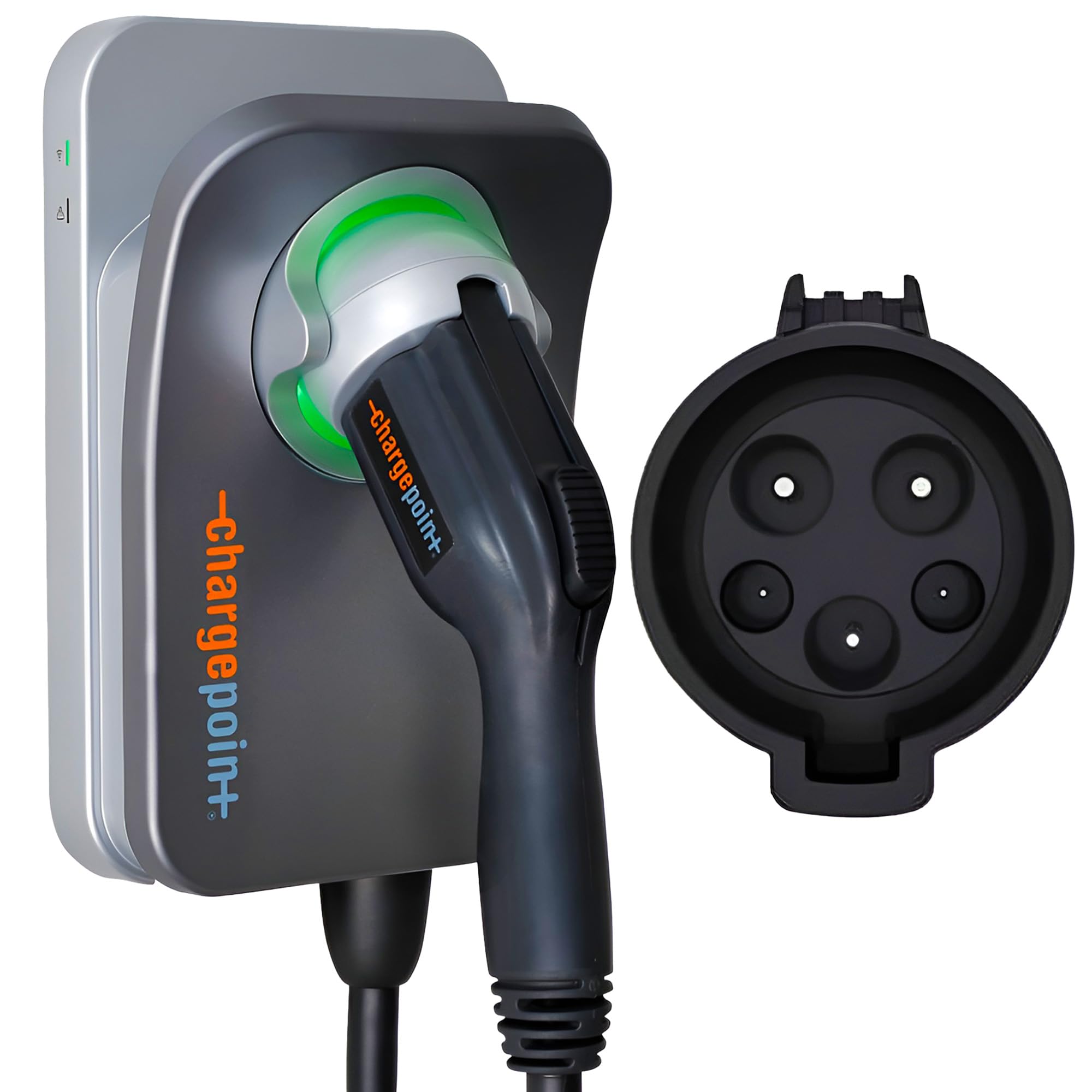
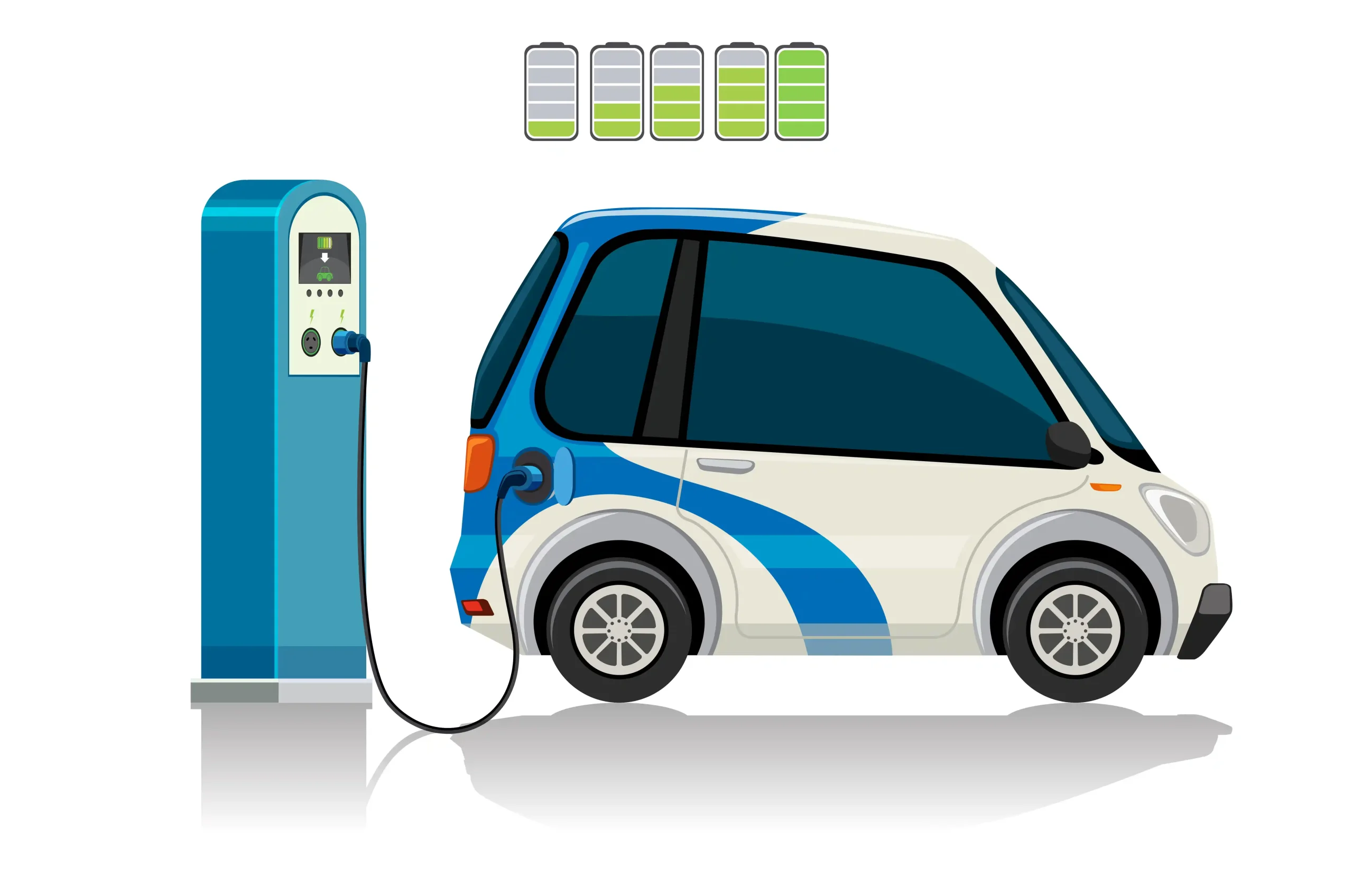
A EV Charging Level 2 turns an overnight parking spot into a full “tank” of range by morning. Unlike the 120V trickle charger that ships with most EVs, a Level 2 unit runs on a 240V circuit, the kind that powers an electric dryer or range, and delivers several times the power. That difference matters because a 120V outlet can take over 24 hours to fill an empty battery, while a properly installed Level 2 charger often finishes the job in well under 10.
Charging speed depends on more than the charger’s amperage rating. The vehicle’s onboard charger, the circuit breaker size, and whether the unit is plugged in or hardwired all cap real-world speed. A 48A charger connected to a car that only accepts 32A won’t charge any faster than a 32A unit, and a 40A charger on a 30A circuit has to be turned down to stay code-compliant. Matching the charger to the electrical panel and the vehicle, not just chasing the highest amp number, is what actually determines how fast a car charges overnight.
Connector type, cable length, and installation style separate these chargers as much as raw power does. Plug-in models using a NEMA 14-50 outlet suit garages that already have (or can add) a heavy-duty receptacle, while hardwired units need an electrician but often support higher continuous amperage. Renters and drivers who move often benefit from portable units with carry bags, while Tesla owners need to decide between a NACS charger or a J1772 unit paired with an adapter.
Best for most non-Tesla EVs: EVIQO Level 2 EV Charger J1772 40A
Best for maximum charging speed: ChargePoint HomeFlex 50A Hardwired
Best for flexible plug-in or hardwire installs: EMPORIA 48A NEMA 14-50
Best for permanent high-amp installs: EMPORIA 48A Hardwired with Whip
Best for budget-conscious buyers: AIMILER 32A Portable Charger
Best for renters needing portability: EVDANCE 32A Portable Charger
Best for higher-mileage daily drivers: EVDANCE 40A Portable Charger
Best for simple, no-frills 40A charging: SEGUMA 40A Charger
Best for apartment dwellers with only a standard outlet: EVDANCE Level 1&2 Charger
Best for Tesla and NACS-native charging: EVIQO NACS 48A Hardwired
EV Charging Level 2
EVIQO Level 2 EV Charger, 40A NEMA 14-50

This charger fits drivers who want a plug-in Level 2 setup with strong app support and weatherproofing for garage or driveway use.
Pros
- Plugs into a NEMA 14-50 outlet, no hardwiring needed
- IP66-rated housing works indoors or outside
- Adjustable 6-40A output via app
Cons
- Requires a dedicated 50A circuit already in place
- 2.4GHz-only WiFi may need a router adjustment
- Not compatible with Tesla’s NACS port without an adapter
The 25-foot cable reaches most garage corners and driveway parking spots without stretching. Its steel-shielded, sealed enclosure holds up in wet or dusty conditions, and the glow-in-the-dark holster is a small but useful touch for late-night plug-ins. The app lets owners schedule off-peak charging and monitor energy costs, which helps offset the electric bill over time. Since it draws up to 40A, actual charging speed still depends on the car’s onboard charger accepting that rate.
ChargePoint HomeFlex 50A Hardwired
Drivers with larger-battery EVs and a licensed electrician on standby will get the most from this hardwired 50A unit.
Pros
- Adjustable 16-50A output covers a wide range of circuits
- Backed by a large public charging network for on-the-go use
- UL-certified and rated for indoor or outdoor mounting
Cons
- Requires professional hardwired installation
- WiFi needed for full feature access
- 23-foot cable is shorter than some competitors
ChargePoint built its name on public charging infrastructure, and that experience shows in the HomeFlex’s app, which links home charging data with its national network. The unit supports up to 45 miles of range per hour, though that ceiling depends on the vehicle’s onboard charger and the circuit amperage selected during setup. Because it’s hardwired to an 80A-rated circuit, it can be configured lower for homes without a 60A+ breaker available.
EMPORIA 48A EV Charger, NEMA 14-50
This model works well for owners who want the option to start with a plug-in setup now and switch to hardwired later.
Pros
- Can be used as NEMA 14-50 plug-in or converted to hardwired
- UL listed and Energy Star certified
- Compatible with nearly every EV sold in North America
Cons
- Full 48A speed only available when hardwired
- Professional installation still recommended for either mode
- Plug-in mode caps at 40A on the NEMA outlet
The dual-mode design gives buyers flexibility if their electrical setup might change, such as moving to a home with different wiring. Reviewers note the companion app is a clear improvement over Emporia’s earlier charger, with straightforward scheduling and usage tracking. At 40A on the NEMA plug or 48A hardwired, actual charging speed still depends on what the vehicle’s onboard charger can accept.
EMPORIA 48A Hardwired with Whip
Buyers who already know they want a permanent hardwired install can skip the NEMA plug version and go straight to this configuration.
Pros
- Preconfigured for hardwired install at full 48A
- UL listed, meets multiple safety standards (UL 2231, UL 2594, and more)
- 1-amp increment adjustments for precise charging control
Cons
- No plug-in option if circumstances change
- Electrician required for setup
- No load management feature (available only on Emporia’s Pro model)
Reviewers who compared this to Emporia’s plug-in version chose it specifically for the slightly reduced theft risk of a hardwired unit with no removable cord. The fine-grained amperage control (in 1A steps) lets owners dial in a charging rate that balances speed with battery longevity. This version skips load management, a feature that automatically reduces charger output if the home’s total electrical draw gets too high.
AIMILER 32A Portable EV Charger
This charger suits budget-focused buyers who want adjustable amperage and app control without paying for a hardwired install.
Pros
- Adjustable from 16A to 32A to match different circuit breakers
- Built-in leakage protection means no extra GFCI breaker needed
- Touchscreen display shows amperage, speed, and voltage in real time
Cons
- Maximum 32A output is lower than some competitors
- Setup instructions for WiFi reset can be fiddly
- Not compatible with certain 2025 EVs without an adapter
The NEMA 14-50 plug design means this unit installs without an electrician, provided the outlet is already there. Reviewers with a range of vehicles, from plug-in hybrids to full EVs, report reliable charging speeds matching the amperage setting selected. Its 25-foot cable and IP66-rated housing make it a practical choice for both covered and semi-exposed parking.
EVDANCE 32A Portable Charger
Renters and drivers who split time between homes will appreciate this charger’s carrying case and simple amperage adjustments.
Pros
- Comes with a carry bag for easy transport
- Adjustable from 16A to 32A with a single button press
- LED screen displays amperage, voltage, and charging speed
Cons
- No smartphone app included
- 32A ceiling limits speed compared to 40-48A units
- Shorter 1-year warranty versus 3-year competitors
This unit skips WiFi connectivity in favor of straightforward on-device controls, which some buyers prefer for simplicity. The NEMA 14-50 plug and 25-foot cable make it easy to move between a garage outlet and a driveway pedestal if needed. Its lower 32A ceiling suits plug-in hybrids and shorter commutes better than high-mileage daily EV use.
EVDANCE 40A Portable Charger
Drivers who log high daily mileage and need a faster overnight top-up will find this 40A version a meaningful step up from EVDANCE’s 32A model.
Pros
- Adjustable from 10A to 40A across six preset levels
- Large 2.4-inch display shows live charging data
- Delay-start feature helps shift charging to off-peak hours
Cons
- Heavier draw requires a 40A-rated circuit for full speed
- No app-based control, adjustments are on-device only
- Newer release with a smaller review history
The wider amperage range (10A up to 40A) gives owners more control over how hard the charger works the battery, which can help preserve battery health over years of daily use. The delay-timer feature is a practical way to avoid peak electricity rates without needing a smart app. As with any 40A charger, actual charging speed depends on the vehicle’s onboard charger and the home circuit’s rated capacity.
SEGUMA 40A EV Charger
This charger offers straightforward 40A charging for buyers who don’t need app connectivity or smart-home integration.
Pros
- ETL and FCC certified for safety compliance
- Adjustable current from 10A to 40A
- IP66 waterproof rating for outdoor use
Cons
- No smartphone app, only on-device controls
- Shorter 1-year warranty
- Smaller brand with a limited track record
The touch-button interface and 2.4-inch display make it easy to check charging status without a phone. Built-in protections against overcurrent, overheating, and short circuits give it a similar safety profile to pricier competitors. It works as a wall-mounted unit or a portable charger with its included carry bag, which suits owners who split time between two properties.
EVDANCE Level 1&2 Portable Charger
Apartment dwellers without access to a 240V outlet can still get Level 2-style charging speeds from this dual-voltage unit.
Pros
- Works with standard 120V outlets or 240V NEMA 6-20
- Included adapter covers both voltage options
- Compact and portable with a carry bag
Cons
- 16A maximum is lower than full Level 2 chargers
- Not compatible with NEMA 14-50, 14-30, or 6-50 without an adapter
- Charging speed on 120V mode is close to standard Level 1
This charger bridges the gap between a basic Level 1 cord and a full home charging station. On a 240V NEMA 6-20 outlet, it delivers roughly 10 to 12 miles of range per hour, a useful boost over the 2 to 5 miles per hour typical of a standard household outlet. Renters without permission to install a NEMA 14-50 outlet can still get a meaningful charging speed improvement with this unit.
EVIQO NACS 48A Hardwired Tesla Charger
Tesla owners who want a native NACS connector without a J1772 adapter should look at this hardwired 48A charger.
Pros
- Native NACS plug works directly with Tesla vehicles
- DIP switch option unlocks 50A on a 70A circuit
- Includes a button to open the Tesla charge port remotely
Cons
- Requires professional hardwired installation
- Non-Tesla EVs need a separate NACS-to-J1772 adapter
- Higher amperage settings need a larger dedicated circuit
Reviewers who installed this for Rivian, Kia, and Hyundai vehicles report it working smoothly with a NACS-to-J1772 adapter, alongside Tesla owners plugging in directly. The 25-foot cable and weatherproof housing match the J1772 EVIQO model, and the app offers the same scheduling and monitoring tools. Since it requires a 60A circuit at minimum (or 70A for the 50A setting), homeowners should confirm their panel has capacity before ordering.
Buying Guide
Plug-In vs. Hardwired Installation
A plug-in charger connects to a NEMA 14-50 outlet, the same style used for RVs and electric ranges. It’s a good option for anyone who wants the ability to unplug and take the charger along during a move.
A hardwired charger connects directly to the electrical panel through a licensed electrician. This setup often supports higher continuous amperage and skips the outlet altogether, which some owners prefer for a cleaner installation and reduced theft risk.
| Feature | Plug-In (NEMA 14-50) | Hardwired |
|---|---|---|
| Installation | Electrician for outlet, DIY charger install | Electrician required for full setup |
| Portability | Can be unplugged and moved | Permanent |
| Typical max amperage | Up to 40A | Up to 50A or higher |
| Good for renters | Yes, if outlet already exists | No |
Matching Amperage to the Circuit and Vehicle
A charger’s amperage rating shows its maximum output, not a guaranteed charging speed. The home’s circuit breaker and the vehicle’s onboard charger both cap the real number.
A 48A charger on a 40A breaker has to be set lower to stay within code. Likewise, a car with a 32A onboard charger won’t benefit from a 40A or 48A unit; it simply charges at its own limit. Checking the vehicle’s manual and the home panel’s available capacity before buying prevents paying for speed that never gets used.
Connector Type: J1772 vs. NACS
J1772 is the standard connector for nearly all non-Tesla EVs and plug-in hybrids sold in North America. NACS is Tesla’s connector, now being adopted by other automakers.
Tesla owners can use a J1772 charger with the adapter that comes with the car, or choose a NACS charger for a direct connection without adapters. Owners of other EVs who want a NACS charger will need a NACS-to-J1772 adapter, sold separately.
Cable Length and Reach
Most home chargers include a 23- to 25-foot cable. That length usually reaches across a two-car garage or from a wall-mounted unit to a driveway parking spot.
Measuring the distance from the planned mounting spot to where the car’s charging port will sit helps avoid a cable that’s too short to reach comfortably.
Weatherproofing for Outdoor Installs
Chargers mounted outside need a housing rated for rain, snow, and temperature swings. Look for an IP66 or NEMA 4 rating, which indicates protection against dust and heavy water exposure.
Indoor-only units can cost less but limit installation options to garages or covered carports.
Smart Features and App Control
A WiFi-connected app lets owners schedule charging during off-peak electricity hours, track energy use, and monitor charging status remotely. Most apps need a 2.4GHz WiFi connection, since many home routers broadcast a 5GHz signal that isn’t compatible.
Not every charger includes an app. Some rely on physical buttons and an on-device screen, which works fine for owners who don’t need remote monitoring but want simpler setup.
Certifications to Check
Look for UL or ETL certification, which confirms the charger passed independent safety testing. Energy Star certification indicates the unit meets efficiency standards set by the U.S. Environmental Protection Agency.
These certifications matter more for long-term safety than any single spec sheet number, since they confirm third-party testing rather than manufacturer claims alone.