
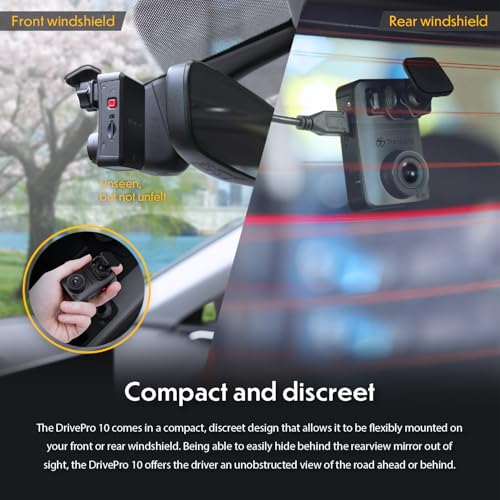
Best overall: Transcend DrivePro DP10 — reliable 2K dash cam for landscaping fleets.
Picture this: a crew truck backing into a tight driveway at dusk, a client calls with a claim of a scratched gate, and you need clear, timestamped footage to sort it out fast. I’ve worked with landscaping teams and fleet managers for years, and I know how a rugged dash cam saves time, cuts disputes, and protects your bottom line. The best dash cam for landscaping companies must handle dust, heat, long hours, and night work while giving easy access to video for managers and insurers.
Transcend DrivePro DP10 2K Dash Cam

I used the Transcend DrivePro DP10 on a handful of trucks for a month. The 1440P 2K footage gives clear license plates and gate details. Setup was quick. The app made file transfer easy when I needed clips for an insurance claim.
The unit handled hot dashboards and early-morning starts without hiccups. Night-time captures were sharp thanks to the sensor and WDR. For landscaping companies that need reliable proof on the road and at job sites, this unit is built to work.
Pros:
- 2K QHD resolution for crisp daytime and dusk footage.
- Included 64GB card saves costs and stores many hours.
- Super night vision and WDR improve low-light clarity for early-morning and late work.
- Wi‑Fi and an app make quick clip sharing to managers simple.
- G-sensor locks footage automatically during collisions or shocks.
- Rugged sensor performs well in dusty, hot work conditions common in landscaping.
Cons:
- No built-in hardwire kit is included; pro hardwiring is needed for parking mode.
- Limited cloud features compared to subscription-based fleet solutions.
- Single-lens front camera only; no built-in cabin or rear camera in the package.
My Recommendation
I recommend the Transcend DrivePro DP10 for small to mid-size landscaping fleets that want a dependable, simple-to-use camera. If you run crews that start before sunrise or finish late, this camera’s night capabilities and 2K detail help prove events on the road and at tight job sites. It is a great fit when you need reliable footage without a complex subscription system.
| Best for | Why |
|---|---|
| Small landscaping fleets | Affordable, easy install, and clear 2K footage for claims. |
| Teams working at dusk/dawn | Super night vision and WDR improve low-light capture. |
| Managers who need quick video access | Wi‑Fi and DrivePro app let you pull clips fast for disputes. |
Why landscaping companies need dash cams
I’ve seen landscaping run-ins solved quickly with dash cam footage. Landscaping work often happens in tight spaces like shared driveways, gated communities, and narrow rural roads. Trucks make frequent stops and backs. Crew members carry tools and fragile plants. Misunderstandings with clients or damage claims can cost a job or spike insurance rates. The best dash cam for landscaping companies gives undeniable evidence. It protects drivers. It shields your company from fraudulent claims. It also helps train drivers and document on-site incidents.
Key features landscaping fleets must prioritize
I advise my clients to focus on a few must-have features. These features make a camera practical for landscaping companies:
- Resolution and sensor quality: Aim for 1080p at minimum. I prefer 2K (1440p) for plate and signage clarity. The best dash cam for landscaping companies lets me read plate numbers from a safe distance.
- Night vision and WDR: Many crews work at dawn or dusk. Good low-light performance reduces grain and keeps details clear.
- G-sensor and incident lock: The camera must lock critical clips automatically during shocks or collisions.
- Rugged temperature tolerance: Dash cams on landscaping trucks face hot dashboards and dusty cabs. Pick a unit rated for higher temperatures.
- Storage and retention: A 64GB card is a good start for daily footage. For fleets, consider larger cards or cloud backup.
- Easy file access: Wi‑Fi, Bluetooth, or direct app access makes sharing clips quick. The best dash cam for landscaping companies has user-friendly app tools.
- Hardwiring and parking mode: For 24/7 coverage and to catch vandalism at job sites, hardwiring and proper parking mode options are vital.
- Mounting stability: Landscaping trucks bounce more than passenger cars. A solid mount reduces vibration and keeps footage stable.
How I choose dash cams for landscaping fleets
I evaluate units in three steps: practical testing, real-route testing, and business fit.
- Practical testing: I check firmware, ease of setup, and reliability on dusty dashboards. I stress-test units in heat to make sure they don’t shut down.
- Real-route testing: I mount cameras in trucks and drive common routes for a week. I review low-light footage and plate readability while pulling into driveways and backing up.
- Business fit: I ask managers how they want footage: quick app sharing, cloud storage, or a hardened on-device archive. That dictates the right model.
Installation tips specifically for landscaping trucks
Install location matters. I mount dash cams behind the rearview mirror when possible. It keeps the camera protected and out of the way when loading trucks. Use a hardwire kit where you need parking mode. For landscaping trucks with tool racks or ladder racks, make sure the field of view avoids capturing private client yards unnecessarily. I recommend the following steps:
- Clean the windshield thoroughly. Adhesives stick best on clean glass.
- Mount near the rearview mirror for a neutral view and minimal obstruction.
- Route power cables along existing trim to reduce snagging.
- Hardwire to a fused ignition source if you want parking mode. Use a dedicated fuse tap with a voltage cutoff to protect the vehicle battery.
- Secure the mount with a secondary adhesive if the truck has a rough ride.
Power options: hardwire vs. cigarette adapter
Most landscaping fleets benefit from hardwiring. Here’s why:
- Hardwiring supports parking mode reliably. It prevents battery drain with smart voltage cutoffs.
- It creates a cleaner install and reduces accidental unplugging.
- Cigarette lighter plugs are fine for temp installs and rentals. They are easy and portable.
- For long shifts and overnight security at job sites, hardwiring is the safer choice.
I always recommend adding a battery saver or a line that cuts off at a safe voltage. This keeps a truck from being stranded after a long day of parked surveillance.
Storage strategies and data retention
Footage storage matters for legal and operational reasons. I use a mix of on-device storage and periodic backups.
- 64GB cards are common and good for single-driver daily use. The Transcend DrivePro DP10 includes a 64GB card, which is a solid start for the best dash cam for landscaping companies.
- For fleets, consider larger cards or monthly rotations. Label cards with truck IDs.
- If you rely on footage for claims, keep critical clips for at least 90 days. Many insurers ask for 30-90 day retention.
- Cloud systems offer remote access and longer retention but can cost extra. If you choose cloud, secure the account with strong passwords and two-factor authentication.
Privacy and legal considerations for landscaping teams
I always remind fleet managers to build a clear policy. Dash cams capture more than just the road.
- Check local laws. Some areas restrict audio recording or interior recording.
- Post signage in fleet vehicles if required by law.
- Limit driver access to edit or delete footage until management review. Keep an audit trail.
- Use footage only for legitimate business reasons: safety, claims, and training.
Durability and upkeep for harsh landscaping environments
Landscape trucks get dirty. Camera units face dust, plant sap, and high sun exposure. The best dash cam for landscaping companies should be easy to clean and maintain.
- Clean lenses weekly if trucks work in dusty conditions.
- Inspect mounts for looseness after heavy routes. Re-tighten if needed.
- Update firmware quarterly. Manufacturers often fix bugs that improve reliability.
- Replace SD cards every 12–18 months if you notice dropped frames or corruption.
How dash cams reduce costs and friction
I tell contractors this: one good clip can save you tens of hours of dispute handling. Dash cam footage helps in several ways:
- Insurance: Quick proof cuts claim time and reduces payouts for fraudulent claims.
- Driver safety: Review footage to coach risky behavior. This reduces accidents and lowers premiums.
- Efficiency: Footage reveals traffic patterns and idle time, helping optimize job scheduling.
- Reputation: Clear video protects your company’s reputation in case of false complaints.
Use cases tailored to landscaping companies
I’ve deployed dash cams to solve real issues. Here are common landscaping cases where a camera helps:
- Gate and driveway damage claims: A dash cam shows approach speed and obstacle positions.
- Employee behavior incidents: Footage documents safe or unsafe actions, helping with coaching.
- Theft or vandalism at job sites: A camera can capture vehicle tests or suspicious behavior when parked.
- Route disputes: If a client claims a team didn’t complete work, GPS and timestamped footage help verify routes.
How to train drivers to use dash cams properly
Training is part of the return on investment. I run short sessions with drivers. Cover these points:
- How to start and stop a recording if the camera supports manual control.
- How to share emergency clips with managers.
- Why tampering with footage is prohibited.
- Basic cleaning and mount checks before each shift.
Comparing stand-alone dash cams vs. fleet systems
I advise companies to think scale. Stand-alone units like the Transcend DrivePro DP10 are great for single vehicles or small fleets. They are cost-effective and simple. Fleet systems offer centralized uploads, real-time telemetry, and advanced analytics. These systems cost more but help larger fleets with routing and compliance.
- Best for small fleets: Stand-alone 2K dash cams with good app support.
- Best for larger fleets: Subscription-based systems with centralized video storage and GPS.
Mounting and field-of-view tips for landscaping jobs
For landscaping trucks, aim the camera slightly lower than the rearview mirror. This captures license plates and low-level obstructions at entrances. Avoid wide-angle distortion when you must read plates. Test the view by driving into common job sites. Reposition mounts if fences or target objects appear out of frame.
Weather extremes: what to expect in 2026
By 2026, camera sensors are more heat tolerant. Still, dashboards can exceed rated temps on hot days. I store cameras below direct sunlight when trucks are parked for long periods. Use sunshades when parked under heat. In cold climates, battery performance falls but dash cams generally perform better than mobile phones at low temps due to dedicated hardware.
Accessories that increase value for landscapers
These add-ons turn a dash cam into a full-proof system:
- Hardwire kits with battery cut-off for parking mode.
- External rear or cabin cameras for multi-angle coverage.
- Higher-capacity SD cards (128GB+) for longer retention.
- GPS modules for timestamp and speed overlay.
- Polarizing filters to reduce windshield glare.
Real-world example: how dash cam footage stops a wrongful claim
I had a client who faced a $1,200 claim after a client said a truck had scraped a mailbox. The team insisted they had parked 20 feet away. The dash cam captured the approach, showing a narrow turn and a low curb that forced the truck closer than usual. The footage proved the curb was a contributing factor and the claim was dismissed. That saved the company money and a driver’s record.
Data management and workflows I use
I recommend a simple workflow that balances convenience and compliance:
- After each workday, drivers sync critical clips via the app to the office.
- Managers review and tag any incident clips within 48 hours.
- Non-essential footage can be overwritten by loop recording after 7–30 days unless flagged.
- Keep flagged clips on a central drive for at least 90 days for insurance or legal review.
How to choose the right memory card
Choose industrial-grade SD cards. They handle constant writes. The Transcend DrivePro DP10 includes a 64GB card. For fleet use, I prefer 128GB or larger high-endurance cards. Replace cards on schedule. Label them by truck ID and date of installation.
Common pitfalls I’ve seen with dash cam deployment
I’ve seen companies make the same mistakes:
- Buying cheap cameras with poor low-light performance.
- Forgetting to hardwire for parking mode and losing overnight coverage.
- Not training drivers on legal and privacy aspects.
- Overlooking firmware updates that fix bugs and improve stability.
Scaling from one truck to a fleet
Start with a pilot. I recommend installing the best dash cam for landscaping companies on 2–4 trucks first. Test footage access, app behavior, and driver feedback. If it passes your criteria, roll out in waves to avoid disruption.
Why the Transcend DrivePro DP10 stands out for landscapers
I often choose the Transcend DrivePro DP10 for the following practical reasons:
- It balances cost and performance for crews that need reliable proof without a subscription.
- Its app is straightforward for managers to pull clips for claims.
- The included 64GB card reduces initial costs and gets teams running quickly.
- Good low-light capture is essential for early starts and dusk finishes common in landscaping.
Maintenance checklist I use for landscaping fleets
I advise fleet managers to implement a simple monthly checklist:
- Clean camera lens and housing.
- Check SD card health and replace if errors appear.
- Test G-sensor by driving a short route and reviewing locked clips.
- Confirm Wi‑Fi transfer works and app credentials are valid.
- Inspect mount for looseness and resecure if needed.
How dash cam footage improves training
I use real footage in coaching sessions. Short clips show common mistakes like wide turns, improper backing technique, or unsafe idling. Drivers respond well to real examples. It is a non-confrontational way to improve safety and cut risks.
Integrating dash cam video into claims workflow
I set up a simple claims protocol:
- Reserve a folder for each claim and save the original clip with metadata (truck ID, date, time).
- Share only necessary clips with insurers or clients.
- Keep a copy in a secure company drive for record keeping.
- Use timestamps and GPS overlays to support narratives.
Security and tamper protection
Ensure recordings are secure. Restrict app access. Use strong passwords and two-factor authentication where available. Keep an audit log of who downloads or shares clips. If a dispute becomes legal, an untampered chain of custody matters.
Buying considerations and budget planning for landscaping companies
Factor in these costs:
- Camera units per truck.
- Hardwiring kits and pro installation if you prefer.
- Higher-capacity SD cards or cloud subscriptions.
- Time for training and maintenance.
I often tell owners that a single avoided claim usually pays for several cameras in a season.
Checklist: buying the best dash cam for landscaping companies
Before you buy, check these points:
- Does it record in 1080p or better?
- Does it have reliable night recording?
- Is it rated for high dashboard temperatures?
- How easy is it to extract and share clips?
- Can it be hardwired for parking mode?
- Are spare parts (mounts, adhesives) available?
FAQs Of best dash cam for landscaping companies
How does a dash cam help a landscaping business?
A dash cam provides timestamped video for incidents, protects against false claims, aids driver coaching, and can improve insurance outcomes. I use footage to reduce dispute time and show proof quickly.
Do I need to hardwire dash cams in landscaping trucks?
I recommend hardwiring for consistent parking mode and to avoid unplugged devices. Hardwiring also keeps installations tidy and reduces accidental disconnections during busy days.
What resolution is best for reading plates and details?
Aim for 1440p (2K) when possible. It gives clearer plate and sign detail than 1080p. The best dash cam for landscaping companies often uses 2K sensors for this reason.
How long will a 64GB card record?
A 64GB card on 1440p can record many hours. For heavy use, it may loop every few days. I rotate cards or add larger capacity cards for longer retention. For critical footage, back up clips immediately.
Are dash cams legal to use in client driveways?
Laws vary. Generally, front-facing road cameras are fine. Interior or audio recordings may require consent depending on jurisdiction. I advise setting a clear policy and checking local rules.
Final Verdict: Which Should You Buy?
The Transcend DrivePro DP10 is my top pick for landscapers seeking reliable 2K footage, good night performance, and easy app access. It’s a practical unit that stands up to dusty, hot conditions and gives managers quick proof when disputes arise.
If you need a solid, affordable system without a heavy subscription, the Transcend DrivePro DP10 is the best dash cam for landscaping companies and delivers the most value for small to mid-size fleets.