
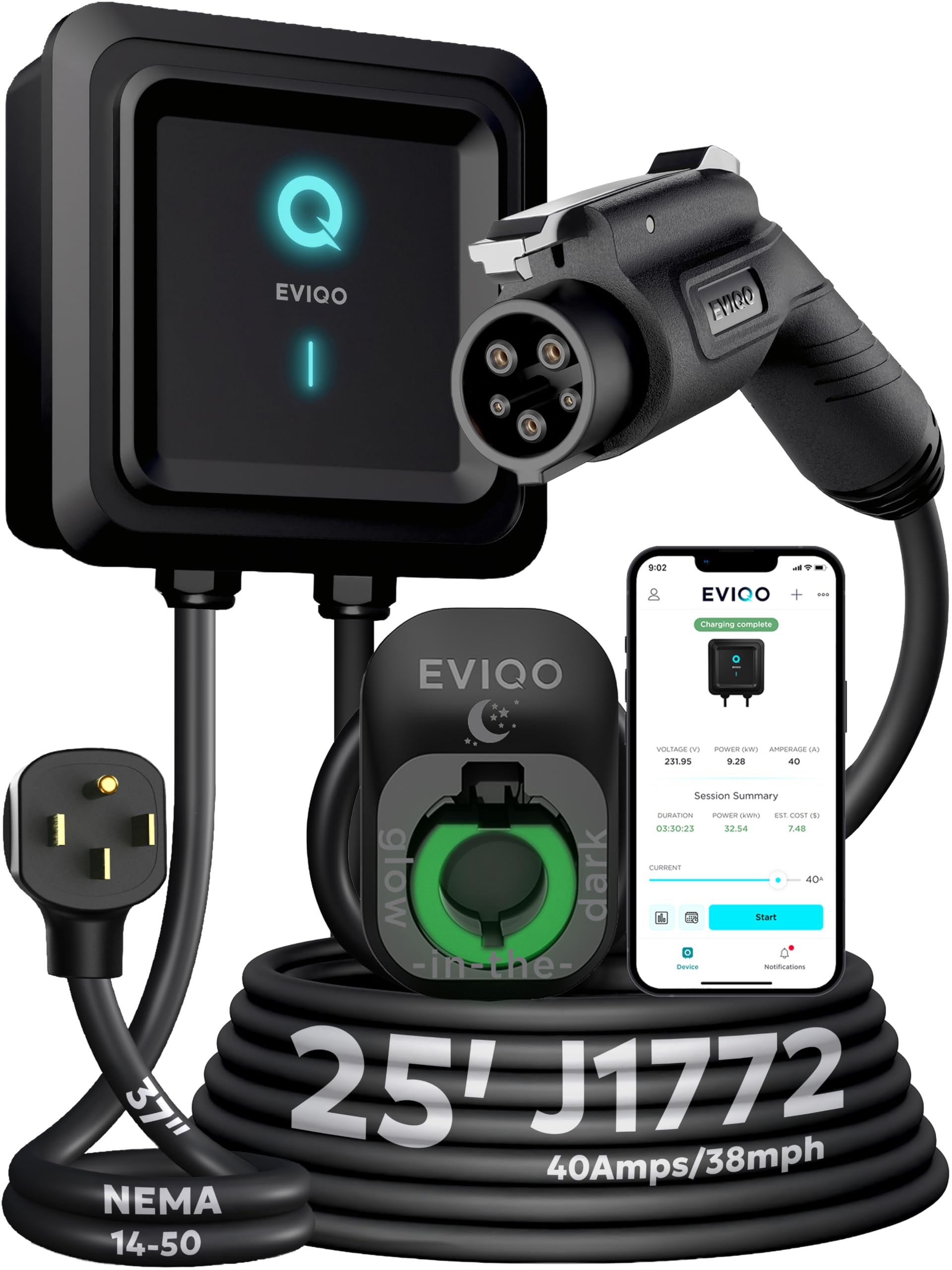
A EV Charging App an electric car at home comes down to two things: how fast it charges and how much control the driver has over that process. A Level 2 charger, which runs on 240 volts instead of a standard 120-volt outlet, cuts charging time from a full day down to a few hours for most EVs and plug-in hybrids. That speed difference is why most home charger buyers skip Level 1 entirely and look for a Level 2 unit that fits their electrical setup.
The app side of these chargers matters just as much as the hardware. A good EV charging app lets drivers schedule overnight charging during off-peak electric rates, adjust the amperage to match their home’s circuit, and track how much energy and money each session uses. Some apps also support RFID cards for shared or outdoor chargers, and a few advanced units offer power sharing or load balancing when two chargers run off one electrical panel.
Before buying, check three things: the connector type (J1772 for most non-Tesla EVs or NACS for Tesla and newer NACS-equipped vehicles), the installation method (plug-in versus hardwired), and whether the home’s electrical panel can support the circuit the charger needs. Plug-in chargers work with an existing NEMA 14-50 outlet and can be moved or unplugged, which suits renters and apartment dwellers with garage access. Hardwired units connect directly to the panel through a licensed electrician and tend to support higher amperage for faster charging.
Best for J1772 plug-in convenience: EVIQO Level 2 EV Charger J1772 40A
Best for drivers who want network access: ChargePoint HomeFlex Level 2 EV Fast Charger
Best budget plug-in option: AIMILER Level 2 EV Charger 32A
Best for Tesla and NACS vehicles: EVIQO Level 2 EV Charger NACS 48A
Best for Bluetooth backup connectivity: Autel Level 2 EV Charger 50Amp
Best for RFID access control: Grasside 48 Amp Level 2 EV Charger
Best for multi-charger households: IYILO Level 2 EV Charger for Tesla
Best for renters needing a standard outlet: Energbison Level 1&2 Portable EV Charger
Best value for occasional charging: NexCyber Level 2 EV Charger 32Amp
Best for cold-weather outdoor installs: DREAMDASH Level 2 EV Charger 40A
EVIQO Level 2 EV Charger J1772 40A

This plug-in charger suits any J1772 EV owner who wants strong app control without hiring an electrician for a hardwired install.
Pros
- Plugs into a NEMA 14-50 outlet, no hardwiring needed
- Adjustable 6-40A output with app-based scheduling and energy tracking
- IP66 weatherproof housing rated for indoor or outdoor use
Cons
- Requires a dedicated 50A circuit already in place
- Some buyers note the connector cable itself is shorter than expected
The 25-foot cable reaches across most garages or driveways, and the glow-in-the-dark holster helps at night. Its stronger antenna keeps a steady 2.4GHz Wi-Fi connection even in a basement garage, which is a common complaint with other smart chargers. Reviewers highlight solid build quality and responsive customer support, including one case where the company proactively resolved a connectivity issue. A side reset button avoids breaker trips for troubleshooting.
ChargePoint HomeFlex Level 2 EV Fast Charger
Drivers who want access to a large public charging network alongside their home charger should consider this hardwired unit.
Pros
- Adjustable 16-50A output on a single hardwired unit
- Access to ChargePoint’s large North American charging network through the same app
- 23-foot cold-resistant cable performs well in freezing temperatures
Cons
- Requires professional hardwired installation
- App can’t manage two chargers under one account, according to some users
ChargePoint’s app doubles as a trip-planning tool, showing nearby public stations along with home charging data. Reviewers report reliable performance after installation, with charge times around two and a half hours for many EVs. A few mention early Wi-Fi setup hiccups, but most say the app works well for day-to-day scheduling and monitoring once connected. EV Charging App
AIMILER Level 2 EV Charger 32A
This portable plug-in charger works well for owners who want a lower-cost option that still includes app control and a touchscreen.
Pros
- Plug-and-charge mode works without the app if Wi-Fi drops
- Touchscreen displays amperage, voltage, and charging speed directly on the unit
- Built-in ground fault protection removes the need for an added GFCI breaker
Cons
- Maximum 32A output is lower than some hardwired competitors
- Setup requires 2.4GHz Wi-Fi specifically, which trips up some first-time users
Reviewers across several EV brands, including Tesla owners using a J1772-to-NACS adapter, report consistent performance and a cable that feels noticeably heavier-duty than stock chargers. The NEMA Type 4 rated housing holds up outdoors, though direct sun exposure isn’t recommended. Its dual plug-and-play and app modes give flexibility for households without reliable garage Wi-Fi.
EVIQO Level 2 EV Charger NACS 48A
Tesla owners who want a native NACS connector without an adapter should look at this hardwired 48A charger.
Pros
- Built-in NACS plug opens a Tesla’s charge port automatically
- Delivers up to 48A, with a DIP switch option to unlock 50A on a 70A circuit
- Same weatherproof IP66 housing and strong Wi-Fi antenna as EVIQO’s J1772 model
Cons
- Requires hardwired installation by a licensed electrician
- Non-Tesla J1772 drivers need a separate adapter, sold separately
Because it’s hardwired, this unit needs a dedicated 60A circuit and professional setup, which adds cost but supports higher sustained amperage than most plug-in chargers. The app mirrors EVIQO’s J1772 version, with adjustable current from 6 to 48A and scheduling for off-peak charging. It suits Tesla households ready for a permanent installation rather than a portable setup.
Autel Level 2 EV Charger 50Amp
This hardwired charger fits buyers who want both Wi-Fi and Bluetooth connectivity as a backup for app control.
Pros
- Supports Wi-Fi, Bluetooth, and Ethernet for flexible connectivity
- Rated for extreme cold down to -40°C with a flexible 25-foot cable
- NEMA Type 4 housing protects against snow, rain, and hail
Cons
- Lower best-seller ranking suggests less real-world track record than some competitors
- No listed reviews available at time of publication
Autel, known for automotive diagnostic tools since 2004, built this charger with fire-resistant materials and over-voltage protection. The app supports scheduled off-peak charging and remote firmware updates. The Bluetooth option is useful during initial setup in garages where Wi-Fi signal is weak, giving it an edge over Wi-Fi-only competitors for first-time pairing.
Grasside 48 Amp Level 2 EV Charger
Buyers who want RFID-based access control alongside app scheduling will find this hardwired 48A charger a strong fit.
Pros
- RFID card support adds a security layer for shared or outdoor chargers
- Adjustable current from 10A to 48A in precise 1A increments
- Charging schedules can run seamlessly across midnight
Cons
- Requires a dedicated 60A circuit and professional installation
- One reviewer had to lower amperage to 40A to stop breaker trips
Reviewers describe straightforward installation, often completed in about an hour by an electrician. The app tracks voltage, current, power, and cost history, and supports multiple user profiles for households sharing one charger. Its IP65 housing withstands outdoor conditions, and the 25-foot cable gives enough reach for most garage layouts.
IYILO Level 2 EV Charger for Tesla
Households planning to install two chargers on one circuit should consider this NACS charger for its power sharing and load balancing support.
Pros
- Power sharing lets two chargers share one breaker safely
- Built-in temperature sensor in the connector prevents overheating
- Listed with several utility EV charging incentive programs
Cons
- Requires a separate Energy Meter accessory for dynamic load balancing
- Hardwired install needed, plus a J1772 adapter for non-NACS EVs
This charger’s NTC temperature sensor monitors the connector in real time and cuts power if it exceeds 221°F. That’s a useful safety layer for daily use. The app supports RFID cards, time-of-use scheduling, and multiple user accounts, making it a practical option for multi-vehicle or multi-driver households on NACS vehicles.
Energbison Level 1&2 Portable EV Charger
Renters and apartment dwellers without access to a 240V outlet installation should look at this dual-voltage portable charger.
Pros
- Works with a standard NEMA 5-15 household outlet or a 6-20 adapter
- Lightweight and portable enough to bring along on trips
- LCD screen shows real-time voltage, power, and temperature data
Cons
- Maximum 16A output is slower than dedicated Level 2 units
- Only a 12-month warranty, shorter than most competitors
This charger automatically limits current to 12A on standard household outlets for safety, and reaches up to 16A on a 240V NEMA 6-20 setup. It won’t match the charging speed of hardwired chargers, but it gives renters and apartment dwellers a flexible, low-cost way to add range overnight without any electrical work.
NexCyber Level 2 EV Charger 32Amp
Owners who charge occasionally and want a no-frills plug-in option can consider this 32A charger with plug-and-play as the default mode.
Pros
- Works without the app using its built-in touchscreen controls
- NEMA Type 4 housing offers IP66-level weather resistance
- 25-foot cable and drop-resistant plug rated for 10,000-plus charges
Cons
- 32A output charges slower than 40A or 48A units
- Not compatible with Tesla/NACS vehicles without an adapter
This charger’s plug-and-play mode skips app setup entirely, which appeals to buyers who just want to plug in and go. The touchscreen shows charging speed and lets drivers adjust amperage between 16A and 32A directly. For those who do want app data, it adds cost tracking and charge history without much added complexity.
DREAMDASH Level 2 EV Charger 40A
This plug-in charger fits buyers who need a full 40A output at a lower cost, with an IP66 housing built for cold-weather outdoor use.
Pros
- Full 9.6kW output at 40A, adjustable down to 6A
- IP66-rated enclosure rated from -22°F to 122°F
- Includes a wall-mounted holster and carrying case
Cons
- Shorter, 2-year warranty compared to the 3-year standard from most competitors
- A few buyers report the cable length feels shorter than the 25-foot spec suggests
One reviewer with home solar and battery storage noted this charger’s amperage draw worked well alongside a Tesla Powerwall setup, unlike some competing chargers that pulled too much current. The touchscreen and app both allow amperage adjustments, and the housing has held up in cold climates according to several reviews.
Buying Guide
Connector Type: J1772 vs. NACS
The connector on a home charger has to match the vehicle’s charging port. J1772 is the standard connector for most non-Tesla EVs and plug-in hybrids sold in North America. NACS, originally Tesla’s proprietary connector, now appears on a growing number of non-Tesla EVs as well.
| Connector | Works With | Adapter Needed |
|---|---|---|
| J1772 | Most non-Tesla EVs and PHEVs | Tesla owners need a J1772-to-NACS adapter (often included with the car) |
| NACS | Tesla vehicles and newer NACS-equipped EVs | Non-Tesla J1772 drivers need a separate adapter |
Check the vehicle’s owner manual or charge port before buying, since some newer non-Tesla models have switched to NACS.
Plug-In vs. Hardwired Installation
Plug-in chargers connect to an existing NEMA 14-50 outlet, similar to what an RV or electric range uses. They can be unplugged and moved, which makes them a good fit for renters or anyone who might relocate. Hardwired chargers connect directly to the electrical panel and require a licensed electrician, but they often support higher amperage and feel more permanent.
Amperage and Charging Speed
Higher amperage means faster charging, but only up to what the vehicle and circuit can handle. A 32A charger on a 40A circuit charges slower than a 48A charger on a 60A circuit, though actual speed depends on the car’s onboard charger too. Common Level 2 amperages include 32A, 40A, and 48A, corresponding to circuits of 40A, 50A, and 60A.
App Features Worth Comparing
| Feature | What It Does |
|---|---|
| Scheduling | Sets charging to run during off-peak electric rates |
| Current adjustment | Lowers or raises amperage to match circuit capacity |
| Energy tracking | Shows kilowatt-hours used and estimated cost per session |
| RFID access | Restricts who can start a charge, useful for shared or outdoor units |
| Power sharing | Lets two chargers split one circuit safely |
| Load balancing | Adjusts charging automatically based on total home electrical load |
Most apps require a 2.4GHz Wi-Fi connection rather than 5GHz, which trips up some first-time users during setup. A few chargers add Bluetooth as a backup connection method, which helps during initial pairing in a garage with weak Wi-Fi signal.
Weatherproofing and Cable Length
Chargers installed outdoors or in unheated garages need weather protection, usually listed as an IP rating or NEMA enclosure type. IP66 and NEMA Type 4 both indicate strong resistance to rain, snow, and dust. Cable length matters based on where the charger mounts relative to the vehicle’s charging port; most home chargers include a 23- to 25-foot cable, enough to reach across most garages or driveways.