
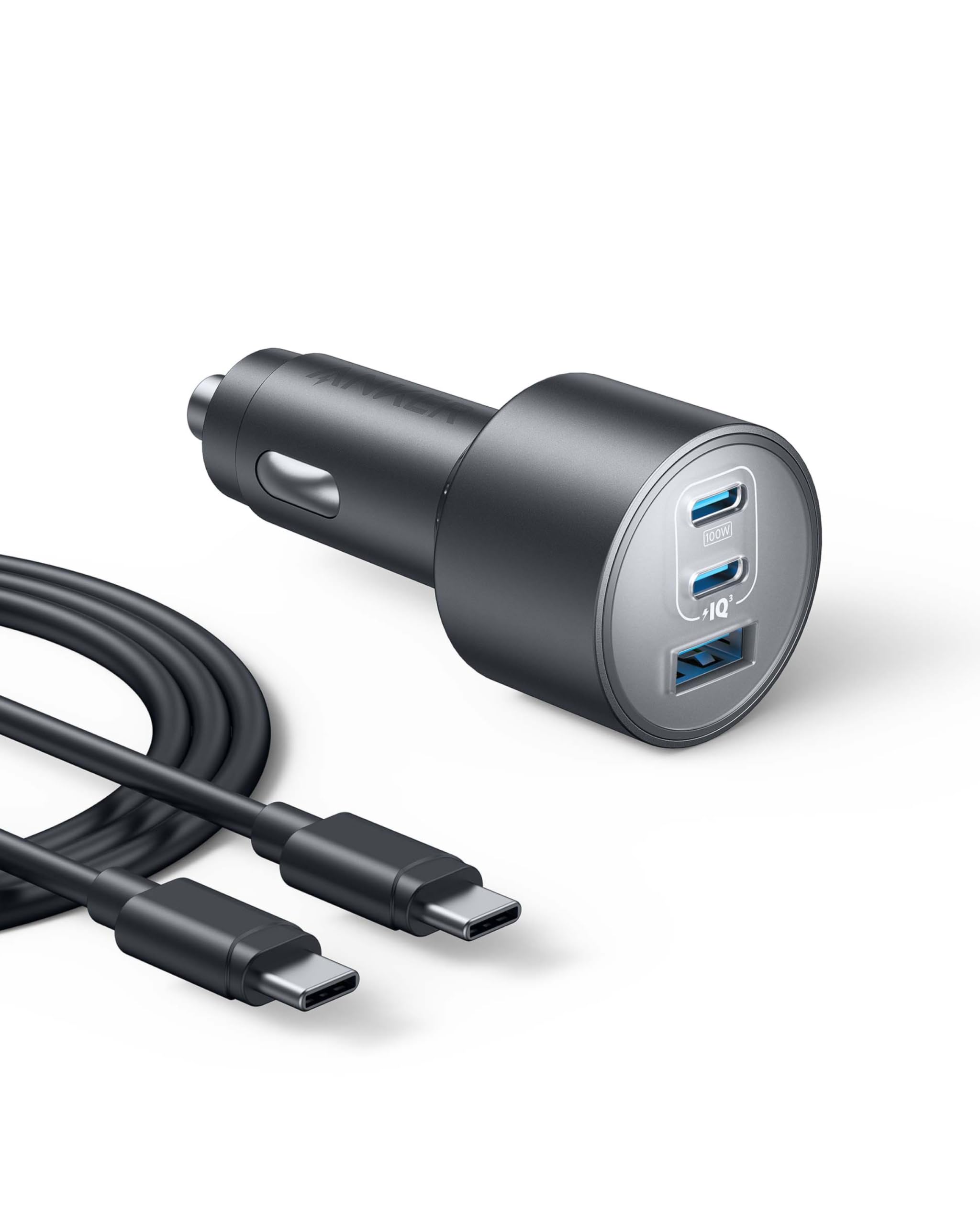
A Best DC Fast Charger for Car for your car turns a standard 12-volt outlet into a real power source for phones, tablets, and even laptops. Instead of trickle-charging a phone over an hour, the right charger can push a device from empty to half full in under 30 minutes, matching the speed of the wall adapter sitting at home. That difference matters most on road trips, during long commutes, or whenever multiple passengers need power at once.
Not all chargers labeled “fast charging” perform the same way. A charger’s total wattage gets shared across its ports, so a phone plugged into a “100W” charger might only receive a fraction of that if other devices are also connected. USB-C Power Delivery (PD) and Programmable Power Supply (PPS) support determine whether a charger can actually match a phone or laptop’s charging protocol, and port layout affects how many devices can charge at full speed simultaneously.
The most reliable chargers pair a well-supported fast-charging protocol, like PD 3.0 or Qualcomm Quick Charge, with enough dedicated wattage per port to avoid slowdowns when multiple devices are plugged in. Compact size, metal construction for heat management, and included cables also affect day-to-day convenience. The lineup below compares ten USB-C car chargers across these practical factors, not just their headline wattage.
Best for laptop charging on the go: Anker 167.5W Max 3-Port Car Charger
Best for everyday phone charging: Anker 323 52.5W USB C Car Charger
Best budget dual-port pick: Anker 40W 2-Port PowerIQ 3.0 Car Charger
Best for maximum multi-device power: LISEN 200W GaN Car Charger
Best for families with mixed devices: ROADRESS 200W Dual PD Car Charger
Best for built-in cable convenience: SUPERONE 99W Retractable Car Charger
Best compact metal design: LISEN 90W Dual USB-C Car Charger
Best for flush, low-profile installs: MRGLAS 125W Car Charger
Best for four-passenger vehicles: TIBEITA 90W 4-Port Car Charger
Best low-cost basic option: ANDHOT 3.4A Car Charger with Built-In Cable
Anker 167.5W Max 3-Port Car Charger

This charger suits drivers who need to top off a laptop and phone at the same time without carrying a separate power brick.
Pros
- 100W USB-C port can charge a MacBook Pro to 50% in under an hour
- Three ports cover a laptop, phone, and accessory simultaneously
- Compact housing does not crowd the dashboard or console
Cons
- Full 167.5W output only applies when ports are used individually
- Higher price point than basic phone-only chargers
- Includes only one USB-C to USB-C cable
The standout feature here is the 100W primary port, which is rare in a car charger and genuinely useful for anyone who works from a laptop between meetings. The second USB-C port at 45W handles phones from Apple and Samsung at full fast-charging speed, while the 22.5W USB-A port covers an older accessory or a passenger’s device. Splitting power across all three ports at once will reduce individual output, so plan primary use around one or two devices at a time for the fastest results.
Anker 323 52.5W USB C Car Charger
This charger fits drivers who mainly need fast, reliable phone charging without paying for laptop-level wattage.
Pros
- PowerIQ 3.0 matches charging speed to the connected device automatically
- USB-C and USB-A ports can run two phones at once
- Small footprint plugs in without blocking nearby controls
Cons
- 30W USB-C output is not enough for most laptops
- No bundled cable included
- Two ports total limits multi-device use in larger families
A 30W USB-C port here charges a modern iPhone or Galaxy phone to 50% in under 30 minutes, based on Anker’s testing conditions. The 22.5W USB-A port adds a second charging lane, useful for a passenger’s device or an older cable-based accessory. ActiveShield 2.0 monitors temperature during charging, which helps maintain consistent output on longer drives. This model works best as a dedicated phone charger rather than a multi-device hub.
Anker 40W 2-Port PowerIQ 3.0 Car Charger
This is a solid pick for drivers who want dependable dual-phone charging at a lower price than higher-wattage models.
Pros
- Two USB-C ports allow simultaneous fast charging for two phones
- PowerIQ 3.0 handles a wide range of phone brands automatically
- Ultra-compact shape stays out of the way
Cons
- 40W total output splits between ports, reducing speed with two devices connected
- Not suited for tablets or laptops
- No USB-A port for older accessories
Reviewers consistently mention reliable, no-fuss charging over long-term use, with several noting more than a year of daily use without issues. Both ports use USB-C, so this charger fits households built around newer phones rather than legacy USB-A cables. It is a straightforward choice for couples or roommates who each need a phone topped off during a shared commute.
LISEN 200W GaN Car Charger
This charger targets drivers who regularly charge a laptop, phone, and tablet together and want the highest available per-port wattage.
Pros
- 140W primary port supports serious laptop charging speeds
- GaN chip design manages heat better than standard chargers
- Included 240W-rated cable matches the charger’s top output
Cons
- Total 200W output is shared, so running all three ports reduces individual speeds
- Larger and heavier than basic phone-only chargers
- Fewer verified long-term reviews than established brands
The 140W USB-C port stands out as one of the highest available in a car charger, useful for charging a MacBook Pro during a long drive instead of waiting until arrival. The 60W Samsung-specific fast charging support is a helpful detail for Galaxy S24 and S25 owners. Metal housing helps dissipate heat, though drivers should expect some output reduction when all three ports run simultaneously, as with any shared-power design.
ROADRESS 200W Dual PD Car Charger
This charger works well for drivers who want two equally powerful USB-C ports instead of one dominant port and a weaker second one.
Pros
- Two 100W-capable USB-C ports for balanced dual-device charging
- Broad protocol support including QC4.0, PD3.0, and PPS
- LED ring light helps locate ports at night
Cons
- Advertised 200W total is a shared maximum, not simultaneous per-port output
- Acrylonitrile butadiene styrene housing feels less premium than metal designs
- No charging cable included
Two matched 100W ports make this charger appealing for two people who both need serious power, such as a laptop and a tablet charging together. The third USB-A port at 60W adds flexibility for older devices. The blue LED ring is a small but genuinely useful touch for locating the port after dark, though buyers should treat the 200W figure as a ceiling rather than a guarantee across all three ports at once.
SUPERONE 99W Retractable Car Charger
This charger is built for drivers tired of loose cables cluttering the console, thanks to two retractable cords built directly into the unit.
Pros
- Built-in retractable USB-C and Lightning cables eliminate separate cords
- Six total charging options across cables and ports
- 180-degree adjustable plug improves fit in tight console spaces
Cons
- Real-world PD output tops out at 30W, lower than several rivals here
- Retractable cable mechanisms can wear over time with heavy daily use
- Bulkier housing than simple plug-in chargers
Reviewers highlight how much tidier their car interior looks once cables retract into the unit instead of tangling in the console. The built-in Lightning and USB-C cords mean no forgotten cables on trips, a meaningful convenience despite the modest 30W PD ceiling. This model suits drivers prioritizing convenience and cable management over maximum charging speed.
LISEN 90W Dual USB-C Car Charger
This charger fits drivers who want two genuinely fast USB-C ports in a compact, all-metal body.
Pros
- Two 45W USB-C ports support simultaneous fast charging for phone and tablet
- Zinc metal shell aids heat dissipation and feels durable
- Thumb-sized body barely protrudes from the outlet
Cons
- No USB-A port for older cables
- 90W total output splits between the two ports
- PD 3.0 support only, no mention of PPS for Samsung Super Fast Charging
Both ports deliver up to 45W each, a genuinely useful spec for charging an iPhone and iPad together at full speed rather than one device dominating the output. The metal shell holds up well over extended use and the compact size fits nearly any 12V socket without sticking out. This charger works best for Apple-heavy households, since Samsung’s PPS-based fast charging isn’t explicitly supported.
MRGLAS 125W Car Charger
This charger suits drivers who want a nearly flush-fitting charger that still delivers strong PD and QC output.
Pros
- Sits nearly flush in the socket, reducing snagging or accidental unplugging
- PD 65W and QC 60W cover most phones and small laptops
- Pull-ring design makes removal easier than gripping a small metal body
Cons
- USB-A and USB-C ports cannot both fast charge at the same time
- Full 65W/60W output requires a 20V-capable vehicle system, which not all cars provide
- Some buyers report inconsistent power delivery with higher-draw devices like handheld gaming units
Multiple reviewers praise how little this charger protrudes, making it ideal for trucks, motorcycles, or vehicles with shallow 12V sockets. The pull-ring design solves a common annoyance: removing a low-profile charger without needing to pinch a tiny surface. Buyers should note the fine print regarding 20V vehicle requirements for peak output, since standard 12V systems will not unlock the full rated wattage.
TIBEITA 90W 4-Port Car Charger
This charger is built for families or carpools needing to charge four devices from a single outlet.
Pros
- Two USB-C and two USB-A ports cover mixed device types for multiple passengers
- Includes a 3-foot USB-C cable in the box
- Illuminated ring helps locate ports at night
Cons
- 45W max per USB-C port is modest compared to single- or dual-port rivals
- Four ports running together will reduce per-device speed noticeably
- Not suited for full-speed laptop charging
This charger prioritizes port count over raw per-port power, a reasonable trade-off for families where everyone just needs their phone charged during a drive. The 45W USB-C ports handle Samsung Galaxy and iPhone models at reasonably fast speeds when only one or two ports are active. Reviewers note the included cable and blue lighting as helpful bonuses, though this is not the pick for anyone needing to charge a laptop at speed.
ANDHOT 3.4A Car Charger with Built-In Cable
This charger is a low-cost, no-frills option for drivers who just need basic phone charging with a cable already attached.
Pros
- Built-in 3-foot USB-C cable means one less item to remember
- Extra USB-A port for a second device
- Budget-friendly price point
Cons
- 15W total output is far below true fast-charging standards
- Two ports share the same 3.4A output, slowing speeds further when both are used
- Not suitable for tablets or laptops
At 15W total shared output, this charger sits well below the true “dc fast charger” category and functions more like a standard charging adapter. Reviewers confirm it works reliably for basic phone charging, though several note noticeably slower speeds compared to higher-wattage chargers. It suits drivers with light charging needs or as a backup unit rather than a primary fast-charging solution.
Best DC Fast Charger for Car Buying Guide
Understand Shared Power Limits
A charger’s total wattage rating is a ceiling, not a guarantee per port. Many multi-port chargers list an impressive combined number, such as 200W, but that power splits across active ports. Check whether the listing specifies per-port wattage, since that number matters more than the total when deciding if a charger can fast-charge two devices at once.
Match Charging Protocols to Devices
Different phone brands use different fast-charging standards. USB-C Power Delivery (PD) covers most modern phones and all laptops with USB-C charging. Programmable Power Supply (PPS) is required for Samsung’s Super Fast Charging feature, and Quick Charge (QC) covers many older Android phones. A charger without PPS support will still charge a Samsung phone, just not at its fastest possible speed.
| Standard | Common Use | Typical Speed Benefit |
|---|---|---|
| USB-C PD | iPhones, iPads, laptops | Fast, consistent charging |
| PPS | Samsung Galaxy Super Fast Charging | Matches Samsung’s fastest protocol |
| Quick Charge (QC) | Many Android phones | Fast charging on older devices |
Consider Port Count and Layout
More ports help multiple passengers charge at once, but each additional port usually lowers the maximum speed available to any single device. A single high-wattage port suits a solo commuter with a laptop. A four-port layout suits carpools or families, provided expectations for per-device speed are adjusted accordingly.
Look at Build Material and Heat Management
Metal-bodied chargers, including aluminum or zinc alloy designs, generally dissipate heat better than plastic housings. Gallium nitride (GaN) chip technology also improves efficiency and reduces heat during high-wattage charging. This matters most for chargers rated above 60W, where heat buildup can affect performance over time.
Weigh Cable Convenience Against Flexibility
Chargers with built-in cables save the hassle of misplacing a cord, but they lock the buyer into a fixed connector type, such as Lightning or USB-C. Chargers with open ports work with any compatible cable, offering more flexibility if devices change over time.
Check Physical Fit for the Vehicle
Older or economy vehicles may only supply 12V power, while some larger vehicles supply 24V systems. A few chargers require higher vehicle voltage to reach their top advertised wattage. Compact or flush-fitting designs work better in shallow sockets or vehicles where a protruding charger risks snagging on knees or bags.