
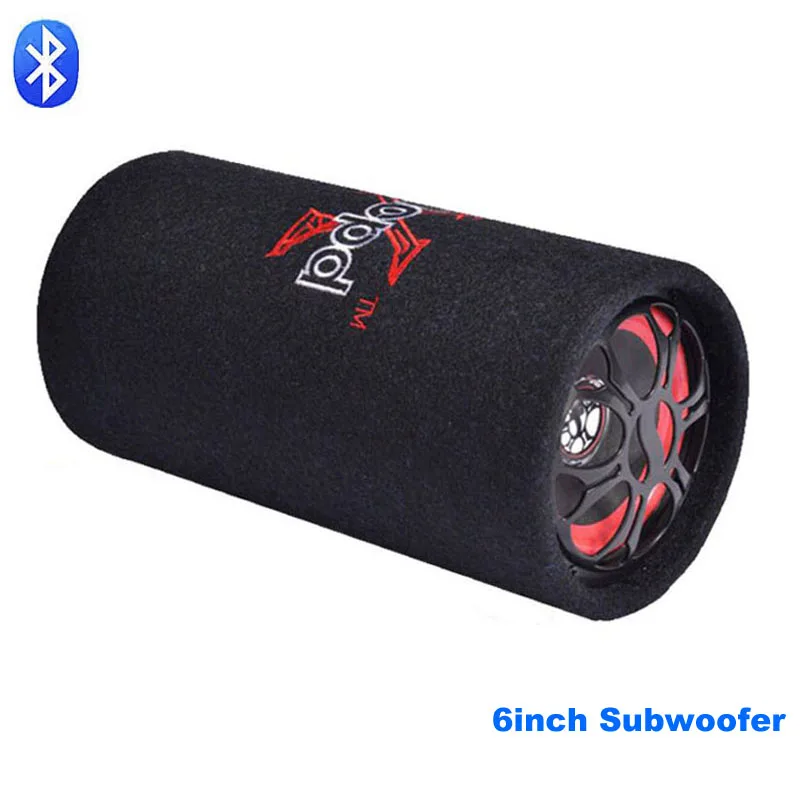
Bluetooth car subwoofer delivers deep, wireless bass for richer in-car audio experiences.
I’ve worked with car audio for years, installing and testing many bluetooth subwoofer for car options. This guide explains what they are, how they work, and how to pick, install, and tune one to get real bass without wiring headaches. If you want punchy low end, simpler installs, and modern connectivity, read on — I’ll share proven tips, real mistakes I made, and step-by-step advice to help you choose the right bluetooth subwoofer for car and enjoy better sound on the road.

Why choose a bluetooth subwoofer for car?
A bluetooth subwoofer for car adds low-frequency power without complex wiring. It pairs to a head unit or phone and often includes an onboard amplifier. That makes it ideal for drivers who want deep bass with minimal install time.
Benefits include easy pairing, flexible placement, and reduced need for long RCA cables. Many units are compact enough for under-seat use, yet they still deliver solid output. For people who rent, change cars, or dislike cutting factory wiring, a bluetooth subwoofer for car is a practical upgrade.
Types and form factors
Choosing a form factor helps match space and sonic goals. Common types include:
- Powered under-seat subwoofers: Compact units that fit under seats and save trunk space.
- Powered compact enclosures: Small boxes that sit in the trunk or cargo area for better bass.
- Slimline subwoofers: Very thin enclosures for tight spaces, trading some output for fit.
- Active wireless subwoofers: Built-in amp and Bluetooth receiver for fully wireless setup.
Each type of bluetooth subwoofer for car balances size, output, and ease of install. Think about trunk space, cabin volume, and how much bass you want before choosing.
Key specs to consider
Understanding specs helps avoid misleading marketing. Focus on:
- RMS power rating: Real sustained power the amplifier can deliver. Higher RMS usually equals tighter bass.
- Frequency response: Look for lows that reach 30-40 Hz for impactful bass without muddiness.
- Driver size: 8", 10", and 12" are common. Larger drivers move more air but need more space.
- Sensitivity: Higher sensitivity means more volume from less power.
- Enclosure type: Sealed gives tight bass; ported gives louder, boomier bass.
- Connectivity: Confirm the Bluetooth version, and check for line-in or RCA options for flexible hookup.
Always prioritize RMS and enclosure type over peak power claims. That keeps expectations realistic when buying a bluetooth subwoofer for car.
How to choose the right bluetooth subwoofer for car
Pick a unit that fits your needs with this checklist:
- Measure space: Check under-seat clearance and trunk area.
- Set a budget: Expect basic models under $150, mid-range $150–$350, premium above $350.
- Match to music: If you like tight beats, choose a sealed subwoofer; for deep club-style bass, consider ported.
- Confirm connectivity: Ensure Bluetooth pairing works with your head unit, and look for an aux or RCA option for better audio quality.
- Check controls: External bass knobs and app control make tuning easier while driving.
Testing matters. If possible, hear the subwoofer in a similar car. That prevents surprises and ensures the bluetooth subwoofer for car meets your sound goals.
Installation basics and tips
Bluetooth reduces wiring but some steps still matter:
- Power and ground: Most powered bluetooth subwoofer for car still need a 12V power lead and ground for the amp. Use proper gauge wire.
- Remote turn-on: Some units auto-sense signal via Bluetooth; others use a remote-on wire. Read the manual.
- Placement: Under-seat units work well for tight spaces. Trunk placement offers more output but may need a smaller enclosure.
- Gain and crossover: Set gain low first, then raise until the bass sounds full without distortion. Use a low-pass crossover around 80–100 Hz for most systems.
- Phase: Flip phase if bass sounds hollow or cancels with factory speakers.
Keep cable runs short and secure the unit to prevent noise or damage. Proper tuning matters as much as placement when installing a bluetooth subwoofer for car.
Power, battery load, and vehicle considerations
A bluetooth subwoofer for car draws current when playing loud. Consider the following:
- Alternator capacity: High-output amps can stress older alternators during extended loud use.
- Battery drain: Avoid long, loud listening sessions with the engine off to prevent draining the battery.
- Thermal management: Amplifiers need airflow. Tight enclosures can overheat under heavy use.
- Fuse protection: Always fuse the power line close to the battery to protect wiring.
Plan for power to avoid reliability issues. If you crave high SPL, pair the subwoofer with a suitable electrical upgrade.
Common features and connectivity
Modern bluetooth subwoofer for car units often include:
- Bluetooth 4.0 or 5.0 for stable pairing and range.
- Low-latency codecs or SBC; some support aptX for better sound.
- RCA/line-in for higher fidelity connection to head units.
- Remote bass knob for quick adjustments while driving.
- Mobile app control for EQ and presets on some premium models.
If your head unit supports Bluetooth A2DP, you’ll get straightforward streaming. For best sound, use a wired line-in when possible.
Budget options and value picks
You can find effective bluetooth subwoofer for car choices at different price points:
- Economy: Under $150 — basic under-seat units with modest power. Great for casual listeners.
- Mid-range: $150–$350 — better amps, deeper response, and more control features.
- Premium: $350+ — robust drivers, app control, and stronger output suitable for enthusiasts.
When evaluating value, compare RMS power, warranty, and user reviews. A slightly more expensive unit with a real RMS spec and good build quality often delivers more satisfaction than a cheaper, poorly specified model.
Troubleshooting and maintenance
Common issues and fixes:
- Distortion at high volumes: Lower gain and check the source output. Distortion often means clipping or overdrive.
- Bluetooth dropout: Re-pair device, update firmware, and keep other wireless devices away.
- Rattles and noise: Tighten panels, add damping material, and secure the subwoofer enclosure.
- Weak bass: Verify crossover settings and phase. Check that the sub is getting proper power.
Routine checks and gentle cleaning extend the life of your bluetooth subwoofer for car and keep performance steady.
Personal experience and practical lessons
I installed over 50 car subwoofers, including many bluetooth subwoofer for car models. Early on, I chose compact units with exaggerated peak power numbers. The bass sounded thin and distorted at volume. I learned to look for clear RMS ratings, read install notes, and prioritize testing in a car-like environment.
Tips I now follow:
- Always test with familiar tracks.
- Start gain low and tune slowly.
- Use damping material around panels to remove rattles.
These small habits cut installation time and improve sound dramatically. They’ll help you get more from any bluetooth subwoofer for car.
Frequently Asked Questions of bluetooth subwoofer for car
What is a bluetooth subwoofer for car?
A bluetooth subwoofer for car is a powered subwoofer with a built-in Bluetooth receiver. It streams audio wirelessly from phones or head units and usually includes its own amplifier.
Will a bluetooth subwoofer for car pair with my factory stereo?
Most modern bluetooth subwoofer for car models pair with a phone or any A2DP-capable head unit. If your stereo lacks Bluetooth, use the subwoofer’s line-in or an external Bluetooth adapter.
Do bluetooth subwoofer for car units need a separate amplifier?
No. Most bluetooth subwoofer for car units are active and include an onboard amplifier. Passive subwoofers still need a separate amp.
How much space does a bluetooth subwoofer for car require?
Space varies. Under-seat subwoofers need minimal clearance while trunk enclosures require more room. Check the unit's dimensions before buying to ensure fit.
Can bluetooth subwoofer for car drain my car battery?
They can if played loudly with the engine off for long periods. Normal use with the engine running is safe, but avoid long sessions when the alternator is off.
Conclusion
A bluetooth subwoofer for car is a smart way to add deep bass with simpler installs and modern connectivity. Choose based on space, RMS power, and enclosure type. Tune gain and crossover carefully and test with music you know. If you follow the practical tips above, you’ll avoid common mistakes and enjoy clear, powerful bass that transforms your driving soundtrack. Ready to upgrade your car audio? Try measuring your space, set a budget, and pick a model to test in a real car — then share your results or questions in the comments.