
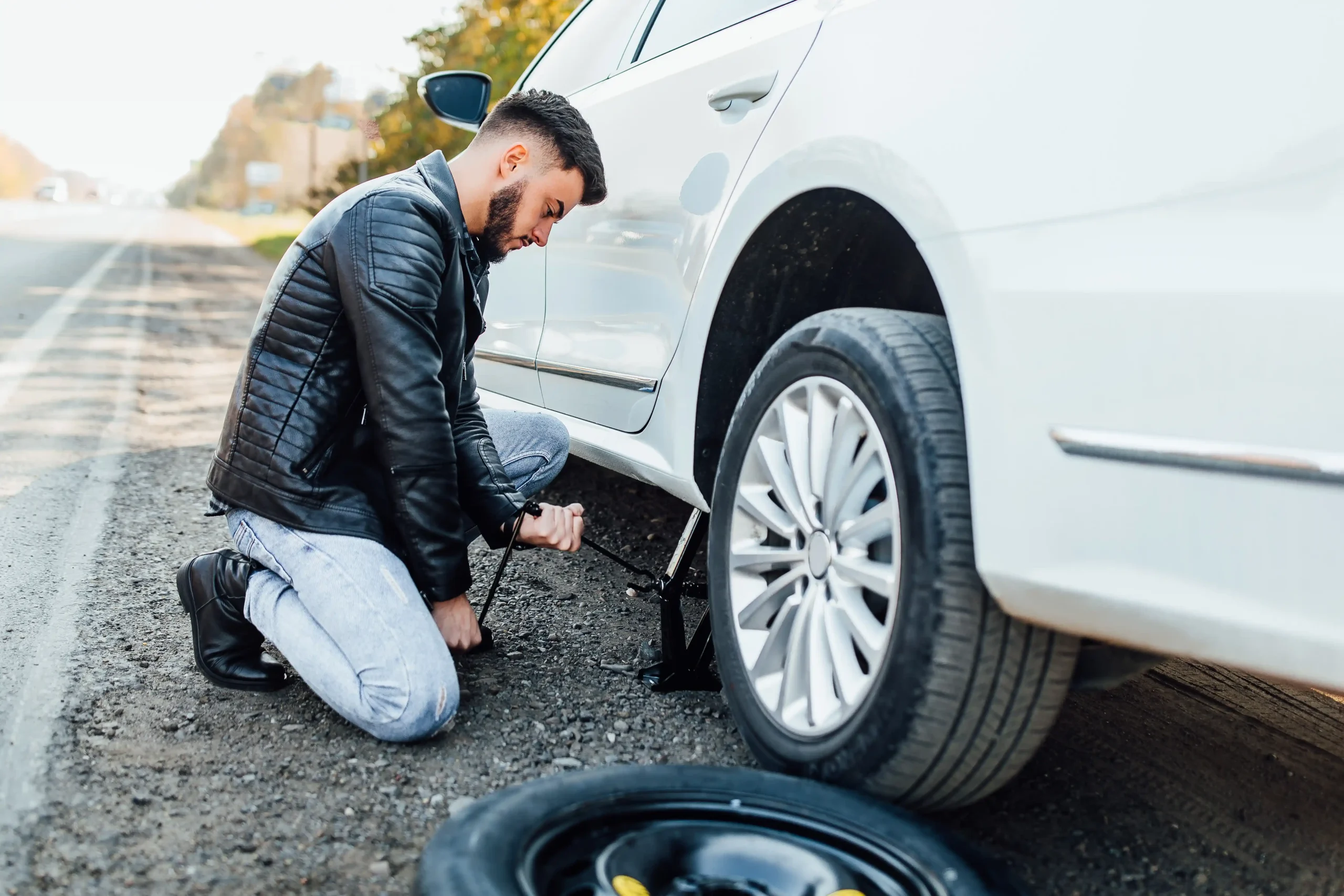
If you have ever heard that dull thump from one corner of your car, you know the feeling. A flat tire can turn a normal drive into a stressful stop on the shoulder. I have been there, and the first question is usually the same: can I fix this long enough to get somewhere safe?
In this guide, I will explain how to fix a flat tire temporarily in a way that makes sense for everyday drivers. I will cover safe roadside steps, when to use a spare tire, when tire sealant can help, and when you should stop driving and call for help.
The goal is not to turn you into a mechanic. The goal is to help you stay calm, protect your car, and avoid making the damage worse.
Quick Answer
The safest temporary fix for a flat tire is to pull over, inspect the tire, and either install your spare tire or use a tire sealant kit if the puncture is small and in the tread. Do not drive on a fully flat tire unless you are moving only a very short distance to get out of danger. Tire sealant is only a short-term fix, and a spare tire is also meant for limited driving. After any temporary repair, go to a tire shop as soon as possible.
What Causes a Flat Tire?
A flat tire usually happens because air escapes from the tire faster than it should. Sometimes it is sudden. Other times it is slow, and you may not notice until the tire looks low or your car starts pulling to one side.
Most flat tires come from simple road hazards. A small nail, screw, sharp rock, or piece of metal can enter the tread and let air leak out. In some cases, the tire sidewall gets damaged after hitting a pothole or curb.
Here are the most common causes I see drivers deal with:
- Nails or screws: These often cause slow leaks in the tire tread.
- Potholes: A hard hit can damage the tire, rim, or both.
- Valve stem leaks: The small air valve can crack or loosen over time.
- Old tires: Worn rubber is more likely to fail.
- Sidewall damage: Cuts or bubbles on the side are serious and usually not repairable.
The good news is that not every flat tire means the tire is ruined. If the hole is small and located in the tread, a shop may be able to patch or plug it. If the damage is on the sidewall, the tire usually needs to be replaced.
Warning: If your tire has a large tear, exposed cords, or sidewall damage, do not try to fix it with sealant. Use a spare tire or call roadside help.
How to Tell If Your Tire Can Be Fixed Temporarily
Before you grab tools or sealant, take a minute to look at the tire. A temporary repair only makes sense if the tire is not badly damaged. You want to know whether you are dealing with a small puncture, a slow leak, or a tire that is no longer safe.

Look for these signs:
- The tire is low but still holding some air.
- You can see a nail or screw in the tread area.
- The wheel rim does not look bent or cracked.
- There is no long cut in the tire rubber.
- The sidewall does not have a bubble or deep slice.
If you are not sure, choose the safer option. Put on the spare if you have one, or call for roadside assistance. The NHTSA tire safety guide is also a helpful resource for understanding tire condition and safe driving.
| Flat Tire Sign | Temporary Fix May Work? | Best Next Step |
|---|---|---|
| Small nail in tread | Yes, sometimes | Use spare or sealant, then visit a tire shop |
| Slow air leak | Yes, if tire is not damaged | Add air and inspect soon |
| Sidewall cut | No | Do not drive; replace tire |
| Tire shredded or torn | No | Call roadside help |
| Bent rim after pothole hit | Usually no | Have wheel and tire inspected |
How to Fix a Flat Tire Temporarily Step by Step
Here is the basic process I recommend when you get a flat tire. Keep it simple. Your first job is safety, not speed.
1. Pull Over Somewhere Safe
Slow down gently. Do not slam on the brakes. Turn on your hazard lights and move to a flat, safe area away from traffic. A parking lot is best if you can reach one without driving far on the flat tire.
2. Check the Tire Damage
Look at the tire before using any tool. If the tire is shredded, split, or damaged on the sidewall, skip sealant. You need a spare tire or roadside assistance.
3. Use a Spare Tire If You Have One
A spare tire is often the best temporary fix. Use your owner’s manual, jack, lug wrench, and wheel lock key if your car has one. Loosen the lug nuts slightly before lifting the car, then raise the vehicle on the correct jack point.
After installing the spare, tighten the lug nuts in a star pattern. Drive slowly and follow the speed limit printed on the spare tire. Many temporary spare tires are not made for highway speed or long trips.
4. Use Tire Sealant for a Small Tread Puncture
If your car does not have a spare, it may have a tire repair kit with sealant and a small air compressor. This can help with a small puncture in the tread. Follow the kit instructions closely.
Most sealant kits work by pushing liquid sealant into the tire while adding air. After that, you usually drive a short distance so the sealant spreads inside the tire.
Alex’s Tip: Tire sealant can make a mess inside the tire. Tell the tire shop you used it, because they may need to clean the wheel and check the tire pressure sensor.
5. Add Air and Check Pressure
If the tire is not fully flat and the damage looks minor, a portable tire inflator may help you reach a safe repair shop. Check the recommended tire pressure on the driver-side door sticker, not the number printed on the tire sidewall.
6. Drive Slowly to a Repair Shop
After any temporary fix, avoid fast driving, hard braking, and long highway trips. Your goal is simple: get to a tire shop safely. You can also read practical tire buying and repair advice from Kelley Blue Book car advice if you are trying to decide whether to repair or replace the tire.
| Item | Why You Need It |
|---|---|
| Spare tire | Best temporary replacement for a damaged tire |
| Jack | Lifts the vehicle so you can change the tire |
| Lug wrench | Removes and tightens lug nuts |
| Tire sealant kit | Seals some small tread punctures for short-term driving |
| Portable inflator | Adds air so you can reach a safe place |
| Gloves and flashlight | Help you work safely and see the damage |
Common Mistakes to Avoid
A flat tire is already frustrating. These mistakes can make it more expensive or more dangerous.
- Driving too far on a flat tire: This can ruin the tire and damage the wheel.
- Using sealant on sidewall damage: Sealant is not made for cuts or sidewall failure.
- Ignoring the spare tire limit: Temporary spares have speed and distance limits.
- Jacking the car in the wrong spot: This can damage the vehicle or make it unstable.
- Forgetting to tighten lug nuts again: Have them checked after a short drive if possible.
- Thinking temporary means permanent: Every temporary fix needs a real inspection soon.
Warning: If you are on a busy highway shoulder, do not risk your safety to change a tire. Stay away from traffic and call for help.
Expert Tips from Alex
Alex’s Tip: Check your spare tire pressure every few months. A spare tire does not help much if it is flat too.
Alex’s Tip: Keep a small tire pressure gauge in the glove box. It is cheap, small, and very useful when your dashboard warning light comes on.
Alex’s Tip: Practice finding your jack point at home. It is much easier to learn in your driveway than on the side of the road.
Alex’s Tip: If your car came without a spare, consider building a small roadside kit. A portable inflator, flashlight, gloves, and warning triangle can make a bad day safer.
One more thing: do not ignore your tire pressure light. The Consumer Reports tire guide has useful tire care advice, and it is worth reading if you want to avoid surprise flats.
How Long Can You Drive After a Temporary Flat Tire Fix?
That depends on the fix. If you installed a temporary spare, follow the limit printed on the tire and your owner’s manual. Many compact spares are meant for short-distance driving only.
If you used tire sealant, think of it as a way to reach help, not a real repair. I would not plan a road trip, commute, or highway run on a sealed tire unless a tire professional has checked it first.
For more help choosing tools before a problem happens, see our guide to essential car emergency tools.
Key Takeaways
- A temporary flat tire fix is only meant to get you somewhere safe.
- A spare tire is usually better than sealant if the tire is badly damaged.
- Tire sealant may work for small punctures in the tread only.
- Never use sealant on sidewall cuts, bubbles, or shredded tires.
- After any temporary fix, visit a tire shop as soon as you can.
Frequently Asked Questions
Can I drive on a flat tire for a short distance?
You should avoid driving on a flat tire. If you must move the car out of danger, drive very slowly for the shortest distance possible. Driving on a flat tire can destroy the tire and damage the wheel. Is tire sealant a permanent repair?
No, tire sealant is not a permanent repair. It is a temporary fix for some small tread punctures. You should still have the tire inspected by a tire shop as soon as possible.
Can I use tire sealant on a sidewall puncture?
No, you should not use tire sealant on a sidewall puncture. Sidewall damage is unsafe and usually cannot be repaired. Use a spare tire or call roadside assistance.
How fast can I drive on a temporary spare tire?
Most temporary spare tires have a speed limit printed on the tire. Many are limited to about 50 mph, but you should check your spare and owner’s manual. Drive carefully and avoid long trips.
Should I remove the nail before using tire sealant?
Do not remove the nail unless the sealant kit instructions tell you to. In many cases, the object helps slow the leak until the sealant can work. Follow the instructions that came with your repair kit.
What should I keep in my car for a flat tire?
Keep a spare tire, jack, lug wrench, tire pressure gauge, gloves, flashlight, and warning triangle if your vehicle supports a spare. If your car has no spare, keep a tire inflator and a sealant kit. Check these items before long trips.
When should I replace the tire instead of repairing it?
Replace the tire if it has sidewall damage, a large cut, exposed cords, a bubble, or severe tread wear. A tire shop can inspect the tire and tell you if a safe repair is possible.
When in doubt, choose safety over saving the tire.
Conclusion
A flat tire is never convenient, but you do have options. The safest temporary fix is usually a spare tire. If the damage is small and in the tread, tire sealant or a portable inflator may help you reach a repair shop.
Just remember the key rule: temporary means temporary. Do not treat a sealed tire or compact spare like a normal tire. Slow down, avoid long drives, and get the tire inspected as soon as possible.
If you want to be better prepared before your next drive, check out our roadside emergency kit checklist and make sure your car has the basics ready.