No. Electric cars do not have gas engines. They use electric motors.
You want a clear answer. You also want the why. Maybe you looked under the hood of an EV at a showroom. You did not see a familiar engine. You saw covers, cables, and a small 12V battery. It can feel strange. Gas cars use engines with pistons. EVs use motors with magnets and coils. The feel on the road is different too. Instant torque. Smooth drive. Fewer parts to service. In this guide, I break down do electric cars have engines in simple terms. I also share helpful picks that make EV life easier or explain it well.
See the differences between my top picks at a glance.
| Product | Type | Relevance to “do electric cars have engines” | Power/Format | Key Engine vs. Motor Insight | Best For |
|---|---|---|---|---|---|
| DEERC 9309E RC Car 40KPH All-Terrain | RC electric car | Shows how electric motors deliver instant torque | Rechargeable battery | Motors give fast response without a gas engine | Hands-on feel of electric drivetrain behavior |
| The Electric Vehicle Conversion Handbook | Book/Guide | Explains replacing engines with motors in real projects | Print/reference | Motors, batteries, and controllers replace engines and fuel | DIYers who want deep EV tech understanding |
| 5000A Jump Starter with Air Compressor | 12V jump pack + tire inflator | Useful for EV 12V systems and tires; not for EV traction packs | Rechargeable battery | EVs lack engines, but still use 12V batteries and tires | EV and PHEV owners who want safety gear |
| Small Engines & Outdoor Power Equipment Guide | Book/Guide | Contrast: how gas engines work vs. EV motors | Print/reference | Shows what engines need that EVs do not | Shoppers comparing engine upkeep to EV simplicity |
| Drill Brush for Car Wheels and Bottles | Cleaning accessory | EVs still need wheel care; regen helps but dust remains | Uses any household drill | No engine to maintain, but cleaning still matters | Anyone who wants cleaner EV wheels fast |
DEERC 9309E RC Car 40KPH All-Terrain

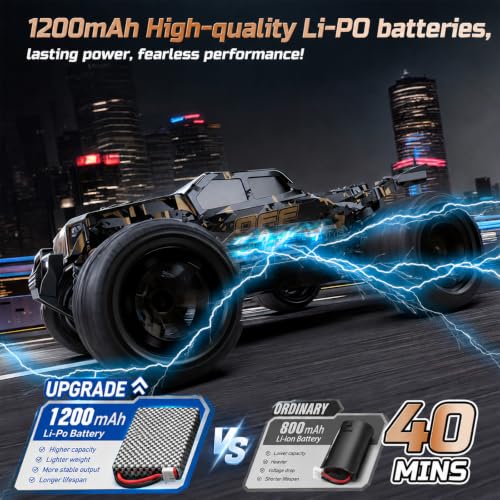
This fast RC truck gives you a tiny taste of EV torque. It launches hard. It sprints up to 40 km/h on flat ground. It grips dirt, grass, and gravel. It uses a compact electric motor and a simple drivetrain. There is no gas engine here. The power feels instant and smooth. That is the big EV advantage in your hands.
I like how it handles bumps. The suspension feels springy and forgiving. It helps you learn how electric power hits the wheels. It also shows why electric motors do not need gears like a gas engine. You squeeze the trigger and go. There is little lag. You feel control at every speed.
Pros:
- Instant throttle response from the electric motor
- Hits 40 km/h for a thrilling backyard run
- All-terrain tires handle dirt and grass well
- Light maintenance compared to nitro or gas RC cars
- Great way to feel EV-like torque in a simple form
- Rechargeable battery is easy to manage
Cons:
- Run time can feel short at max speed
- Motor and ESC can get warm after long sessions
- Spare batteries may be needed for long play
What Amazon Buyers Are Saying
Shoppers praise the speed and punchy takeoff. Many like the sturdy feel for the price. Several note that run time depends on driving style and terrain. Some mention that spare batteries make the fun last. A few buyers call out heat buildup after long, high-speed runs, which is common with fast RC cars.
My Recommendation
This is a fun, affordable way to “feel” how electric motors deliver power. If you are new to EVs and want a hands-on demo, this checks the box. It is not an EV car for the road, but it teaches the core idea fast. I rate it 4.4 out of 5 for performance and value.
| Category | Rating |
|---|---|
| Build Quality | 4.3/5 |
| Performance (Speed & Control) | 4.6/5 |
| Ease of Use | 4.5/5 |
| EV Education Value | 4.2/5 |
| Value for Money | 4.4/5 |
| Overall Rating | 4.4/5 |
The Electric Vehicle Conversion Handbook
If you want the full answer to do electric cars have engines, read this. This handbook shows how people remove engines. Then they install motors, battery packs, and controllers. You see the parts and the process. You learn how electric power replaces fuel, exhaust, and oil. It breaks down voltage, current, and safety in plain steps.
I like that it covers different vehicles. You can think about cars, trucks, motorcycles, and even bikes. You also learn about off-the-shelf kits. Those kits can save time. They help you avoid major wiring mistakes. Even if you never build an EV, the lessons help you shop smart.
Pros:
- Clear view of engines out, motors in
- Covers EV parts: motors, inverters, batteries, BMS
- Shows kits and component options for projects
- Good for beginners and intermediate DIYers
- Helps you understand range, charging, and weight
- Great primer before buying a factory EV in 2026
Cons:
- Some parts and prices may have shifted since publication
- Hands-on builds still need expert help for safety
- Not a brand-specific buyer’s guide
What Amazon Buyers Are Saying
Readers say it is a practical walk-through. Many like the diagrams and project flow. Some wish for more up-to-the-minute parts lists. Others note it helps them talk to shops with confidence. The general theme is clear: it makes EV tech less scary.
My Recommendation
Want to truly grasp why EVs skip engines? Start here. This guide explains the swap from combustion to electric in a friendly way. It will raise your EV IQ fast. I rate it 4.6 out of 5 for clarity and depth.
| Category | Rating |
|---|---|
| Content Depth | 4.7/5 |
| Clarity & Diagrams | 4.6/5 |
| Practicality for DIY | 4.4/5 |
| Up-to-Date Relevance | 4.3/5 |
| Value for Money | 4.6/5 |
| Overall Rating | 4.6/5 |
5000A Jump Starter with Air Compressor
Do electric cars have engines? No. But they do have a 12V system. That small battery wakes the car. It runs locks, ECUs, and relays. If it dips, an EV may not “start” even with a full high-voltage pack. A jump pack like this can help the 12V system. It also doubles as a tire inflator. That is big for long trips.
You should not and cannot jump the EV’s main traction battery. This tool is for 12V support and for gas cars. It can jump a gas or diesel when needed. It can also inflate a low tire to factory spec. Keep it in your trunk. You will be glad you have it the day you need it.
Pros:
- 5000A peak jump current for tough gas or diesel starts
- 160 PSI compressor for on-the-go tire care
- Clear LCD and strong LED light for night use
- Smart clamps help prevent reverse polarity mistakes
- Handy for EV 12V systems in a pinch
- Portable design fits trunk or frunk
Cons:
- Not for jumping EV traction batteries
- Compressor will take time for large tires
- Needs regular charging to stay ready
What Amazon Buyers Are Saying
Owners like the strong cranking power for gas vehicles. Many value the built-in compressor. It saves a roadside stop. Some mention the unit’s size and weight, which is normal for high output. A few note the need to top off its charge every few months. That is standard care for jump packs.
My Recommendation
This is a smart add-on for any car, EV or not. It covers the 12V weak-battery surprise. It also protects your time with a tire inflation fix. For EV life, it adds peace of mind. I rate it 4.5 out of 5 for features and utility.
| Category | Rating |
|---|---|
| Safety Features | 4.6/5 |
| Air Compressor Performance | 4.4/5 |
| Battery Capacity | 4.5/5 |
| Ease of Use | 4.5/5 |
| Value for Money | 4.5/5 |
| Overall Rating | 4.5/5 |
Small Engines & Outdoor Power Equipment Guide
Why include a small engines guide in an EV article? It shows the contrast. Gas engines need fuel, oil, filters, plugs, and belts. Electric motors do not. If you ask do electric cars have engines, this book answers by showing what engines demand. You will see how much time and cost you leave behind with an EV.
Many homes still have gas tools. If you are moving to an EV, you may still care for a mower or snowblower. This guide helps you keep them running. It also makes EV benefits clear. No oil changes. No valve checks. No carb clogs. That is the power of simple machines.
Pros:
- Explains how gas engines work and fail
- Clear repair steps and care schedules
- Great for mowers, snow blowers, and more
- Helps you weigh engine upkeep vs. motor ease
- Useful even as you switch your car to electric
Cons:
- Not about EVs directly
- Some newer tool models may not be covered
- Repair tasks can be messy and time consuming
What Amazon Buyers Are Saying
Readers appreciate the step-by-step help. Many say it saved them shop costs. Some wanted even more photos. Others like the tips for storage and fuel care. The general tone is positive on clarity and usefulness.
My Recommendation
If you still maintain gas tools, this is a handy guide. It also highlights why EV motors are simpler. That context helps you decide with confidence. I rate it 4.3 out of 5 for utility and clarity.
| Category | Rating |
|---|---|
| Clarity | 4.3/5 |
| Repair Coverage | 4.4/5 |
| Photo/Illustration Support | 4.1/5 |
| Beginner-Friendliness | 4.3/5 |
| Value | 4.3/5 |
| Overall Rating | 4.3/5 |
Drill Brush for Car Wheels and Bottles
EVs do not have engines. But you still clean your wheels. Regenerative braking helps reduce dust, but it does not erase it. This drill brush speeds up cleaning. Snap it on your household drill. Add a safe cleaner. Spin away grime from barrels, spokes, and lug areas. Quick and simple.
I like the compact head for bottle necks and tight spots. It helps with cup holders and storage bins too. You save time. You save your wrists. Keep one with your wash kit. It upgrades any detail session on an EV or a gas car.
Pros:
- Fast wheel cleaning with a drill
- Reaches tight areas around lugs and spokes
- Works on bottles, cup holders, and bins
- Light and easy to store
- Affordable boost to any wash kit
Cons:
- Not for delicate finishes without care
- Needs a drill to work
- May sling cleaner if spun too fast
What Amazon Buyers Are Saying
Many users like how fast it removes grime. Reviews often mention better results in less time. Some warn to use lower drill speeds on sensitive surfaces. Others suggest pairing it with a gentle wheel cleaner. The theme is simple: it saves effort and time.
My Recommendation
This is a small buy with big impact. It keeps EV wheels tidy without much work. Use it right and it will be a favorite tool. I rate it 4.4 out of 5 for speed and value.
| Category | Rating |
|---|---|
| Cleaning Power | 4.4/5 |
| Versatility | 4.3/5 |
| Build Quality | 4.2/5 |
| Ease of Use | 4.5/5 |
| Value | 4.5/5 |
| Overall Rating | 4.4/5 |
How to Choose do electric cars have engines
When you shop, you will face many terms. Keep it simple. Focus on what matters to your life. The question do electric cars have engines leads to bigger choices. You pick a motor system, a battery size, and a charge plan. Use these steps to get it right.
1. Learn the difference: engines vs. motors
Engines burn fuel. Motors use electricity. That is the root answer to do electric cars have engines. Battery Electric Vehicles (BEVs) have only motors. Plug-in Hybrids (PHEVs) have both an engine and at least one motor. Extended-range EVs (EREVs), like older BMW i3 REx, use a small engine as a generator. In 2026, most new EVs are BEVs with one or two motors. Motors make peak torque from zero RPM. They do not idle. They do not need multi-speed gearboxes in most cases. Some performance EVs, like certain sports sedans, may use a 2-speed unit on a rear motor. But there is still no engine. Motors, inverters, and reduction gears drive the wheels.
Motors pair with inverters. The inverter converts DC battery power to AC for the motor. The battery voltage can be 400V or 800V in 2026. Higher voltage allows faster charging and cooler cables. Thermal systems keep the battery and motor at a safe temp. You do not change oil. You do not swap spark plugs. You do check tires, brakes, cabin filters, and coolant for the thermal loop at set intervals.
2. Match the EV type to your driving
Daily city trips under 60 miles? A single-motor BEV works well. It is simple. It is efficient. Often it is cheaper. You want easy home charging. Overnight Level 2 charging makes life smooth. Long highway trips weekly? Look at dual-motor all-wheel drive with a larger battery. 800V systems can add range faster. That cuts stop time on road trips. Cold winters? Consider battery preconditioning and heat pump HVAC. That improves range in the cold.
If you cannot charge at home or at work, a PHEV may fit. It has an engine and motors. You get short electric trips and a gas backup. It answers do electric cars have engines with a “yes, but” for your case. Still, plan for public charging growth. By 2026, networks have improved in many regions. 350 kW chargers help 800V cars a lot. Yet you should still map your route and test the local stations.
3. Compare total cost and value
Sticker price is one part. Look at fuel and service cost over years. Motors waste less energy than engines. Electricity can be cheaper than gas, especially at home off-peak. Many EVs need fewer service visits. Brake pads last longer due to regen. Tires can cost more due to torque and weight. Budget for good ones. Check incentives. Federal, state, and utility offers change. They can cut your net cost. Look at warranty length for battery and drive unit. Many offer 8 years or more on the battery to a set mileage. That reduces risk. Also check software support. Over-the-air updates can improve range, charging, and features over time.
Do not skip charging speed. AC charging rate matters for home. DC fast charging speed matters for trips. Check the peak and the curve. Some cars hold high charge rates longer. That saves time. Look at ports too. In 2026, many models in North America adopt Tesla’s NACS port. It can open access to more stations. Adapters help in the short term. Always confirm what cable and adapter you will receive with the car.
Final Verdict: Which Should You Buy?
The Electric Vehicle Conversion Handbook is my top pick. It explains engines vs. motors so you never need to ask do electric cars have engines again. It gives you confidence fast.
If you want hands-on learning, grab the DEERC RC car too. It shows instant torque in action. Pair the jump starter for 12V safety. Keep the brush for quick cleanups. Simple tools. Smarter driving.
FAQs Of do electric cars have engines
Do electric cars have engines?
No. Battery electric cars use electric motors, not gas engines. Motors get power from a battery through an inverter.
How do electric motors replace engines?
Motors make torque without fuel or spark. An inverter feeds them from the battery. A reduction gear sends power to the wheels.
Do hybrids have engines?
Yes. Hybrids and plug-in hybrids have both an engine and one or more electric motors. They can drive together or alone.
Do EVs need oil changes?
Not for the motor. There is no engine oil. You may change coolant for thermal systems and service gear oil at long intervals.
Do EVs have transmissions?
Most use a single-speed reduction gear. A few performance EVs use a 2-speed unit. There is no multi-gear engine transmission.
Can you jump-start an EV?
You can boost the 12V battery if needed. Do not jump the high-voltage traction battery. Follow your owner’s manual.